
September 30, 2026
10 min
Nathan J
July 20, 2026
8 min

Your grandmother’s diabetes medication might be hiding a secret: the potential to slow aging itself. Metformin, a 70-year-old drug prescribed to millions for blood sugar control, has become the most talked-about molecule in longevity science. But separating the signal from the hype requires looking at what the research actually shows, who stands to benefit, and where the evidence runs out.
What the evidence supports: Metformin activates well-characterized longevity pathways (AMPK activation, mTOR inhibition, reduced inflammation) and diabetic patients taking it show surprisingly favorable survival outcomes. Decades of safety data and biological plausibility make it the strongest pharmacological candidate for anti-aging research currently in clinical pipelines.
What’s overstated or unsupported: Nearly all human longevity data comes from diabetic populations, not healthy adults. Animal study doses don’t translate cleanly to humans. The landmark TAME trial won’t report results until the late 2020s, meaning we’re still years away from definitive answers for non-diabetics.
⚕️ LyfeiQ Score: 6/10 — A genuinely promising longevity candidate with strong biological rationale, held back by the gap between animal research and human proof. Worth watching closely, but not worth self-prescribing.
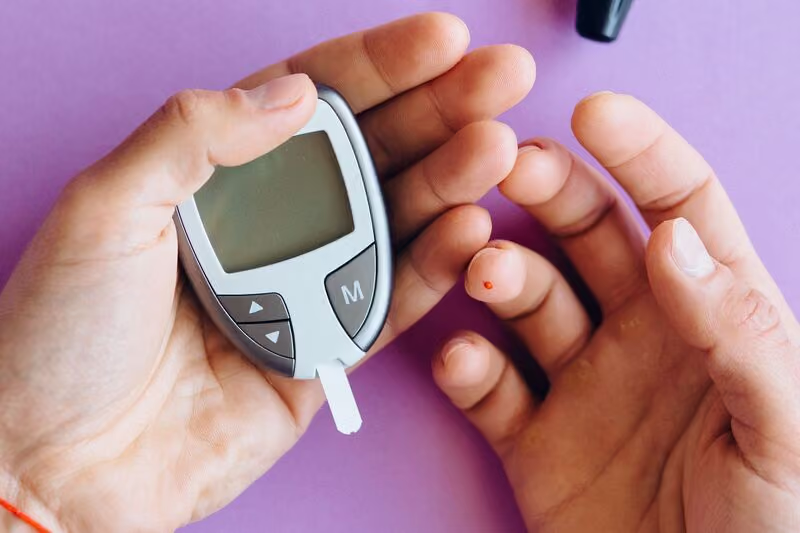
Metformin has been in clinical use since the 1950s, providing an unusually deep well of safety data and clinical observation. It’s a first-line treatment for type 2 diabetes, helping cells respond better to insulin and reducing glucose production in the liver. But researchers noticed something unexpected: diabetic patients taking metformin seemed to live longer than expected, in some analyses outliving non-diabetics entirely.
A landmark 2014 study published in Diabetes, Obesity and Metabolism found that diabetic patients on metformin had better survival rates than matched non-diabetic controls, sparking an avalanche of follow-up research. Animal studies provide further evidence across multiple species: a 2013 study in Nature Communications demonstrated that metformin extended healthspan and lifespan in mice by activating AMPK, a cellular energy sensor involved in longevity pathways, mimicking some effects of caloric restriction. A 2016 review in Cell Metabolism outlined how metformin’s multiple mechanisms—AMPK activation, mTOR inhibition, inflammation reduction, and oxidative stress protection—could theoretically slow fundamental aging processes.
Clinical data in humans shows metformin reduces cancer incidence by an estimated 25–40% in diabetic populations and may protect against cardiovascular disease, cognitive decline, and age-related frailty. A 2018 study in Aging Cell provided the first evidence that metformin affects both metabolic and nonmetabolic pathways linked to aging in older adults. The TAME trial (Targeting Aging with Metformin) aims to test whether metformin delays aging in non-diabetics and represents the first major trial treating aging as a treatable condition, though results won’t arrive until the late 2020s at earliest.
If you’re here because you Googled “metformin for anti-aging,” here’s the practical reality. Metformin is a prescription medication. You cannot (and should not) buy it over the counter or self-prescribe. Any use for longevity purposes requires a physician’s involvement.
For people with type 2 diabetes or prediabetes, metformin’s benefits are well-established: typical doses range from 500–2,000 mg daily, taken with meals to reduce gastrointestinal side effects. Common side effects include nausea, diarrhea, and stomach discomfort, which usually improve over time. Vitamin B12 levels should be monitored, as long-term use can cause deficiency. Metformin should be temporarily discontinued before procedures involving contrast dye, and it’s contraindicated in severe kidney or liver disease.
For healthy individuals interested in longevity, the honest answer is: we don’t have enough data yet to recommend it. Some longevity-focused physicians prescribe it off-label, typically at lower doses (500–1,000 mg daily), with regular metabolic monitoring. But this is a personalized medical decision, not a general recommendation. Importantly, exercise activates many of the same cellular pathways as metformin (particularly AMPK) without requiring a prescription. One concern: a 2019 study found metformin may blunt some of the muscle-building benefits of resistance training, making the risk-benefit calculation more complex for physically active individuals.
Major medical institutions approach metformin for longevity with measured skepticism. The American Diabetes Association endorses it solely for diabetes and prediabetes management. Dr. Nir Barzilai, who leads the TAME trial, acknowledges we lack sufficient evidence to recommend metformin for healthy individuals. Mayo Clinic emphasizes that off-label use carries risks without proven benefits: metformin can cause gastrointestinal distress, vitamin B12 deficiency, and rarely, lactic acidosis. The Cleveland Clinic notes that metformin interacts with contrast dyes used in medical imaging, requiring temporary discontinuation.
Some physicians do prescribe metformin off-label for polycystic ovary syndrome, weight management, and cancer prevention. A 2020 study in the Journal of Clinical Endocrinology & Metabolism found potential cognitive benefits, though results remain preliminary. The medical consensus: fascinating hypothesis, insufficient evidence, wait for clinical trials. No major health organization currently recommends metformin for anti-aging purposes in healthy adults.
Longevity-focused practitioners take a different view, grounded in preventive rather than reactive medicine. Dr. Mark Hyman, a functional medicine advocate, discusses metformin as part of comprehensive longevity protocols while emphasizing lifestyle interventions first. The Andrew Weil Center for Integrative Medicine views metformin through a risk-benefit lens: for someone with a strong family history of diabetes or metabolic syndrome, earlier intervention might prevent disease progression before it starts.
Practitioners like Dr. Peter Attia discuss metformin’s use in their practices, noting that some patients experience improved metabolic markers even without diabetes. They monitor B12 levels, kidney function, and adjust doses individually. The integrative perspective acknowledges that waiting decades for perfect evidence means potentially missing benefits, arguing that metformin’s 70-year safety record provides reasonable assurance for informed adults making autonomous health decisions. However, they consistently emphasize that no pill replaces foundational health practices like diet, exercise, and stress management.
Biohacking communities have embraced metformin with enthusiasm that sometimes outpaces the evidence. Dave Asprey, founder of Bulletproof, has experimented with metformin and documented his experience, noting improved energy and body composition. Longevity-focused Substacks and forums buzz with protocol discussions, with some users reporting taking 500–1,000 mg daily despite lacking diabetes.
Dr. Peter Attia’s podcast reaches millions and features extensive discussion of metformin’s pros and cons, making the science accessible without oversimplifying. Rhonda Patrick, PhD, discusses metformin’s mechanisms while emphasizing that lifestyle interventions achieve similar AMPK activation without medication. On the other side, some users share negative experiences: persistent GI issues, fatigue, or no perceived benefits. TikTok trends show younger users discussing metformin for weight loss and anti-aging, a concerning development given the lack of long-term safety data in healthy young adults. The public conversation often lacks nuance, with metformin becoming either a miracle drug or dismissed entirely, and less attention to the complicated middle ground where most scientific truth resides.
All three perspectives agree on several key points. First, metformin shows genuine biological effects that could theoretically slow aging through measurable, replicable, and biologically plausible mechanisms. Second, current evidence doesn’t justify widespread use in healthy populations—the gap between animal models and human reality remains substantial. Third, individual factors matter enormously: someone with prediabetes or a strong family history faces a different risk-benefit calculation than a metabolically healthy 25-year-old. Fourth, lifestyle interventions should come first, since exercise activates many of the same pathways as metformin without requiring a prescription.
The disagreement centers on how much uncertainty we should tolerate. Medical institutions want definitive proof. Integrative practitioners accept higher uncertainty for potential benefits. Biohackers experiment on themselves. The myth that metformin is a “fountain of youth in pill form” is overstated—but dismissing it entirely ignores legitimately compelling preliminary data. The truth lives in the uncomfortable middle: metformin is the most promising pharmacological anti-aging candidate we have, and we still don’t know if it works for that purpose in healthy people.
The TAME trial represents a critical first step, but broader research is needed. Validated aging biomarkers like DNA methylation clocks and senescent cell burden could provide surrogate endpoints, accelerating research without requiring 50-year follow-ups. Genetic and metabolomic profiling may identify who responds best to metformin, enabling precision medicine approaches. Combination studies with other interventions like rapamycin, NAD+ precursors, or senolytics could reveal synergistic effects. And long-term safety studies specifically in non-diabetic populations remain essential, since diabetics face different risk profiles than healthy individuals.
Credibility Rating: 6/10
Medical Consensus: Mainstream medicine endorses metformin for diabetes and prediabetes. No major health organization recommends it for anti-aging in healthy adults. The TAME trial may change this within 5–10 years.
Who should try this: People with type 2 diabetes or prediabetes have clear, evidence-backed reasons to use metformin. Individuals with metabolic syndrome or strong family history of diabetes may benefit from discussing it with their physician as a preventive measure.
Who should skip this: Healthy young adults without metabolic risk factors, anyone with kidney or liver disease, and people who prioritize muscle-building through resistance training (due to potential interference with hypertrophy signaling) should not self-prescribe metformin for longevity.
⚕️ LyfeiQ Score: 6/10 — Metformin earns a moderate score reflecting its split personality. As a diabetes medication, it’s evidence-based and essential. As a longevity intervention for healthy people, it’s promising but unproven. The gap between animal research and human application remains significant. Until trials like TAME provide definitive answers, metformin exists in a gray zone. The score could rise substantially within 5–10 years if ongoing research confirms benefits in non-diabetic populations.
1. Bannister, Christian A., et al. “Can People with Type 2 Diabetes Live Longer than Those without? A Comparison of Mortality in People Initiated with Metformin or Sulphonylurea Monotherapy and Matched, Non-Diabetic Controls.” Diabetes, Obesity and Metabolism, vol. 16, no. 11, Nov. 2014, pp. 1165-1173. https://pubmed.ncbi.nlm.nih.gov/25041462/
2. Martin-Montalvo, Alejandro, et al. “Metformin Improves Healthspan and Lifespan in Mice.” Nature Communications, vol. 4, July 2013, article 2192. https://pubmed.ncbi.nlm.nih.gov/23900241/
3. Barzilai, Nir, et al. “Metformin as a Tool to Target Aging.” Cell Metabolism, vol. 23, no. 6, June 2016, pp. 1060-1065. https://pubmed.ncbi.nlm.nih.gov/27304507/
4. Sluggett, Janet K., et al. “Metformin and Risk of Alzheimer’s Disease Among Community-Dwelling People with Diabetes: A National Case-Control Study.” Journal of Clinical Endocrinology & Metabolism, vol. 105, no. 4, Apr. 2020, pp. 1-9. https://pubmed.ncbi.nlm.nih.gov/31886508/
5. Kulkarni, Ameya S., et al. “Metformin Regulates Metabolic and Nonmetabolic Pathways in Skeletal Muscle and Subcutaneous Adipose Tissues of Older Adults.” Aging Cell, vol. 17, no. 2, Apr. 2018. https://pubmed.ncbi.nlm.nih.gov/29383869/
Disclaimer: This content includes personal opinions and interpretations based on available sources and should not replace medical advice. This content includes interpretation of available research and should not replace medical advice. Although the data found in this blog and infographic has been produced and processed from sources believed to be reliable, no warranty expressed or implied can be made regarding the accuracy, completeness, legality or reliability of any such information. This disclaimer applies to any uses of the information whether isolated or aggregate uses thereof.