September 30, 2026
10 min
Maya Q.
July 20, 2026
7 min
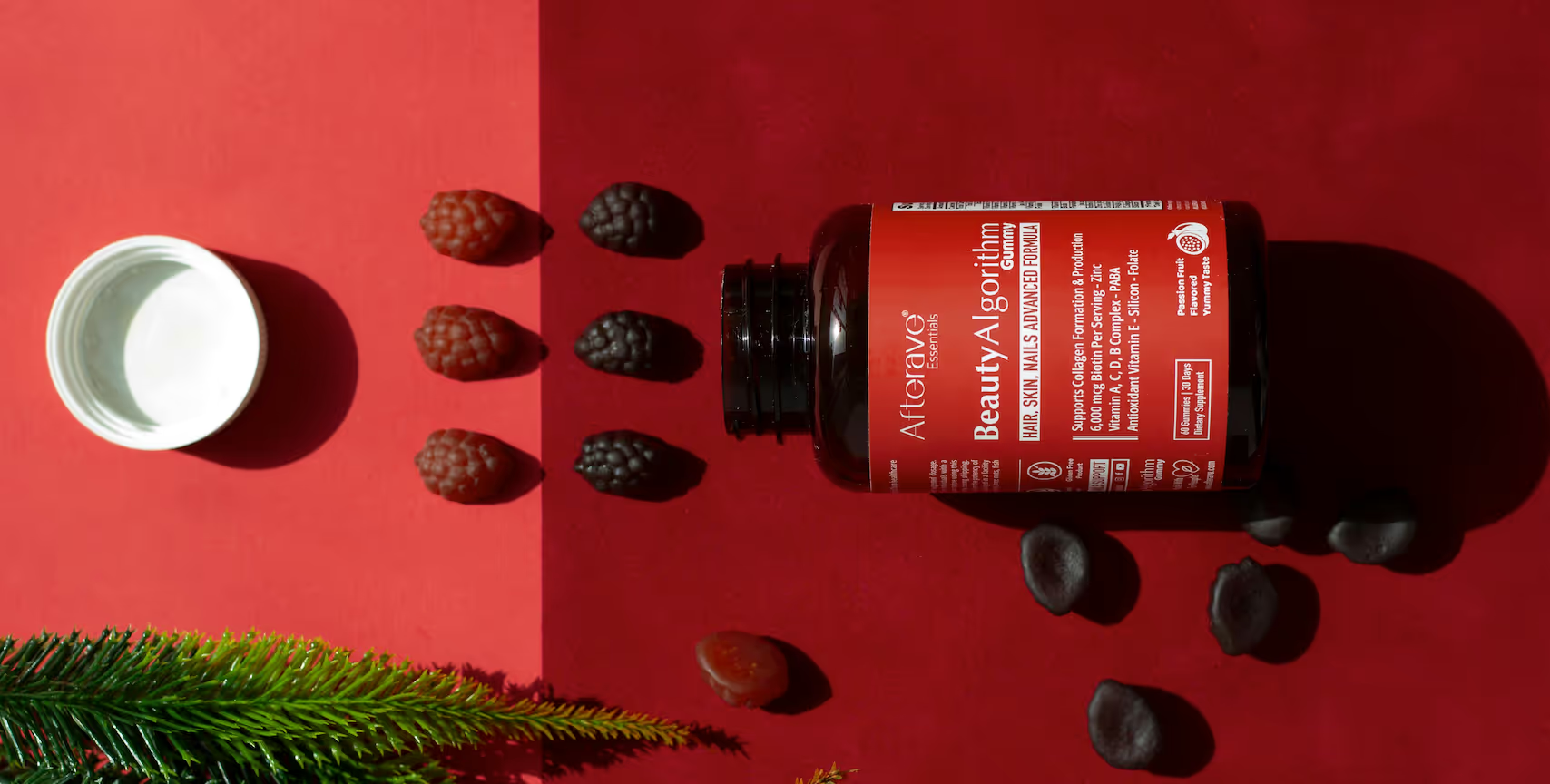
Americans spend hundreds of millions of dollars a year on biotin supplements chasing thicker hair and stronger nails. Here’s the uncomfortable truth the label won’t tell you: most people already get plenty of biotin from food, and the evidence that extra doses do anything for healthy individuals is remarkably thin.
✅ What the evidence supports: Biotin supplementation is well-established and medically essential for people with biotinidase deficiency or confirmed biotin deficiency from malabsorption. A small study found modest nail improvements in people with brittle nails.
⚠️ What’s overstated: There is no rigorous evidence that high-dose biotin improves hair, skin, or nails in people who are not deficient. Most positive studies are small, short, and lack control groups. High-dose supplements can also interfere with thyroid, cardiac, and pregnancy lab tests — a risk the wellness industry rarely mentions.
💊 LyfeiQ Score: 3/10 — Legitimate for true deficiency; oversold for cosmetic use in healthy people.
Biotin (vitamin B7, or vitamin H) is a water-soluble B-complex vitamin that your body uses as a coenzyme for five carboxylase enzymes involved in breaking down fats, carbohydrates, and proteins. It also plays a role in synthesizing fatty acids and amino acids, and in regulating blood sugar. The hair-and-nails connection is direct: biotin supports keratin production, the structural protein that makes up hair, skin, and nails. When biotin is genuinely insufficient, keratin synthesis suffers and you may see brittle nails, hair thinning, or skin changes.
Here’s the catch. True biotin deficiency is rare. The vitamin is found in a wide variety of common foods — eggs (especially yolks), nuts, seeds, sweet potatoes, broccoli, whole grains, and even naturally produced by your gut bacteria. The adequate intake level for adults is just 30–100 micrograms per day according to the Mayo Clinic. Most people hit this easily through diet alone. Yet supplement doses on store shelves routinely run 1,000 to 10,000 micrograms — up to 100 times the recommended level. That gap between dietary need and supplement dose is where the marketing lives.
The science on biotin is more nuanced than any supplement bottle suggests, and the honest summary is: strong evidence for deficiency, weak evidence for everyone else. A systematic review of the literature confirms compelling support for biotin in managing biotinidase deficiency, a rare genetic disorder affecting biotin metabolism where supplementation is genuinely life-altering. People on prolonged tube feeding or with gastrointestinal conditions that impair nutrient absorption may also benefit.
For healthy individuals seeking cosmetic benefits, the picture dims considerably. A 2015 randomized, double-blind, placebo-controlled trial examined women with self-perceived thinning hair who took a marine protein supplement containing biotin — and did see improvement. But the supplement contained multiple active ingredients, making it impossible to attribute the effect to biotin alone. A separate small study found that biotin supplementation improved nail hardness in people with brittle nails, but sample sizes were under 50 participants and baseline biotin levels were not measured in most subjects.
The methodological problems are consistent across the literature: small sample sizes, no control groups, no measurement of participants’ starting biotin status, short follow-up periods, and likely publication bias toward positive results. A 2017 review in Skin Appendage Disorders (Patel et al.) concluded that all reported cases of hair growth with biotin supplementation involved either an underlying pathology causing deficiency or a deficiency induced by dietary practices. In other words: biotin helps when you’re low. There’s no good evidence it helps when you’re not.
There’s also a safety concern worth taking seriously. The FDA has issued warnings that high-dose biotin can interfere with immunoassay-based lab tests, producing falsely elevated or falsely low results for thyroid hormones, cardiac troponin (a heart attack marker), and hormone panels. Cleveland Clinic notes this interference creates real clinical risk — not theoretical. Someone taking 5,000–10,000 mcg daily could receive an incorrect thyroid diagnosis or a missed cardiac event.
If you have confirmed biotin deficiency or a condition that impairs biotin absorption, supplementation is appropriate and should be guided by your physician. For everyone else, the most practical step is dietary: eggs, nuts, seeds, sweet potatoes, spinach, whole grains, and mushrooms provide biotin in amounts that more than satisfy daily requirements for most adults.
If you choose to experiment with biotin despite likely being replete, keep dose expectations realistic. Hair and nail growth is slow — any real effect would take months to appear, and distinguishing biotin’s contribution from other lifestyle changes is genuinely difficult. More importantly: always tell your doctor and any lab technician if you’re taking biotin before blood tests, particularly thyroid panels or cardiac workups. You may need to stop supplementing several days before testing to avoid false results. This is not a minor footnote — it is the most clinically significant fact about biotin supplementation that most supplement users never hear.
Hair loss and brittle nails also have many potential causes beyond biotin: thyroid dysfunction, iron deficiency anemia, hormonal imbalances, stress, and aging. Supplementing before ruling out these causes may delay the correct diagnosis and treatment.
The medical consensus is conservative and evidence-based: biotin supplementation is indicated for confirmed deficiency or specific medical conditions, and not for cosmetic use in otherwise healthy individuals. Mayo Clinic and Cleveland Clinic both state that true deficiency is rare and typically occurs only in specific circumstances — genetic biotinidase deficiency, pregnancy, inflammatory bowel disease, or prolonged use of broad-spectrum antibiotics that disrupt gut flora.
The mainstream clinical view is straightforward: if you eat a reasonably varied diet, you almost certainly get enough biotin. High-dose supplements likely produce nothing more than expensive urine. The more pressing concern for clinicians is the lab interference issue, which has prompted FDA warnings and is documented well enough to constitute a genuine safety signal. Physicians also emphasize that hair loss and nail brittleness require proper workup — biotin is not a diagnostic substitute.
The natural health community takes a broader view, framing biotin supplementation as nutritional optimization rather than deficiency correction. Proponents argue that modern diets — even apparently healthy ones — may not deliver optimal micronutrient levels due to soil depletion, food processing, and individual variation in absorption and metabolism. From this perspective, supplementing above the minimum requirement makes intuitive sense, especially during high-demand periods like postpartum recovery, periods of chronic stress, or aggressive dieting.
This approach often combines biotin with complementary supplements — collagen, vitamin E, omega-3 fatty acids — targeting a broader “glow from within” effect. The NCCIH acknowledges that nutritional adequacy and optimal function are not always the same threshold, and some integrative practitioners point to the theoretical plausibility of supraphysiologic dosing even in the absence of confirming trial data. The evidence here is preliminary at best and relies heavily on testimonials and before-and-after anecdotes rather than controlled research — which limits how much weight these claims can bear scientifically.
Beauty and health influencers have done more to drive biotin sales than any clinical study — and the gap between their claims and the evidence is wide. Instagram and TikTok are saturated with “biotin journey” content: before-and-after photos documenting longer hair, thicker nails, and clearer skin, typically attributed to daily doses of 5,000–10,000 mcg over several months. Popular wellness creators routinely recommend specific high-dose brands with affiliate links, framing biotin as an affordable, accessible beauty hack anyone can try.
The narrative is compelling and visually persuasive. But the mechanism is rarely explained, the evidence is never cited, and the commercial relationship between influencer and supplement brand is inconsistently disclosed. Some creators do acknowledge that “results vary” or that biotin “may not work for everyone,” which is more honest than most — but these caveats tend to get buried. Notably, the lab interference risk — arguably the most important safety fact about high-dose biotin — almost never appears in influencer content. The framing, as Alexis Brock documented in a 2019 piece in The Pavlovic Today, is aspirational and transactional rather than informational.
The three perspectives on biotin reflect deeper disagreements about what counts as evidence and when intervention is warranted — not just disagreements about a vitamin. Mainstream medicine requires controlled trials and documented deficiency before recommending supplementation. Integrative practice weighs individual experience and biochemical individuality alongside trial data. Influencer culture trades in narrative and visual transformation, with commercial incentives shaping the story.
None of these positions is entirely wrong. The medical caution about lab interference and deficiency rarity is well-founded. The integrative argument that optimal function may require more than the minimum is theoretically plausible, even if unproven for biotin specifically. Influencer testimonials reflect real people’s experiences, even if those experiences result from placebo effects, regression to the mean, or concurrent lifestyle changes.
The honest synthesis: biotin is important for the tissues it supports, deficiency is real and treatable, and supplementation in that context is genuinely valuable. For healthy people without deficiency, the “more is better” hypothesis is unproven, the cosmetic benefits are not established by rigorous evidence, and the lab interference risk is underappreciated. The supplement industry has built a large market on a small evidence base — and the gap between the two is where consumer money quietly disappears.
The most useful research directions would address the gaps the current literature leaves open. Large, well-controlled trials in healthy adults with measured baseline biotin status — something almost no existing study includes — would finally answer whether supraphysiologic dosing does anything beyond deficiency correction. Researchers are also beginning to explore biotin’s potential role in neurological conditions, including multiple sclerosis, where early high-dose trials have shown mixed but intriguing results. Better characterization of individual variation in biotin metabolism, including genetic polymorphisms affecting absorption and utilization, could eventually allow more personalized supplementation guidance rather than the blanket high-dose approach currently marketed to everyone.
Biotin has a clear and important role in human health — but that role is much narrower than the supplement industry claims.
Credibility Rating: 3/10
👉 Who should try this: People with confirmed biotin deficiency, biotinidase deficiency, conditions impairing nutrient absorption (Crohn’s, chronic tube feeding), or those whose physician recommends it during pregnancy.
👉 Who should skip this: Healthy adults pursuing biotin for hair growth or stronger nails without a confirmed deficiency. You’re almost certainly getting enough from food, and high-dose supplements carry a real risk of interfering with important lab tests.
💊 LyfeiQ Score: 3/10 — Biotin is genuinely important — just not in the way it’s sold. If you’re eating a varied diet, you don’t need a supplement. If you’re experiencing hair loss or brittle nails, see a doctor to find the actual cause rather than reaching for a high-dose pill first.
Ablon, Glynis. “A 3-Month, Randomized, Double-Blind, Placebo-Controlled Study Evaluating the Ability of an Extra-Strength Marine Protein Supplement to Promote Hair Growth and Decrease Shedding in Women with Self-Perceived Thinning Hair.” Dermatology Research and Practice, vol. 2015, 2015, pp. 1–8. https://doi.org/10.1155/2015/841570
Brock, Alexis. “InstaVitamins: Selling the Dream.” The Pavlovic Today, 3 June 2019. https://thepavlovictoday.com/instavitamins-selling-the-dream/
Cleveland Clinic. “Biotin Side Effects: What’s the Risk?” Cleveland Clinic, 15 Oct. 2024. https://health.clevelandclinic.org/biotin-side-effects
Hochman, L. G., et al. “Brittle Nails: Response to Daily Biotin Supplementation.” Cutis, vol. 51, no. 4, Apr. 1993, pp. 303–305. https://pubmed.ncbi.nlm.nih.gov/8477615/
Mayo Clinic. “Biotin (Oral Route) Description and Brand Names.” Mayoclinic.org, 2019. https://www.mayoclinic.org/drugs-supplements/biotin-oral-route/description/drg-20062359
MedlinePlus. “Biotinidase Deficiency.” U.S. National Library of Medicine. https://medlineplus.gov/genetics/condition/biotinidase-deficiency/
National Institutes of Health, Office of Dietary Supplements. “Biotin: Fact Sheet for Health Professionals.” NIH, 10 Jan. 2022. https://ods.od.nih.gov/factsheets/Biotin-HealthProfessional/
Oregon State University, Linus Pauling Institute. “Biotin.” Updated 2014. https://lpi.oregonstate.edu/mic/vitamins/biotin
Patel, Deepa P., et al. “A Review of the Use of Biotin for Hair Loss.” Skin Appendage Disorders, vol. 3, no. 3, 2017, pp. 166–169. https://doi.org/10.1159/000462981
Disclaimer: This content includes personal opinions and interpretations based on available sources and should not replace medical advice. This content includes interpretation of available research and should not replace medical advice. Although the data found in this blog and infographic has been produced and processed from sources believed to be reliable, no warranty expressed or implied can be made regarding the accuracy, completeness, legality or reliability of any such information. This disclaimer applies to any uses of the information whether isolated or aggregate uses thereof.