
December 18, 2025
12 min
Maya Q.
May 7, 2026
8 min
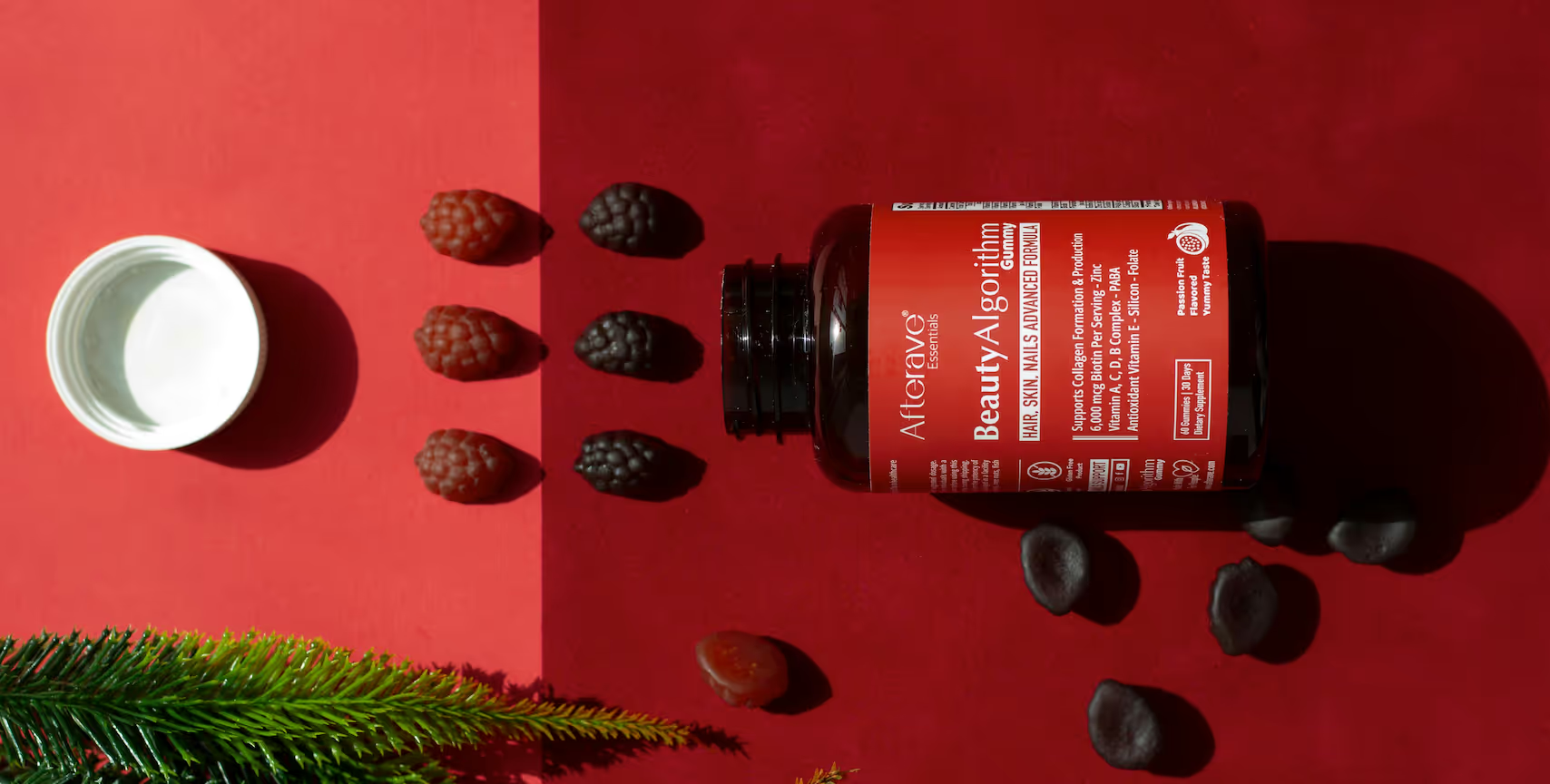
The biotin supplement market is worth hundreds of millions of dollars a year — built almost entirely on a problem most people don’t have. True biotin deficiency is rare, most of us get plenty from food, and the evidence that extra supplementation does anything for healthy hair or nails is surprisingly thin. So why is a 10,000 mcg gummy the best-selling item in the beauty aisle?
✅ What the evidence supports: Biotin supplementation is genuinely effective — even life-altering — for people with biotinidase deficiency or confirmed biotin deficiency from medical conditions. It also plays an essential role in pregnancy nutrition. ⚠️ What’s overstated: For healthy people without a deficiency, there is no strong clinical evidence that high-dose biotin supplements improve hair growth, nail strength, or skin quality. Most positive studies have small sample sizes, no control groups, and don’t measure baseline biotin levels. ⚕️ LyfeiQ Score: 3/10 — A legitimate vitamin doing an illegitimate marketing job. Worth considering only if you have a confirmed deficiency or a specific medical indication.
The science on biotin is surprisingly lopsided: strong evidence for a rare condition, thin evidence for everything else. Biotin (also called vitamin B7 or vitamin H) is a water-soluble B-complex vitamin that acts as a coenzyme for five carboxylase enzymes involved in breaking down fats, carbohydrates, and proteins. It also supports fatty acid synthesis, blood sugar regulation, and amino acid metabolism. The connection to hair and nails is real — biotin is essential for keratin production, the structural protein that makes up hair, skin, and nails. But “essential” doesn’t mean “more is better.”
The most compelling evidence for biotin supplementation comes from biotinidase deficiency, a rare genetic disorder that impairs the body’s ability to recycle biotin. In these patients, supplementation is medically critical. People with prolonged tube feeding, certain gastrointestinal conditions affecting absorption, or specific enzyme disorders also have genuine clinical needs.
For healthy people, the picture changes. A 2015 randomized, double-blind, placebo-controlled study (Ablon, Dermatology Research and Practice) found improvements in women with self-perceived thinning hair who took a marine protein supplement — but the supplement contained multiple ingredients, making it impossible to attribute the benefit to biotin alone. An older study by Hochman et al. (Cutis, 1993) found that biotin supplementation helped with brittle nails, but the sample was small and baseline biotin status wasn’t measured. A 2017 review in Skin Appendage Disorders (Patel et al.) concluded that while there are case reports of benefit, randomized controlled trial data remains severely lacking.
The methodological issues compound: most positive studies have fewer than 50 participants, short durations, no baseline biotin measurement, and no control group. Publication bias — the tendency for positive results to be published more often than null results — inflates the apparent effect. The NIH Office of Dietary Supplements and the Linus Pauling Institute at Oregon State University both note that evidence for cosmetic benefits in non-deficient individuals remains insufficient to support routine supplementation.
One underreported finding deserves attention: your gut bacteria produce biotin naturally, adding to the dietary supply. The adequate intake level is just 30 micrograms per day for adults (Mayo Clinic). Common supplement doses run 1,000 to 10,000 micrograms — up to 333 times the adequate intake. Since biotin is water-soluble, the excess is excreted in urine. But the idea that flooding your system with a vitamin you don’t need will produce beauty benefits has no solid mechanistic or clinical backing.
Before reaching for supplements, it’s worth understanding what biotin can and can’t do — and the specific situations where it actually makes sense. If you have a confirmed deficiency (diagnosed through a blood test), supplementation is appropriate and your doctor will guide dosing. This is uncommon in people eating a varied diet.
If you’re pregnant or breastfeeding, biotin requirements increase modestly. Most prenatal vitamins include it; check with your OB before adding a standalone supplement. If you’re experiencing hair loss or brittle nails, see a physician first. These symptoms have many causes — thyroid dysfunction, iron deficiency anemia, hormonal imbalances, chronic stress — and taking biotin without ruling those out delays proper treatment.
For dietary biotin, eggs (especially yolks), nuts and seeds, sweet potatoes, spinach, whole grains, bananas, and mushrooms are excellent sources. A varied diet typically meets needs without supplementation.
Critical safety note: High-dose biotin interferes with several common laboratory tests, including thyroid panels, cardiac troponin tests (used to diagnose heart attacks), and some hormone assays. The FDA has issued warnings about this. If you are taking biotin, always inform your doctor and pause supplementation for at least 48–72 hours before any blood work.
The medical consensus is cautious, evidence-based, and focused on deficiency — not optimization. The Mayo Clinic and Cleveland Clinic both recommend biotin supplementation only when there’s a confirmed deficiency or specific medical indication. Clinicians point out that true deficiency is rare and almost always linked to identifiable causes: biotinidase deficiency, prolonged antibiotic use disrupting gut flora, inflammatory bowel disease, or malabsorptive conditions.
The mainstream medical view also stresses that hair loss and brittle nails have many potential underlying causes. Taking biotin without investigating the root cause risks delaying diagnosis of a more serious condition. And the lab test interference issue creates real clinical risk: a person supplementing with 10,000 mcg of biotin could receive falsely elevated or falsely low results on thyroid or cardiac panels, potentially leading to misdiagnosis or unnecessary treatment. Cleveland Clinic explicitly flags this as a meaningful concern.
Integrative practitioners take a broader view, framing biotin as part of a general strategy for nutritional optimization rather than deficiency correction. The philosophy is that modern diets — even nominally healthy ones — may not provide optimal micronutrient levels due to soil depletion, food processing, and individual variation in absorption and metabolism. Biotin is seen as a low-risk way to support hair, skin, and nail health, particularly during periods of increased physiological demand like postpartum recovery or high stress.
Proponents often combine biotin with complementary nutrients — collagen, vitamin E, omega-3 fatty acids, zinc — viewing synergy between beauty-supporting nutrients as important. This perspective values individual experience alongside clinical data, and the evidence framework is broader, incorporating observational data, case reports, and patient-reported outcomes. Proponents point to biotin’s safety profile as a point in its favor: excess is excreted, and direct toxicity is nearly unheard of.
Biotin is one of the most heavily promoted supplements in wellness content — and the messaging has almost no overlap with the clinical literature. Beauty and health influencers built much of biotin’s cultural moment through transformation narratives: before-and-after videos showing thicker hair, stronger nails, and clearer skin attributed to months of daily supplementation. Instagram and TikTok are densely populated with “biotin journey” content, often recommending doses in the 5,000–10,000 mcg range and specific brands.
The appeal is real: biotin is cheap, accessible, and requires no prescription. Many creators have affiliate relationships with supplement brands, though disclosure practices are inconsistent. Notably, some dermatology-focused creators — including board-certified dermatologists active on YouTube and TikTok — have actively pushed back on the biotin hype, pointing out that the supplement industry has oversold a vitamin that most viewers simply don’t need.
The biotin story is really a story about three groups with different definitions of what “working” means. Medicine asks: does this intervention produce measurable clinical benefit in a controlled setting? Alternative health asks: does this support optimal function and feel good to take? Social media asks: can I make this into a compelling story that resonates with my audience? Biotin answers each question differently.
The medical answer is: yes, for deficiency. No, for the rest. The integrative answer is: maybe, and the risk is low enough to try. The influencer answer is: yes, look at my hair.
Key misconceptions worth debunking: First, keratin production doesn’t scale linearly with biotin intake. Your body synthesizes what it needs when biotin is adequate; adding more doesn’t accelerate the process. Second, dramatic hair transformations in “biotin journey” content can reflect many other variables — seasonal hair cycles, reduced styling damage, other dietary changes, or simply the passage of time. Third, “water-soluble, so it’s safe” is mostly true for direct toxicity but ignores the lab interference issue entirely.
Where the evidence and marketing genuinely intersect: biotin is essential for keratin production. Deficiency does affect hair and nails. The supplement is safe for most people. The mistake is extrapolating from “deficiency causes problems” to “excess provides benefits” — a logical leap the data doesn’t support.
Future research worth watching includes better-powered randomized controlled trials in healthy adults with measured baseline biotin levels — the methodological gaps in existing literature are fixable, they just haven’t been prioritized. There’s also emerging interest in whether specific subpopulations (people with MTHFR gene variants, those with inflammatory gut conditions, or postpartum individuals) might have elevated biotin needs that don’t meet clinical deficiency thresholds but still respond to supplementation. Computational models of nutrient-gene interaction may eventually help identify who actually benefits from biotin beyond confirmed deficiency cases.
Credibility Rating: 3/10
👉 Who should try this: People with confirmed biotinidase deficiency or diagnosed biotin deficiency, those with malabsorptive conditions affecting B vitamin uptake, or pregnant individuals whose prenatal vitamin doesn’t include adequate biotin.
👉 Who should skip this: Healthy adults taking it for hair or nail growth without a confirmed deficiency — the evidence doesn’t support it, and high doses can interfere with important lab tests. Address hair loss or brittle nails with a physician who can identify the actual cause.
⚕️ LyfeiQ Score: 3/10 — Biotin is a genuinely important vitamin doing an illegitimate marketing job. If your diet is varied and you’re not deficient, supplements are unlikely to deliver the beauty results promised. Spend the money on a blood panel instead — it’ll tell you far more.
Related: The Collagen Paradox: Why Collagen Won’t Rebuild Your Collagen by Eating It
Disclaimer: This content includes personal opinions and interpretations based on available sources and should not replace medical advice. This content includes interpretation of available research and should not replace medical advice. Although the data found in this blog and infographic has been produced and processed from sources believed to be reliable, no warranty expressed or implied can be made regarding the accuracy, completeness, legality or reliability of any such information. This disclaimer applies to any uses of the information whether isolated or aggregate uses thereof.