November 7, 2025
8 min
Maya Q.
March 11, 2026
7 Min.

You've probably seen it everywhere lately. The internet has been raving about it with TikTok creators raving about feeling "zen" after taking it. Maybe your yoga instructor mentioned it once or twice. Ashwagandha has become one of the most popular supplements on the market, and for good reason. People are stressed out, exhausted, and looking for answers.
But here's the thing. Does this ancient herb actually work? And more importantly, is it safe for you to take? Let’s take a look at the science!
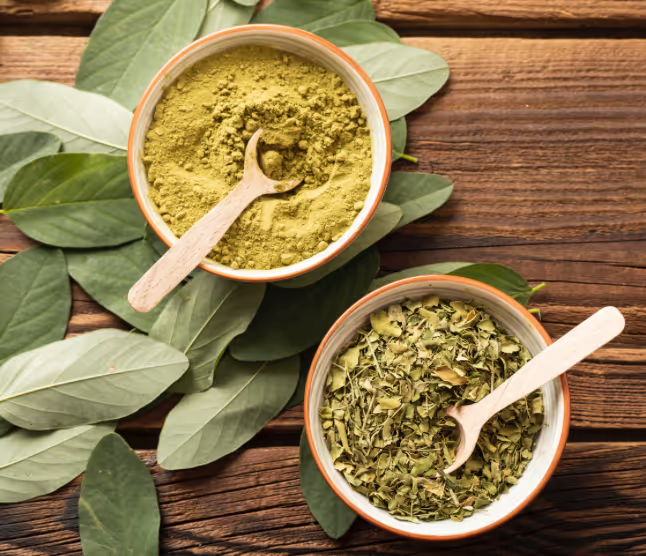
Ashwagandha is a small evergreen shrub that grows in India, Africa, and parts of the Middle East (National Center for Complementary and Integrative Health). Its scientific name is Withania somnifera, but you might also hear it called "Indian ginseng". The name ashwagandha comes from Sanskrit and roughly translates to "smell of horse” which refers both to the herb's distinct odor and the traditional belief that it gives you the strength of a stallion (Herba Naturalle).
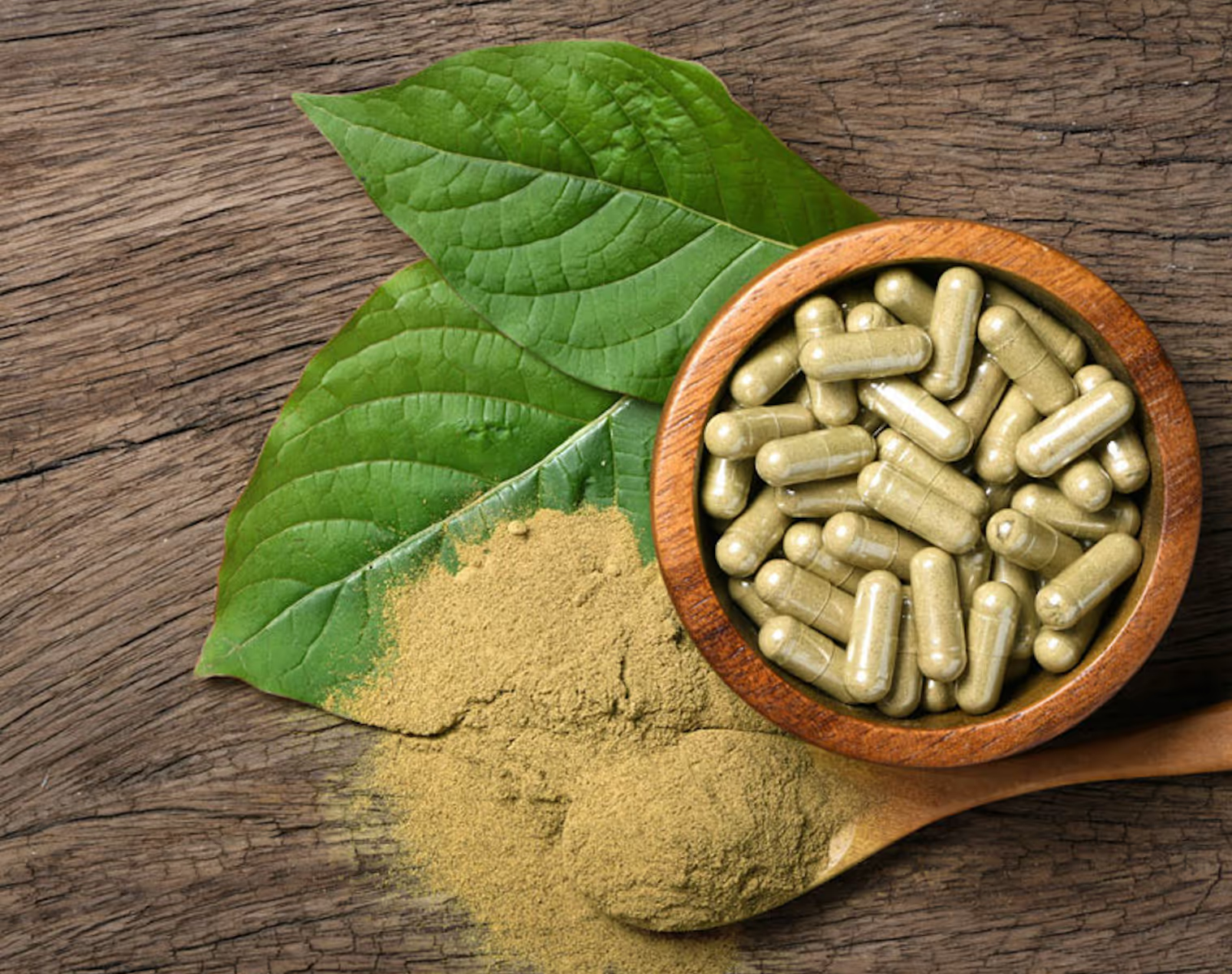
For thousands of years, practitioners of Ayurvedic medicine have used ashwagandha as a "rasayana," which means a rejuvenating tonic (Singh et al.). They prescribed it for everything from fatigue and weakness to stress and aging. Today, you'll find it in capsules, powders, gummies, and even drinks at your local grocery store.
The active compounds in ashwagandha are called withanolides and it is these naturally occurring chemicals that give the plant its biological effects (National Center for Complementary and Integrative Health). Most modern supplements contain concentrated root extracts that are standardized to contain specific amounts of withanolides, typically between 0.3% and 1.5% (Millstine).
The research on ashwagandha has grown significantly over the past two decades. Scientists have conducted dozens of clinical trials examining its effects on stress, anxiety, sleep, and other health outcomes. Here's what the evidence shows.
Ashwagandha has been used for over 3,000 years in traditional medicine and has recently gained popularity in Western countries, prompting more human clinical trials. A 2021 systematic review analyzed 41 human studies examining ashwagandha as a single-ingredient intervention for a wide range of mental and physical conditions, including stress and anxiety, fertility, athletic and cognitive performance, pain, fatigue, thyroid function, metabolic disorders, and sleep. Most studies reported positive effects, though there was substantial variation in dosage, treatment duration, and extract type, and many trials had small sample sizes and were conducted primarily in India. Overall, the strongest and most consistent evidence supports ashwagandha’s effectiveness in reducing stress and anxiety. While findings suggest broad therapeutic potential, significant study heterogeneity and limited high-quality trials mean more robust, well-powered research is needed (Lopresti and Smith).
A 2025 randomized, double-blind, placebo-controlled trial evaluated the effects of Ashwagandha root extract on stress and weight management in adults over 24 weeks. Participants receiving 300 mg of ashwagandha twice daily experienced significantly greater reductions in body weight and BMI compared with placebo, along with improvements in perceived stress, quality of life, subjective satisfaction, and food cravings. The extract was generally well tolerated, with only mild and self-limiting adverse events reported at rates similar to placebo. Overall, the findings suggest that ashwagandha root extract is a safe and effective adjunct for reducing stress and supporting weight loss (Pakhale et al.).
People struggling with sleep have also turned to ashwagandha. A 2020 randomized, double-blind, placebo-controlled trial evaluated a standardized ashwagandha extract in 150 adults with non-restorative sleep over six weeks. Compared with placebo, ashwagandha significantly improved self-reported sleep quality, objective sleep measures (sleep efficiency, total sleep time, sleep latency, and wake after sleep onset), and multiple quality-of-life domains. The supplement was well tolerated, with no treatment-related adverse events reported (Deshpande et al.).
A meta-analysis of five randomized controlled trials (400 participants) found that ashwagandha extract produced a small but significant improvement in overall sleep, particularly in adults with insomnia, at doses ≥600 mg/day and durations ≥8 weeks, while also improving mental alertness and anxiety, with no serious adverse effects reported (Cheah et al.).
A randomized, placebo-controlled study evaluated the effects of 600 mg/day ashwagandha root extract for 8 weeks in adults with self-reported cognitive and energy difficulties. Compared with placebo, ashwagandha significantly improved episodic and working memory, attention accuracy, mood, mental fatigue, and executive function. The supplement was well tolerated, with good compliance and no serious adverse events reported, suggesting benefits for cognition, energy, and mood (Kale et al.).
Athletes and fitness enthusiasts have also shown interest in ashwagandha. A systematic review and meta-analysis found that ashwagandha supplementation significantly improved VO₂max (maximal oxygen consumption) in healthy adults and athletes, suggesting potential benefits for cardiorespiratory fitness. However, the limited number of studies and high heterogeneity indicate that further high-quality research is needed to confirm these findings (Pérez-Gómez et al.).
While the research looks promising, it comes with important caveats. Most studies have been relatively small, involving dozens rather than hundreds or thousands of participants. Study durations also tend to be short with most trials lasting only two to three months. We don't have great data on what happens when people take ashwagandha for years. The long-term safety picture remains incomplete.
Additionally, the types of ashwagandha preparations used in studies vary widely. Some researchers used root-only extracts while others included both root and leaf. The withanolide concentrations differed across trials. This makes it tricky to know exactly what form and dose works best.
There's also the issue of study populations. Many trials were conducted in India with participants who may have different baseline stress levels, diets, and lifestyles than Western populations. How well the results translate across cultures remains an open question.
Mainstream medicine takes a cautious but increasingly open stance on ashwagandha. The Cleveland Clinic acknowledges that ashwagandha may have mind and body-boosting benefits, particularly for stress relief and sleep. However, their experts emphasize that it's "not magic" and shouldn't replace proven stress management strategies.
Many physicians do acknowledge that the studies look promising, but recommend developing coping tools for stress rather than relying primarily on supplements.
The NIH's National Center for Complementary and Integrative Health states there isn't enough evidence to determine if ashwagandha helps with conditions beyond stress, anxiety, and sleep (National Center for Complementary and Integrative Health). They caution that long-term safety remains unknown and that more research is needed.
WebMD rates ashwagandha as "possibly safe" when taken for up to three months. They warn about potential stomach upset, diarrhea, and rare but serious liver problems. They specifically advise pregnant women to avoid it entirely. It is always best to speak to your doctor prior to making any decisions to ensure utmost safety (WebMD).
Integrative medicine practitioners generally view ashwagandha positively while remaining mindful of its limitations. It is often described as a calming adaptogen, particularly useful for anxiety and stress, and is considered less stimulating than some other herbs in this category. Because of its relaxing and mildly sedative effects, it is commonly suggested for use later in the day rather than in the morning, and practitioners emphasize the importance of individualized guidance when selecting adaptogens. Ashwagandha is typically framed within the broader adaptogen concept, herbs that support the body’s ability to cope with stress and maintain balance, and its long history of use in Ayurvedic medicine is often valued as an important source of insight alongside modern clinical evidence.
On social media, ashwagandha has become a major wellness trend, with search interest and online engagement surging in recent years. Platforms like TikTok are filled with videos claiming benefits such as dramatic stress reduction, better sleep, increased muscle growth, higher testosterone, and improved focus, and ashwagandha products have ranked among the most-viewed wellness items on social commerce platforms.
At the same time, not all content is positive. Some users report side effects such as emotional numbness, feelings of detachment, or allergic reactions, while others say the supplement did not live up to expectations. As a result, healthcare professionals generally encourage a cautious approach, advising people to be skeptical of exaggerated claims and to consult a qualified provider before starting any supplement.
All three viewpoints agree on certain points. Ashwagandha appears to have real, measurable effects on stress and anxiety for some people. It's been used safely for thousands of years in traditional medicine. And it's generally well-tolerated in the short term by most healthy adults.
The disagreements center on degree and caution. Mainstream medicine wants more robust clinical evidence before making strong recommendations. Integrative practitioners are more willing to incorporate traditional wisdom alongside emerging research. Social media often oversimplifies and exaggerates benefits while sometimes ignoring risks.
One misconception worth addressing: ashwagandha is not a quick fix. Despite TikTok videos showing dramatic before-and-after transformations, most clinical research shows effects building gradually over weeks. It's also not a replacement for addressing the underlying causes of stress.
Another overlap worth noting: all perspectives recommend consulting healthcare providers before starting ashwagandha. This is especially important for people with thyroid conditions, autoimmune disorders, or those taking medications that the supplement might interact with
While ashwagandha is generally considered safe for short-term use, recent reports have raised concerns about liver injury. According to the NIH's LiverTox database, more than dozens of published case reports regarding liver injury associated with ashwagandha have been reported in medical literature (Shaw). Most cases were mild to moderate and resolved after stopping the supplement. However, some cases required liver transplantation, though this was usually within groups that had underlying liver issues.
Other safety considerations include:
Several promising areas deserve further investigation:
Ashwagandha stands out as one of the more scientifically supported herbal supplements available today. Clinical trials show real benefits for stress, anxiety, and sleep in many people. It has a long history of traditional use and is generally well-tolerated for short-term consumption by healthy adults.
However, it's not without risks. Rare but serious liver injuries have been documented. Long-term safety remains unknown. And the quality of supplements varies widely in an unregulated market.
If you're considering ashwagandha, talk to your healthcare provider first. This is especially important if you have thyroid issues, liver disease, autoimmune conditions, or take prescription medications. Choose products from reputable manufacturers that provide third-party testing. And pay attention to how your body responds.
The ancient herb has earned its modern moment in the spotlight. Just approach it with both curiosity and caution. Always ensure that you speak to your healthcare provider prior to starting any new medication or supplementation.
Ashwagandha shows genuine promise for stress and sleep support, backed by meaningful clinical evidence. However, concerns about liver safety, lack of long-term data, and variable supplement quality prevent a higher rating. Work with a healthcare provider if you decide to try it.
Always consult a healthcare professional before starting any supplement. This content includes interpretations based on available sources and is for informational purposes only. It does not constitute medical advice, diagnosis, or treatment.
Cheah, Kae Ling, et al. “Effect of Ashwagandha (Withania Somnifera) Extract on Sleep: A Systematic Review and Meta-Analysis.” PLOS ONE, vol. 16, no. 9, 24 Sept. 2021, p. e0257843, pmc.ncbi.nlm.nih.gov/articles/PMC8462692/, https://doi.org/10.1371/journal.pone.0257843. Accessed 13 Feb. 2026.
Deshpande, Abhijit, et al. “A Randomized, Double Blind, Placebo Controlled Study to Evaluate the Effects of Ashwagandha (Withania Somnifera) Extract on Sleep Quality in Healthy Adults.” Sleep Medicine, vol. 72, 21 Mar. 2020, pubmed.ncbi.nlm.nih.gov/32540634/, https://doi.org/10.1016/j.sleep.2020.03.012. Accessed 13 Feb. 2026.
Herba Naturalle. “What Is Ashwagandha Definition & Overview.” Western Medical Herbalist, 20 Dec. 2025, medicalherbalist.org/what-is-ashwagandha-definition-overview/. Accessed 13 Feb. 2026.
Kale, Sanjiv, et al. “Safety and Efficacy of Ashwagandha Root Extract on Cognition, Energy and Mood Problems in Adults: Prospective, Randomized, Placebo-Controlled Study.” Journal of Psychoactive Drugs, 5 Nov. 2024, pp. 1–13, pubmed.ncbi.nlm.nih.gov/39498904/, https://doi.org/10.1080/02791072.2024.2424279. Accessed 13 Feb. 2026.
Kamal, Hawra I, et al. “Ashwagandha as a Unique Cause of Thyrotoxicosis Presenting with Supraventricular Tachycardia.” Cureus, vol. 14, no. 3, 25 Mar. 2022, pmc.ncbi.nlm.nih.gov/articles/PMC9035336/, https://doi.org/10.7759/cureus.23494. Accessed 13 Feb. 2026.
Lopresti, Adrian L., and Stephen J. Smith. “Ashwagandha (Withania Somnifera) for the Treatment and Enhancement of Mental and Physical Conditions: A Systematic Review of Human Trials.” Journal of Herbal Medicine, vol. 28, no. 1, Aug. 2021, p. 100434, www.sciencedirect.com/science/article/abs/pii/S2210803321000142, https://doi.org/10.1016/j.hermed.2021.100434. Accessed 13 Feb. 2026.
Millstine, Denise. “Can Ashwagandha Supplements Really Provide Stress Relief?” Mayo Clinic Press, 14 June 2023, mcpress.mayoclinic.org/mental-health/ashwagandha-supplements/. Accessed 13 Feb. 2026.
National Center for Complementary and Integrative Health. “Ashwagandha.” NCCIH, Mar. 2023, www.nccih.nih.gov/health/ashwagandha. Accessed 13 Feb. 2026.
Pakhale, Ketan, et al. “Efficacy and Safety of Ashwagandha (Withania Somnifera) Root Extract on Stress and Weight Management in Adults: A Prospective, Randomized, Double-Blind, Placebo-Controlled Study.” JOURNAL of MEDICINE and LIFE 1137 JOURNAL of MEDICINE and LIFE, vol. 18, Dec. 2025, medandlife.org/wp-content/uploads/JML-2025-0147.pdf, https://doi.org/10.25122/jml-2025-0147. Accessed 13 Feb. 2026.
Pérez-Gómez, Jorge, et al. “Effects of Ashwagandha (Withania Somnifera) on VO2max: A Systematic Review and Meta-Analysis.” Nutrients, vol. 12, no. 4, 17 Apr. 2020, p. 1119, pmc.ncbi.nlm.nih.gov/articles/PMC7230697/, https://doi.org/10.3390/nu12041119. Accessed 13 Feb. 2026.
Shaw, Tayler. “Ashwagandha Is Popular for Boosting Health — but Could It Hurt Your Liver?” Cuanschutz.edu, University of Colorado Anschutz Medical Campus, 12 May 2025, news.cuanschutz.edu/department-of-medicine/ashwagandha-liver-health. Accessed 13 Feb. 2026.
Singh, Narendra, et al. “An Overview on Ashwagandha: A Rasayana (Rejuvenator) of Ayurveda.” African Journal of Traditional, Complementary and Alternative Medicines, vol. 8, no. 5S, 3 July 2011, www.ncbi.nlm.nih.gov/pmc/articles/PMC3252722/, https://doi.org/10.4314/ajtcam.v8i5s.9. Accessed 13 Feb. 2026.
WebMD. “Ashwagandha: Overview, Uses, Side Effects, Precautions, Interactions, Dosing and Reviews.” Webmd.com, www.webmd.com/vitamins/ai/ingredientmono-953/ashwagandha#precautions. Accessed 13 Feb. 2026.