

November 5, 2025
8 min
Maya Q.
January 30, 2026
6 min
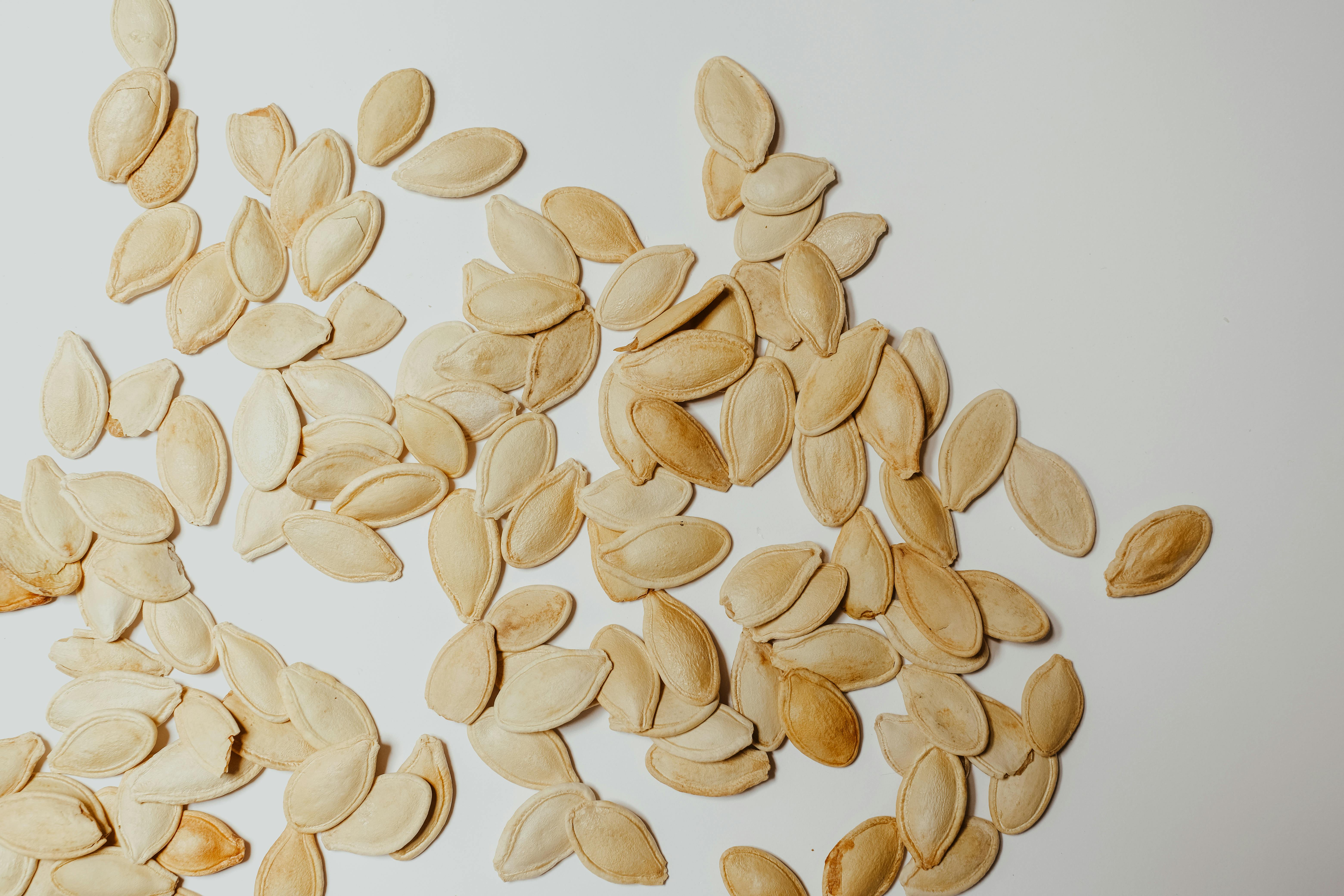
If you're struggling with thinning hair or hair loss, you've probably searched high and low for solutions. And chances are, pumpkin seed oil has popped up on your radar. Influencers and natural health claim it as a miracle hair growth supplement. But does it really work? Let's dive into what the research actually shows about pumpkin seed oil for hair loss.
Pumpkin seed oil has gained a reputation as a potential natural treatment for hair loss, and there is some preliminary evidence to support this. A 2014 study published in Evidence-Based Complementary and Alternative Medicine found that men taking 400 mg of pumpkin seed oil per day for 24 weeks had a 40% increase in hair count compared to a placebo group (Cho et al.). The researchers theorized that the oil's phytosterols could block the conversion of testosterone to DHT, a hormone that shrinks hair follicles.
Animal studies also show promise. A 2019 study in Avicenna Journal of Phytomedicine found that in a testosterone-induced mouse model of androgenetic alopecia, topical pumpkin seed oil, especially at 10%, significantly promoted hair regrowth and reversed testosterone’s inhibitory effects on hair follicles, showing efficacy comparable to minoxidil and suggesting its potential as a topical treatment for male pattern hair loss. And a 2023 study in Molecules indicated that certain compounds in pumpkin seed oil, like trigonelline, may promote hair growth by activating signaling pathways in dermal papilla cells (Soe et al.). However, large-scale human trials are still lacking. Most of the evidence is preliminary or theoretical at this point. But, it certainly does have promise for future research.
While the existing studies are intriguing, they have limitations. The 2014 human study, though a randomized controlled trial, had a small sample size of only 76 men. Additionally, the article mentioned using pumpkin seed oil among other supplements, so it is unclear if the result is due to pumpkin seed oil alone. The animal and in vitro studies suggest mechanisms of action, but we can't assume they translate to real-world effects in humans.
Overall, the evidence base for pumpkin seed oil and hair loss is still thin. We need more independent, placebo-controlled human trials with diverse populations and larger sample sizes to draw firm conclusions.
When evaluating pumpkin seed oil for hair loss, it’s helpful to compare it to minoxidil, the FDA-approved gold standard topical treatment for androgenetic alopecia (Mayo Clinic).
Minoxidil works by prolonging the anagen (growth) phase of the hair cycle and increasing blood flow around hair follicles. Its effectiveness is supported by decades of large-scale clinical trials in both men and women. However, it has downsides: results require continuous use, shedding can occur early on, and side effects like scalp irritation or unwanted facial hair growth are not uncommon.
Pumpkin seed oil, by contrast, appears to act more upstream by targeting hormonal pathways. Its phytosterols are thought to inhibit 5-alpha reductase, reducing DHT levels, the primary driver of male pattern hair loss (Perfect Hair Health Team). In animal models, topical PSO demonstrated hair regrowth effects approaching those of minoxidil, but direct head-to-head human trials are lacking. Importantly, PSO may offer a gentler side-effect profile, though its efficacy is less established.
At this point, minoxidil remains the more reliable option, while pumpkin seed oil may serve as a complementary or alternative approach for individuals seeking plant-based therapies or those who cannot tolerate minoxidil.
Pumpkin seed oil is often combined with saw palmetto in hair loss supplements for good reason. Saw palmetto is another natural 5-alpha reductase inhibitor with modest clinical evidence supporting its role in reducing DHT levels (WebMD). Some studies suggest it may help slow hair thinning, particularly when used consistently over time.
While combining pumpkin seed oil and saw palmetto could theoretically enhance anti-androgenic effects, robust clinical trials evaluating this combination are still missing. As with PSO alone, most evidence remains preliminary.
Minoxidil has the strongest scientific backing and remains the first-line treatment for pattern hair loss. Pumpkin seed oil, alone or paired with saw palmetto, shows promise, particularly for those interested in natural or hormone-modulating approaches, but it should be viewed as an adjunctive rather than a replacement until larger human studies confirm its effectiveness.
From a conventional dermatology standpoint, there isn't enough evidence yet to recommend pumpkin seed oil as an evidence-based treatment for hair loss. While a few small studies show potential, they're not robust enough to change clinical practice guidelines.
According to the American Academy of Dermatology, the most well-studied and effective treatments for male and female pattern hair loss are still FDA-approved medications like finasteride and minoxidil, as well as procedures like laser therapy or hair transplants in certain cases.
Dr. Bergfeld, “Pumpkin seed oil is an antioxidant and is anti-inflammatory. It also has vitamin E, omega-3 fatty acids and linoleic acid”. “Those are all potentially beneficial properties. And we know it’s safe for consumption and as a topical treatment” (Cleveland Clinic).
In the natural health world, pumpkin seed oil is often praised as a gentle, nutrient-rich treatment for hair loss, especially when used alongside a holistic approach. Proponents point to its unique mix of essential fatty acids, antioxidants, and phytosterols as key benefits.
Pumpkin seed oil is rich in zinc, selenium, and essential fatty acids that nourish hair follicles and promote circulation in the scalp. Some natural health practitioners recommend taking pumpkin seed oil orally in capsule form, as well as massaging it directly into the scalp. Combining it with other hair-healthy oils like rosemary or castor oil is also popular.
On social media, pumpkin seed oil is often promoted as a natural alternative to conventional hair loss treatments, which can sometimes cause side effects. Many users post before-and-after photos claiming that it thickened their hair or improved growth. Some report that consistent use—whether as a topical application, oral supplement, or both—has led to noticeably fuller hair over several months.
However, not everyone sees results. Skeptics note that some apparent improvements could be due to other products, genetics, or placebo effects. Overall, public experiences are highly varied, highlighting that while pumpkin seed oil may help some individuals, its effects are not guaranteed.
Pumpkin seed oil sits at the intersection of preliminary scientific evidence, holistic health practices, and social media hype. While influencer anecdotes can be compelling, it's important to remember that hair growth is complex and what works for one person may not work for another. The research so far shows promise but not definitive proof.
All three perspectives likely hold some truth. Pumpkin seed oil does contain nutrients that, theoretically, could support healthy hair. And combining it with a balanced diet, gentle hair care practices, and stress management — as a holistic approach would suggest — is reasonable.
But for those with underlying health conditions causing hair loss, relying on pumpkin seed oil alone, as some influencers suggest, could delay evidence-based treatments. The mainstream medical view rightfully emphasizes proven therapies and the need for more research before recommending pumpkin seed oil.
To move pumpkin seed oil from an intriguing possibility to an evidence-based hair loss treatment, we need more research. Future studies should:
With more robust evidence, dermatologists may be able to offer personalized recommendations on if and how to incorporate pumpkin seed oil into hair loss treatment plans. Potential future products could combine it with other evidence-based active ingredients for a multi-pronged approach.
Additionally, the hair wellness industry should prioritize educating consumers on the realistic expectations and limitations of natural ingredients like pumpkin seed oil, and the importance of first ruling out underlying health issues with a professional.
So how effective is pumpkin seed oil? The answer is that it is variable. While some small studies and lots of personal anecdotes suggest it could help, we need more high-quality research to say for sure. It likely won't be a one-stop solution for everyone.
What we do know is that it contains several hair-friendly nutrients and seems safe for most people. So if you want to try it as part of a gentle, holistic hair care routine, there's probably no harm. Just don't rely on it as your sole treatment, especially if your hair loss is sudden, severe, or linked to an underlying condition. And keep your expectations realistic, luscious locks may not happen overnight.
Pumpkin seed oil shows glimmers of hope for hair loss, but the evidence remains more anecdotal than conclusive. For now, consider it a reasonable complementary approach if your doctor gives the green light, but don't cancel your appointment with the dermatologist just yet. Stay tuned as science develops.
Cho, Young Hye, et al. “Effect of Pumpkin Seed Oil on Hair Growth in Men with Androgenetic Alopecia: A Randomized, Double-Blind, Placebo-Controlled Trial.” Evidence-Based Complementary and Alternative Medicine: ECAM, vol. 2014, 23 Apr. 2014, p. 549721, pubmed.ncbi.nlm.nih.gov/24864154/, https://doi.org/10.1155/2014/549721. Accessed 27 Jan. 2026.
Cleveland Clinic. “What Pumpkin Seed Oil Could Do for Your Hair.” Cleveland Clinic, health.clevelandclinic.org/pumpkin-seed-oil-for-hair. Accessed 27 Jan. 2026.
Mayo Clinic. “Minoxidil (Topical Route) Description and Brand Names - Mayo Clinic.” Www.mayoclinic.org, www.mayoclinic.org/drugs-supplements/minoxidil-topical-route/description/drg-20068750. Accessed 27 Jan. 2026.
Perfect Hair Health Team. “The Misleading Results of the Pumpkin Seed Oil-Hair Loss Study.” Perfect Hair Health, 16 Dec. 2025, perfecthairhealth.com/pumpkin-seed-oil-for-hair-growth/. Accessed 27 Jan. 2026.
Soe, Zar Chi, et al. “Potential Natural Products Regulation of Molecular Signaling Pathway in Dermal Papilla Stem Cells.” Molecules, vol. 28, no. 14, 19 July 2023, p. 5517, pmc.ncbi.nlm.nih.gov/articles/PMC10384366/, https://doi.org/10.3390/molecules28145517. Accessed 27 Jan. 2026.
WebMD. “Saw Palmetto: Uses, Side Effects, Interactions, Dosage, and Warning.” Www.webmd.com, www.webmd.com/vitamins/ai/ingredientmono-971/saw-palmetto. Accessed 27 Jan. 2026.