

November 5, 2025
8 min
Nathan J
December 5, 2025
8 min
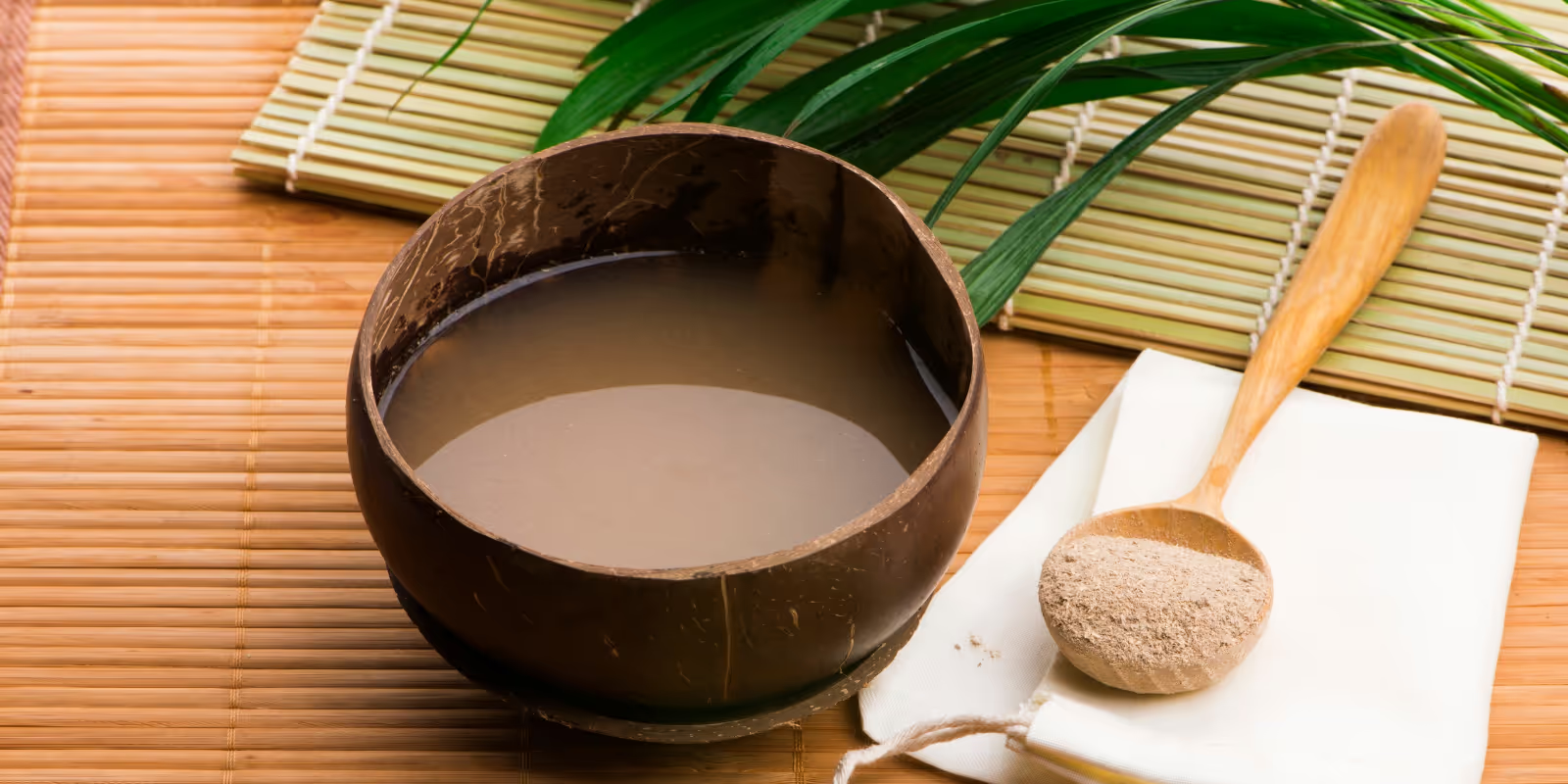
Your friend swears by it for unwinding after work. The new kava bar downtown stays packed until midnight. This root beverage from the South Pacific promises relaxation without alcohol's hangover—but then you hear something about liver damage.
What's the real story? Kava (Piper methysticum) has been consumed ceremonially for over 3,000 years across Pacific Island cultures. Now it's showing up in wellness shops, anxiety forums, and even some bars as an alcohol alternative. You deserve clear answers about whether this traditional remedy is actually safe for casual, recreational use.
Kava contains compounds called kavalactones that interact with your brain's GABA receptors—the same system targeted by anti-anxiety medications like Xanax. The result? A calm, clear-headed relaxation without cognitive impairment. Your muscles loosen. Social anxiety melts away. Yet unlike alcohol, you remain lucid.
Traditional preparation involves grinding the root and mixing it with water or coconut milk. Modern versions come as teas, capsules, tinctures, or the thick beverage served at kava bars. Effects typically kick in within 20-30 minutes and last several hours.
The experience feels distinct from alcohol. Users describe gentle euphoria, increased sociability, and physical relaxation. There's no stumbling, slurred speech, or impaired judgment—though high doses can cause drowsiness.
Pacific Islanders have consumed kava at social gatherings and spiritual ceremonies for millennia. In Fiji, Tonga, Vanuatu, and Hawaii, offering kava demonstrates respect and hospitality. This cultural context matters when evaluating safety—we're discussing a beverage with deep traditional roots, not some new synthetic compound.
The scientific investigation of kava presents a complicated narrative. Early studies looked promising. Then came alarming liver toxicity reports. Now researchers are reconsidering.
A 2003 Cochrane Database systematic review examined 11 randomized controlled trials involving 645 participants. Results showed kava significantly reduced anxiety compared to placebo, with effect sizes comparable to some prescription medications. The studies used standardized extracts over 1-24 weeks.
But here's where things got messy. Between 1990 and 2002, roughly 100 cases of liver toxicity were reported in Europe, some requiring transplants. Germany, Switzerland, France, and Canada banned kava products. The FDA issued warnings.
Then the story shifted. A 2011 World Health Organization review reexamined the evidence and found the risk "extremely small" when traditional preparations are used properly. Many reported cases involved patients taking other medications, drinking alcohol, or using poor-quality kava products.
Research published in Phytotherapy Research in 2016 suggested that traditional water-based preparations might be safer than alcohol or acetone extracts. The different extraction methods pull out different compounds. Some problematic cases involved supplements using potentially toxic parts of the plant—like leaves and stems—rather than just the root.
A 2020 study in the journal Nutrients tracked liver enzymes in regular kava users and found no significant elevation after three months of use. Another investigation published in Drug Safety in 2021 analyzed adverse event reports and concluded that when quality-controlled root preparations are used, serious liver injury remains rare.
The National Institutes of Health notes that well-designed clinical trials haven't replicated the severe liver problems seen in early case reports. This raises questions about product quality, contamination, or patient-specific risk factors.
Current evidence suggests recreational kava use carries low but not zero risk. The challenge? Distinguishing between inherent risks from the plant itself versus problems from adulteration, poor processing, or individual susceptibility.
Kava studies face several methodological hurdles that complicate straightforward safety conclusions.
Most clinical trials lasted only weeks to months. We lack robust long-term data on people drinking kava regularly for years. Traditional populations provide some reassurance, but their consumption patterns and genetic backgrounds differ from Western users.
Product standardization poses huge problems. Commercial kava supplements vary wildly in kavalactone content, plant parts used, and extraction methods. Studies testing one product can't necessarily speak to another's safety.
The liver toxicity cases remain puzzling. Were they caused by contaminated products? Drug interactions? Genetic susceptibility? Alcohol or acetone extraction methods? No smoking gun has been definitively identified.
Small sample sizes plague many studies. It's difficult to detect rare adverse events without tracking thousands of users over extended periods.
Additionally, most research examined kava for anxiety treatment rather than recreational use. These contexts differ. Medical patients might take kava daily at specific doses. Recreational users might consume it sporadically or in larger social quantities.
Publication bias can't be ignored. Dramatic adverse events get reported and published. Millions of uneventful kava drinking sessions never make it into medical literature.
Despite these limitations, the overall safety profile looks reasonably encouraging for occasional recreational use—with important caveats we'll explore.
Medical institutions take a cautious but not prohibitive stance. The National Center for Complementary and Integrative Health acknowledges kava's traditional use and anti-anxiety effects but emphasizes the liver risk uncertainty.
People with liver conditions, those taking medications metabolized by the liver, and anyone drinking alcohol regularly should avoid kava completely. They recommend limiting use to no more than three months and taking periodic breaks.
Kava can cause mild side effects like headache, dizziness, and digestive upset even in people without serious reactions. They emphasize purchasing from reputable sources that use only the root.
Most physicians don't recommend kava as a first-line anxiety treatment when proven therapies exist. However, they're increasingly recognizing it as a reasonable option for occasional stress relief in healthy individuals who can't or won't use conventional medications.
Concerns extend beyond the liver. Kava may interact with sedatives, anti-anxiety medications, and anesthesia. Case reports describe excessive sedation when combined with benzodiazepines. Anyone scheduled for surgery should stop kava at least two weeks beforehand.
Driving or operating machinery while under kava's influence isn't advised, though impairment appears less severe than alcohol.
Integrative medicine practitioners often embrace kava more enthusiastically, viewing it as a valuable botanical alternative to pharmaceutical anxiety treatments.
Dr. Andrew Weil has long advocated for kava's appropriate use, emphasizing that millions of Pacific Islanders have consumed it safely for centuries. He recommends traditional water-based preparations over alcohol extracts.
The American Botanical Council published extensive analysis concluding that the liver scare was overblown and likely related to non-traditional preparations or adulteration. They advocate for proper sourcing and preparation methods.
Herbalists emphasize kava's "noble" varieties—cultivated strains traditionally used for drinking rather than ornamental or wild types. Noble kavas contain higher proportions of beneficial kavalactones and lower amounts of potentially problematic compounds.
Functional medicine doctors often suggest kava for patients seeking non-pharmaceutical stress management, particularly those who've struggled with benzodiazepine dependence. Unlike anti-anxiety medications, kava doesn't appear to cause physical dependence or withdrawal.
This perspective highlights appropriate context and quality. They're not advocating unlimited consumption of any random kava product. Instead, they promote informed use of traditionally prepared, quality-controlled noble kava varieties.
Some practitioners combine kava with other adaptogens like ashwagandha or holy basil for synergistic stress relief. However, combining multiple herbs increases complexity and potential interaction risks.
Social media tells a more enthusiastic story. Kava bars are trendy hangouts promoted by lifestyle influencers as healthy alternatives to traditional drinking spots.
Instagram wellness accounts like @plantbasedjane share posts about "sober curious" culture and kava's role in alcohol-free socializing. These posts garner thousands of likes from people seeking relaxation without intoxication.
YouTube creators document their first kava experiences, often with glowing reviews. Comments sections fill with testimonials: "Changed my anxiety management completely," "Better than any prescription I tried," "Finally something that works without side effects."
TikTok videos showing kava preparation and effects have millions of views under hashtags like #kavalove and #kavaculture. Young adults particularly gravitate toward kava as part of wellness-focused lifestyles.
However, some vocal critics exist. Many users have described their experience "dermo" (dry, scaly skin) from heavy use. Others report digestive issues or disappointing effects. Some users warn about vendors selling poor-quality products.
Podcast hosts like Joe Rogan have discussed kava's effects and the liver controversy, usually landing on "probably fine in moderation" conclusions that mirror many listeners' intuitions.
The sober-curious movement embraced kava as a cornerstone beverage. Influencers promoting alcohol-free lifestyles position kava bars as safe social spaces. This framing resonates with younger generations increasingly questioning drinking culture.
What's largely absent from influencer discussions? Nuanced risk communication. Most posts either dismiss safety concerns entirely or don't mention them. The liver toxicity history rarely appears in promotional content.
These perspectives aren't as conflicting as they initially appear. Everyone agrees on several key points.
Quality matters immensely. Traditional noble varieties prepared properly using root material carry different risk profiles than random supplements using unknown plant parts and extraction methods.
Moderation is crucial. Even kava's biggest proponents don't suggest daily heavy use. Traditional consumption was intermittent and ceremonial, not constant.
Individual health status changes the equation. Someone with existing liver disease faces different risks than a healthy young adult. Context matters.
The liver toxicity scare, while alarming, affected a tiny fraction of users—and many cases had confounding factors. This doesn't mean the risk is zero, but it's not the guaranteed danger some warnings suggest.
Kava offers real anxiolytic effects. This isn't placebo or wishful thinking. The kavalactones genuinely interact with neurotransmitter systems. Both traditional use and clinical trials confirm measurable relaxation effects.
Here's where synthesis helps: Recreational kava use in healthy adults, using quality traditional preparations, consumed occasionally rather than daily, appears to carry relatively low risk based on available evidence. That's not a guarantee of perfect safety, but it's reasonable risk assessment.
The people who should absolutely avoid kava? Those with liver conditions, anyone taking hepatotoxic medications, pregnant or nursing women, people with Parkinson's disease (kava may worsen symptoms), and anyone drinking alcohol regularly.
For everyone else, informed moderate use represents a personal choice rather than obvious danger.
Several research directions could clarify remaining uncertainties and improve safety recommendations.
Genetic susceptibility testing might identify whether certain populations metabolize kavalactones differently. Pharmacogenomic analysis could reveal if specific gene variants predict liver sensitivity, helping individuals assess personal risk before trying kava.
Long-term observational studies tracking regular kava bar patrons over years would provide real-world safety data. Current research mostly involves clinical trial participants taking standardized doses. How do recreational users who drink kava socially several times monthly fare over five or ten years?
Comparative toxicology research examining different cultivars, extraction methods, and plant parts could establish which preparations are safest. Not all kava is created equal. Rigorous analysis might vindicate traditional methods while identifying problematic practices.
Interaction studies exploring how kava combines with common medications would help people make informed decisions. We know some interactions exist, but comprehensive screening across drug classes remains incomplete.
Mechanism research investigating exactly why some people experienced liver toxicity while millions didn't would solve a persistent mystery. Understanding the biological pathway—whether it involves immune reactions, metabolic quirks, or contamination—would inform better safety protocols.
Cultural consultation and traditional knowledge integration could ensure research respects and learns from Pacific Islander expertise. Indigenous communities have sophisticated understanding of kava cultivation, preparation, and appropriate use that Western science is only beginning to appreciate.
Kava offers genuine relaxation effects backed by both traditional use and clinical research. Millions of people across Pacific Island cultures have consumed it safely for thousands of years.
The liver toxicity scare that emerged in the early 2000s appears to have been primarily linked to poor-quality products, non-traditional extraction methods, or individual risk factors. Subsequent research suggests the risk is quite low when quality noble kava root is prepared traditionally.
That said, kava isn't risk-free. People with existing liver conditions, those taking certain medications, and anyone who drinks alcohol regularly should avoid it. Mild side effects like headache or upset stomach affect some users.
For healthy adults seeking occasional stress relief, quality matters enormously. Purchase from reputable vendors who sell noble varieties and use only the root. Traditional water-based preparations appear safer than alcohol or acetone extracts.
Moderation remains key. This isn't something to consume daily in large quantities. Traditional use was intermittent, not constant.
Listen to your body. If you experience unusual fatigue, yellowing skin, dark urine, or abdominal pain, stop using kava immediately and consult a doctor.
Recreational kava offers a reasonable alcohol alternative for appropriate users who choose quality products and consume mindfully. It's not a miracle cure, but it's also not the danger some early warnings suggested.
Credibility Rating: 6/10
LyfeiQ Score: 6/10
Kava represents a well-studied botanical with legitimate anxiolytic properties supported by clinical trials, but complicated by hepatotoxicity concerns that remain incompletely understood. A 2003 Cochrane systematic review concluded kava extract is effective for treating anxiety compared to placebo, with effect sizes rivaling some prescription medications. Multiple subsequent studies have replicated these findings.
The hepatotoxicity controversy centers on approximately 100 cases of liver damage reported in Europe between 1990-2002, leading to temporary bans in several countries. However, investigation revealed most cases involved: (1) products containing stems and leaves (which contain hepatotoxic alkaloids, unlike traditional root-only preparations), (2) alcohol or acetone extracts rather than water-based traditional preparations, (3) concurrent use of hepatotoxic medications, or (4) pre-existing liver conditions. Traditional Pacific Island populations consuming properly prepared kava show no elevated liver disease rates.
Current evidence suggests that noble kava varieties prepared as aqueous (water-based) extracts from peeled roots pose minimal hepatotoxicity risk for individuals with healthy livers who avoid alcohol and hepatotoxic medications. The German Federal Institute for Drugs and Medical Devices lifted their ban in 2015 after reassessment.
For individuals considering kava: Choose products certified as "noble kava" from reputable vendors who test for stem/leaf contamination. Avoid products that use alcohol or acetone extraction. Do not combine with alcohol or acetaminophen. Discontinue use if experiencing yellowing skin/eyes, dark urine, or unexplained fatigue. Obtain baseline liver function tests if planning long-term use. Kava shows promise as a non-addictive anxiolytic alternative, but quality control and medical monitoring are essential.
Fu, Peter P., et al. “Toxicity of Kava Kava.” Journal of Environmental Science and Health, Part C, vol. 26, no. 1, 13 Mar. 2008, pp. 89–112, www.ncbi.nlm.nih.gov/pmc/articles/PMC5868963/, https://doi.org/10.1080/10590500801907407.
Kavahana. “Kava Industry Primed for Expansion: Comprehensive Studies by World Health Organization (WHO) and Codex Alimentarius Commission Confirm Kava Does Not Cause Liver Damage.” Yahoo Finance, 14 Dec. 2023, finance.yahoo.com/news/kava-industry-primed-expansion-comprehensive-150000179.html?guccounter=1. Accessed 14 Nov. 2025.
Plaskova, Anna, and Jiri Mlcek. “New Insights of the Application of Water or Ethanol-Water Plant Extract Rich in Active Compounds in Food.” Frontiers in Nutrition, vol. 10, 2023, p. 1118761, pubmed.ncbi.nlm.nih.gov/37057062/, https://doi.org/10.3389/fnut.2023.1118761.
Smith, Katelyn, and Claudia Leiras. “The Effectiveness and Safety of Kava Kava for Treating Anxiety Symptoms: A Systematic Review and Analysis of Randomized Clinical Trials.” Complementary Therapies in Clinical Practice, vol. 33, 1 Nov. 2018, pp. 107–117, www.ncbi.nlm.nih.gov/pubmed/30396607, https://doi.org/10.1016/j.ctcp.2018.09.003.