

November 5, 2025
8 min
Nathan J
December 5, 2025
8 min
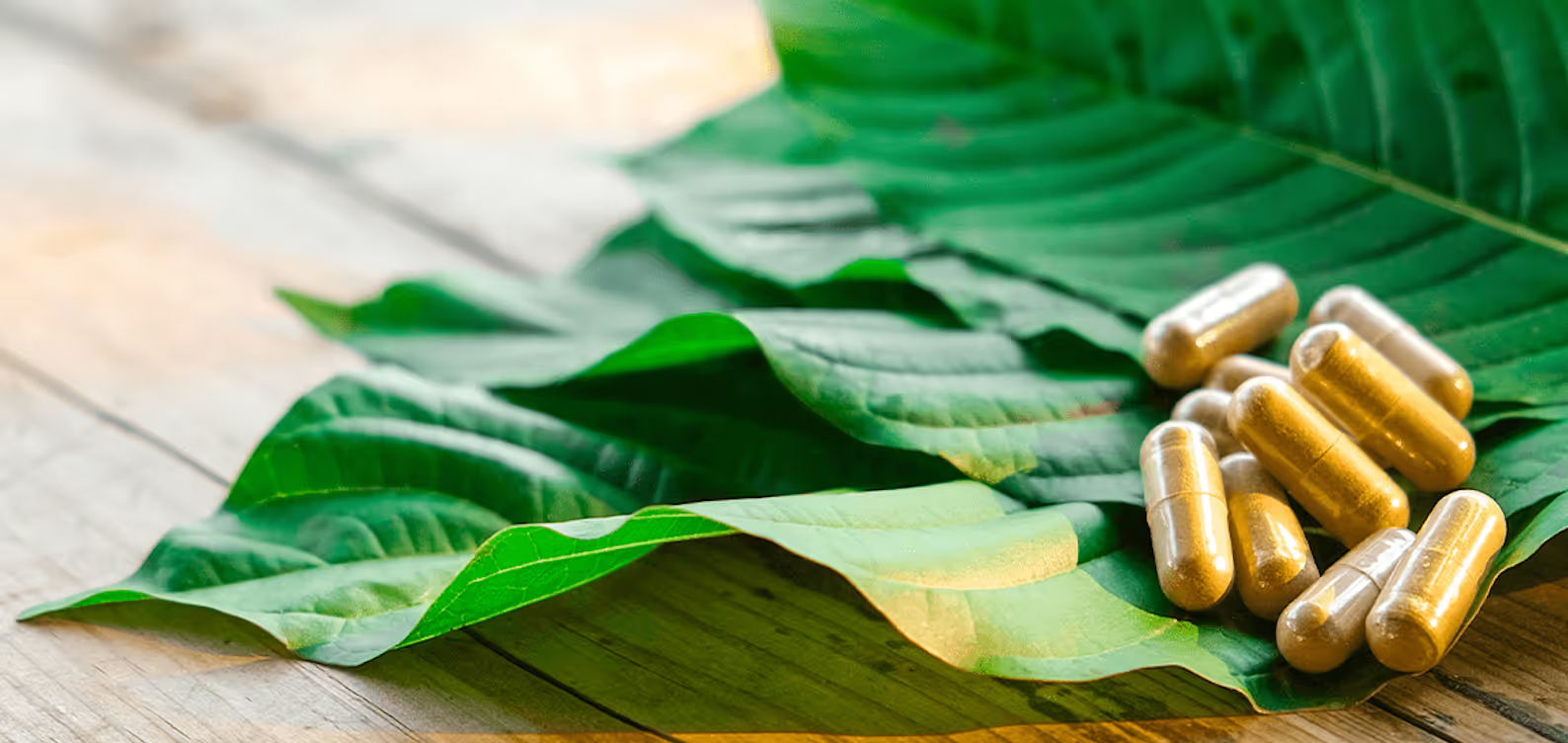
A Southeast Asian tree leaf has sparked one of the most contentious debates in modern medicine. Kratom—sold legally in most U.S. states as a dietary supplement—sits in an unusual position. Some people swear it saved their lives. Others warn it destroyed them. Medical researchers remain divided. And federal agencies can't seem to decide whether it's a dangerous drug or a potential therapeutic tool.
This isn't your typical supplement controversy. Millions of Americans use kratom regularly, often buying it at smoke shops, online vendors, or even some grocery stores. Yet the FDA has issued warnings about deaths linked to kratom, while advocates argue those warnings ignore crucial context. Understanding this plant requires looking past the headlines at what science actually shows.
Kratom (Mitragyna speciosa) contains over 40 alkaloid compounds, but two dominate its effects: mitragynine and 7-hydroxymitragynine. These compounds interact with opioid receptors in the brain, but they work differently than traditional opioids like morphine or oxycodone. A 2020 study in the British Journal of Pharmacology found that mitragynine acts as a partial agonist at mu-opioid receptors rather than a full agonist. That distinction matters. Full agonists like heroin flood receptors with activity, creating intense euphoria and respiratory depression. Partial agonists produce milder effects with a ceiling—beyond a certain dose, increasing the amount doesn't increase the effect proportionally. Johns Hopkins Medicine researchers conducted a survey-based study in 2019 examining kratom use patterns among 2,798 users. They found that most people used kratom to manage pain, anxiety, or opioid withdrawal symptoms. The majority reported taking 1-3 grams per dose, with effects lasting 2-5 hours. Importantly, the study documented a low rate of adverse events when kratom was used alone, but significantly higher risks when combined with other substances.
Pain management represents kratom's most commonly cited benefit. A 2021 systematic review in the journal Pain Medicine analyzed available clinical and preclinical evidence. Animal studies consistently showed analgesic effects comparable to some prescription pain medications. However, human clinical trials remain limited. The same study found that 91% of respondents reported using kratom for pain relief, with 67% saying it worked "very well" or "moderately well." Self-reported efficacy doesn't equal clinical proof, but it suggests something worth investigating further. For opioid withdrawal, preliminary evidence looks promising. A 2018 case series in the Journal of Addiction Medicine followed five patients using kratom to manage opioid withdrawal. All five reported significant symptom reduction without requiring hospitalization or medication-assisted treatment. The researchers noted this warranted controlled clinical trials.
The FDA has linked kratom to at least 44 deaths between 2011 and 2017, according to their public health advisory. However, most of those cases involved polydrug use—kratom combined with opioids, benzodiazepines, or other substances. Only a handful involved kratom alone, and those cases remain contested due to limited toxicological analysis.
A 2019 study in the Annals of Internal Medicine documented liver injury in eight patients who used kratom products. Some cases were severe, requiring transplantation. The researchers couldn't definitively establish causation because patients used various kratom products from different sources, raising questions about contamination or adulteration.
Dependence and withdrawal present real concerns. A 2018 study in Drug and Alcohol Dependence found that regular kratom users developed tolerance and experienced withdrawal symptoms upon cessation. Symptoms included irritability, muscle aches, insomnia, and mood changes—similar to but generally milder than opioid withdrawal. The study noted that withdrawal severity correlated with dose and duration of use.
Respiratory depression—the primary cause of opioid overdose deaths—appears rare with kratom alone. A 2020 pharmacological study in the Journal of Medicinal Chemistry found that 7-hydroxymitragynine produced significantly less respiratory depression than morphine at equivalent analgesic doses in animal models. However, combining kratom with central nervous system depressants increases this risk substantially.
Kratom occupies legal limbo that complicates research. It's not FDA-approved as a drug, not federally scheduled as a controlled substance, but listed as a "drug of concern" by the DEA. This ambiguous status makes securing research funding difficult and navigating regulatory approval processes complex. Most existing studies rely on self-reported survey data rather than controlled clinical trials. People using kratom recreationally or for self-medication may not accurately recall doses, frequencies, or concurrent substance use. Memory bias and social desirability bias skew results. Kratom's chemical complexity poses methodological challenges. Different strains contain varying alkaloid concentrations. Processing methods alter potency. And most users consume whole leaf powder or extracts rather than isolated compounds, making dose standardization nearly impossible.
The political dimension can't be ignored. Kratom advocacy groups push back against regulation, sometimes overstating benefits or minimizing risks. Simultaneously, some public health officials may overemphasize dangers without acknowledging potential therapeutic value. This polarization doesn't serve science or public health.
The American Kratom Association estimates that 10-16 million Americans use kratom, yet the medical establishment remains deeply skeptical. The FDA's position is unambiguous: kratom poses risks and has no proven medical benefit that outweighs those risks.
Dr. Scott Gottlieb, former FDA Commissioner, stated in 2018 that kratom "appears to have properties that expose users to the risks of addiction, abuse, and dependence." The agency has issued multiple import alerts, seizing kratom shipments at the border.
The American Academy of Family Physicians advises against kratom use, citing insufficient safety data and contamination risks. They note that patients seeking pain relief or addiction treatment have evidence-based options that don't carry kratom's uncertainties.
However, some researchers advocate for a more nuanced approach. Dr. Christopher McCurdy, a medicinal chemist at the University of Florida studying kratom's alkaloids, argues that dismissing kratom entirely ignores its potential as a harm reduction tool and possible therapeutic agent. He emphasizes the need for rigorous clinical trials rather than blanket prohibition.
Mayo Clinic toxicologists acknowledge kratom's complexity, warning patients about quality control issues while noting that some individuals report benefits. Their guidance emphasizes informed decision-making with medical supervision rather than outright prohibition.
The harm reduction community views kratom differently. Organizations like the National Harm Reduction Coalition recognize that people will seek alternatives to prescription opioids whether medical professionals approve or not. From this perspective, kratom may represent a less dangerous option for some individuals. Proponents like Dr. Marc Swogger, a psychologist at the University of Rochester who has published kratom research, argue that banning kratom could push people toward more dangerous substances. His 2019 survey study found low rates of problematic use when kratom was used alone, suggesting it might serve as an exit strategy from more harmful drugs. The integrative medicine perspective focuses on kratom's traditional use. For centuries, Southeast Asian laborers used kratom to manage pain and increase stamina during physically demanding work. Dr. Andrew Weil, founder of the University of Arizona Center for Integrative Medicine, has suggested that Western medicine should study traditional uses rather than dismiss them outright.
Addiction recovery advocates present mixed views. Some celebrate kratom as a tool that helped them escape opioid addiction without medication-assisted treatment. Others warn that they simply traded one dependence for another. The Kratom Science Podcast, run by researcher Brian Gallagher, features testimonials from both camps, emphasizing individual variation in response.
The American Association of Naturopathic Physicians takes a cautious position, noting that kratom may benefit some patients but requires quality control, appropriate dosing guidance, and medical supervision—elements currently lacking in the unregulated market.
Every perspective acknowledges that kratom affects opioid receptors and carries some level of risk. The disagreement centers on how those risks compare to alternatives and whether potential benefits justify cautious exploration.
The medical establishment prioritizes safety and proven efficacy—reasonable standards that kratom hasn't met through rigorous trials. But harm reduction advocates argue that real-world conditions matter more than ideal scenarios. If someone can't access or afford medication-assisted treatment, does kratom offer a better alternative than continued opioid use or street drugs?
The public narrative reveals a critical gap: people are making significant health decisions based on internet forums and testimonials rather than medical guidance. That's partly because many doctors dismiss kratom entirely, leaving patients to navigate this space alone.
One myth that needs addressing: "natural" doesn't mean "safe." Tobacco, cocaine, and opium are all plant-derived. Kratom's traditional use provides some reassurance about acute toxicity, but traditional use patterns differ dramatically from high-dose daily consumption of concentrated extracts.
Another misconception: kratom is either completely harmless or inevitably deadly. Reality sits between extremes. For some people, moderate kratom use may pose minimal risks. For others—especially those with liver problems, those taking certain medications, or those combining it with other substances—kratom could be dangerous.
1. Rigorous Clinical Trials Under Federal Support
The National Institute on Drug Abuse should fund controlled trials examining kratom's efficacy for pain management and opioid withdrawal. These studies need standardized products, appropriate controls, and long-term safety monitoring. Only clinical trials can move us beyond anecdotes and surveys.
2. Quality Control and Testing Standards
If kratom remains legal, implementing Good Manufacturing Practice requirements would ensure product consistency and purity. Mandatory testing for heavy metals, pathogens, and adulterants would reduce contamination risks. Several states have already enacted kratom consumer protection laws that could serve as models.
3. Physician Education and Guidance Development
Most doctors know little about kratom, leaving them unable to counsel patients effectively. Medical schools and continuing education programs should include kratom in pharmacology and addiction medicine curricula. Professional organizations could develop evidence-based practice guidelines for patients who disclose kratom use.
4. Public Health Messaging That Acknowledges Complexity
Simple "just say no" campaigns won't work with millions already using kratom. Public health messaging should honestly address both potential benefits and risks, emphasize the dangers of polydrug use, and provide harm reduction strategies for those who choose to use kratom despite warnings.
5. Exploration of Isolated Alkaloids as Therapeutic Agents
Even if whole-leaf kratom proves too variable for pharmaceutical use, isolated and modified alkaloids might offer therapeutic value with better safety profiles. Some pharmaceutical companies are already pursuing this avenue. Supporting this research could yield new pain medications without traditional opioid risks.
Kratom defies simple categorization. It's not the miracle cure enthusiasts claim, nor is it the deadly scourge some officials suggest. It's a pharmacologically active plant with genuine effects on the brain, real but still incompletely understood risks, and potential—though unproven—therapeutic benefits.
The most concerning aspect isn't kratom itself but the unregulated market. Product quality varies wildly. Dosing guidance is inconsistent. And people are using kratom to self-treat serious medical conditions without professional support. That's a recipe for harm regardless of the substance involved.
If you're considering kratom, here's what matters most: it can cause physical dependence with regular use. It interacts with other substances in potentially dangerous ways. And we don't have long-term safety data on daily use over years or decades.
For those already using kratom, harm reduction principles apply. Use the lowest effective dose. Avoid daily use if possible to minimize dependence risk. Never combine with alcohol, benzodiazepines, or opioids. Source from vendors who provide third-party lab testing. And honestly discuss your use with a healthcare provider, even if you fear judgment.
The kratom debate ultimately reflects larger tensions in American healthcare: inadequate pain management, difficult access to addiction treatment, patient autonomy versus medical paternalism, and the role of natural substances in modern medicine. Resolving these tensions requires evidence, empathy, and honest acknowledgment of what we don't yet know.
Credibility Rating: 4/10
LyfeiQ Score: 4/10
Kratom occupies scientific gray space—pharmacologically active with documented effects on opioid receptors, yet lacking rigorous human trials to establish therapeutic efficacy or long-term safety. Survey data from thousands of users suggests potential benefits for pain management and opioid withdrawal, but self-reported outcomes cannot substitute for controlled clinical research.
The most significant concerns are dependence potential (documented withdrawal syndromes comparable to mild-moderate opioid withdrawal), dramatic quality variation in unregulated products (contamination with heavy metals, pathogens, and undeclared compounds), and dangerous interactions when combined with central nervous system depressants.