November 7, 2025
6 min
Maya Q.
December 22, 2025
6 min
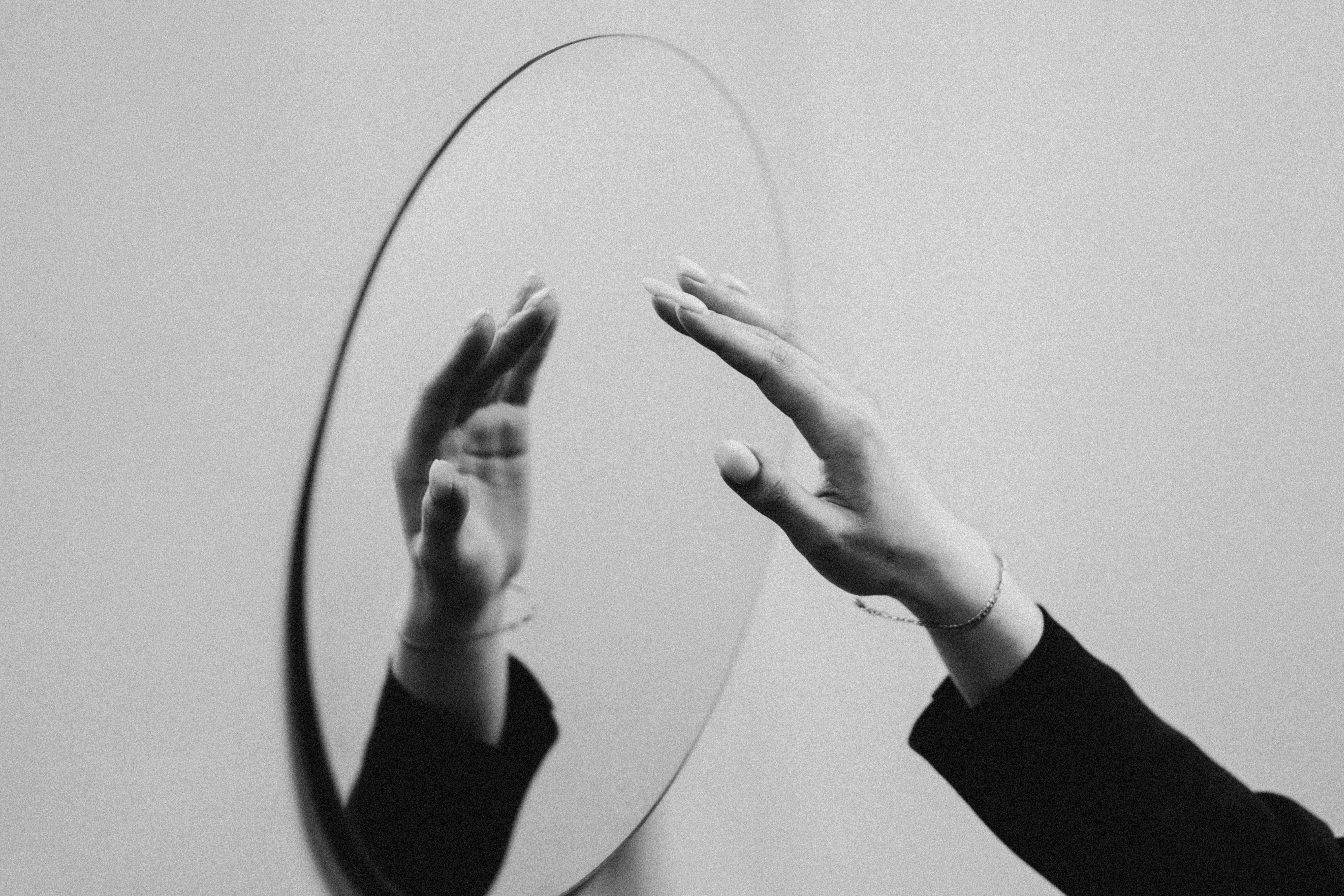
Researchers are creating something that sounds like it was plagiarized from a science fiction movie: creating living things that are built in reverse. Not back in time, but reverse on a molecular scale. These molecules would be the mirrored (or inverted) versions of their “normal” selves.
It would be as if we can create a mirror version of the whole world and its organisms. This field, called mirror biology, is attracting some attention from scientists worldwide. But, it's also raising some very real ethical questions regarding whether or not this is a field that should be explored.
Every DNA molecule, every protein, every molecule that constitutes life in you is "handed." Think about it like your hands; they look the same, but they're mirror images of each other. Your left hand cannot fit into a right hand glove, even if you tried to force it to. The molecules making up living things work in a similar way. The amino acids building proteins in your body are all "left-handed." The sugars in your DNA are all "right-handed."
This does not all happen by chance, as each molecule adopts a specific “handedness” that is needed for its survival. This phenomenon is called “chirality” and is a topic that chemists are always exploring.
Mirror biology does pose a crazy idea: what if we built life with the opposite hand? What if we built proteins out of right-handed amino acids and DNA out of left-handed sugars? Then this would result in the same life as we know but mirrored, right? Well, it may not be that easy.
On the face of it, making mirror organisms seems like an interesting idea. But, there are very real reasons and consequences of why researchers are still contemplating this idea.
As we currently know it, the idea of creating mirror molecules can revolutionize medicine. Your body can break down the molecules within medicine quite easily using the body’s natural enzymes. However, these enzymes are made naturally and synthesized in a way that can only identify the natural, “left or right” molecules. A mirror drug would be made from the opposite hand medicine, which would make it practically invisible to these enzymes. This means that the drug will last longer in your body, so you could potentially have to take fewer doses or less of the drug to get the same effect.
Mirror molecules can potentially be used to cure diseases caused by misfolded proteins. If proteins are misfolded, they clump together (aggregate) and cause problems. This happens in Alzheimer's, Parkinson's, and many other diseases. Mirror molecules could potentially block these toxic clumps without affecting your normal proteins.
Another reason would be plain scientific curiosity. Why is all Earth life one-handed? Is there a certain reason or was it all a coincidence? Building mirror life may provide insight into simple questions about how life began and whether it could have evolved another way.
Many research groups aren't quite weighing in on mirror biology yet because it's still hard to grasp. Scientists haven't created actual mirror organisms, just isolated mirror molecules. In fact, it may be nearly impossible to create mirror organisms for a multitude of reasons.
However, traditional medicine does use some mirror chemistry principles. Researchers are able to simply create mirror versions of short protein strands called peptides. Mirror peptides are hypothesized to be stable in the body and are being studied as potential drugs.
It's unknown if the job is possible as it has many “ifs” at the moment. It's hard enough to create a single mirror protein, let alone a single simple organism. Creating a complete mirror cell, with all the thousands of different proteins and molecules working in concert, has never been done before. To do so, one must build a complete mirror replica of the cellular apparatus that copies DNA, makes proteins, and does everything the job of life requires.
Most scientists have in mind more direct applications of mirror molecules, like longer-lived drugs or diagnostic reagents. Whole mirror organisms do not seem to be of interest to scientists.
In advanced research centers, mirror biology is a fascinating horizon and a serious problem. A research team recently published a detailed technical report examining the possibility and risk of engineering mirror bacteria. Their conclusion is that we could possibly engineer mirror bacteria, but should we?
Your body recognizes the invaders through their molecular shapes or signals. But mirror bacteria would have completely inverted molecules. This means your antibodies, which are made up of normal left-handed amino acids, would not possibly grasp mirror proteins correctly. Your immune cells would not recognize mirror bacteria as a threat which can lead to some serious diseases.
This implies a disturbing possibility. A lab-escaped mirror bacterium can infect animals, plants, or humans and not trigger usual immunity responses. It may spread uncontrolled because nothing in nature has had a reason to fight back mirrored life.
Some scientists say this is too cautious. They say mirror organisms would have their own problems. They wouldn't be able to digest regular food since their mirror enzymes wouldn't digest regular, left-handed nutrients. They would require a mirror ecosystem to live. Others reply that we can't know for certain until we attempt it, and we should not run any risks with an attempt.
The scientific community is split on the perception of mirror biology as a powerful research instrument that needs to be treated with diligent safety protocols versus the view that the dangers outweigh any potential advantages.
Mirror biology has not even been in the minds of people yet. It's too science and is still too theoretical for most people to be concerned with or excited about.
But there is also uncertainty since we're unsure if we really need this. Inserting artificial beasts that nature systems cannot even interact with sounds like asking for disaster. The history of introducing new species to ecosystems, even healthy ones, is often filled with chaos.
These three viewpoints have an interesting pattern.
What ties all of these opinions together is doubt. We genuinely have no idea what would happen if mirror life were to escape out into the wilderness. We have no idea whether mirror animals would automatically thrive outside of highly controlled lab settings. We have no idea whether the health benefits would materialize or whether older, more traditional approaches would be as effective.
The argument is not so much whether or not mirror biology is possible. Most people believe that it probably is, assuming enough time and money are available. The argument is whether or not we should be pursuing it, and if so, when and how.
Something is for sure: if scientists go ahead and create mirror organisms, they will need robust safety protocols, transparent communication with the public, and global cooperation on regulation. This is not something one laboratory or country should or even can be doing in secret.
Today, mirror biology is mostly in the form of research papers and specialty laboratories. Assembling single mirror molecules is established science and is a safe practice.
Closer on the horizon are mirror peptides and mirror drugs. These are simpler to manufacture than whole organisms and offer real medical benefits without the environmental risk. They might cure diseases, deliver drugs more effectively, or become new research tools.
Whether or not we'll be viewing real mirror bacteria or other mirror organisms is partly a function of how the scientific community resolves the safety issue. Some scientists are advocating a voluntary moratorium on developing mirror organisms until we have a better idea of the risks involved. Others believe that benefits outweigh careful, controlled research with optimal safety measures.
For now, mirror biology is a great example of how far science has come and how far it demands in return. We have the data to potentially create life in reverse, but data alone does not tell us if we should or not. We hoped you learned something new!
Mainstream Medical: Focused on practical applications of mirror molecules in drug development. Cautiously optimistic about mirror peptides and other tools, but not actively pursuing full mirror organisms. Limited public guidance available since this is still mostly theoretical.
Alternative/Scientific Frontier: Split between excitement about research possibilities and serious concern about safety. Many researchers acknowledge the potential but argue for strict oversight or even a moratorium on creating mirror organisms until risks are better understood.
Public/Influencer: Limited awareness, but generally cautious when informed. The concept triggers instinctive unease about creating life incompatible with natural ecosystems. More questions than enthusiasm.
Credibility: 4/5 - The science is real and peer-reviewed. Mirror molecules exist and are being researched. The concerns about safety are taken seriously by experts in the field.
Benefit Potential: 3/5 - Mirror drugs could offer real advantages. Full mirror organisms have theoretical benefits but face enormous technical and safety hurdles.
Risk Level: 3/5 - Individual mirror molecules pose minimal risk. Mirror organisms could pose ecological and health risks that are difficult to predict or control.
Applicability: 2/5 - This technology is years or decades away from affecting your daily life. Current applications are limited to specialized research.
Mirror Biology scores a 3 out of 10 on the LyfeIQ scale for real-world credibility and applicability from an evidence-based risk/benefit perspective at this time, based on the current state of research showing limited medical applications, major technical hurdles, split scientific opinion, and grave environmental risks.
Mirror biology is legitimate science with both genuine potential and real concerns. It's not something you need to worry about today, but it's worth watching as research develops. The most important thing may be ensuring that decisions about creating mirror life are made transparently, with input from diverse experts and the public.
Adamala, Katarzyna P., et al. Technical Report on Mirror Bacteria: Feasibility and Risks. 2024.
Adamala, Katarzyna P., et al. “Confronting Risks of Mirror Life.” Science, vol. 386, no. 6728, 12 Dec. 2024, https://doi.org/10.1126/science.ads9158.
Backman, Isabella. “Q&A: How “Mirror Bacteria” Could Take a Devastating Toll on Humanity.” Yale School of Medicine, 19 Dec. 2024, medicine.yale.edu/news-article/qanda-how-mirror-bacteria-could-take-a-devastating-toll-on-humanity/.
Hunt, Katie. “Scientists Warn of “Unprecedented” Risks of Research into Mirror Life.” CNN, 16 Dec. 2024, www.cnn.com/2024/12/16/science/mirror-bacteria-research-risks.
Kubota, Taylor. “A New Report Warns of Serious Risks from “Mirror Life.”” Stanford.edu, Stanford University, 2024, news.stanford.edu/stories/2024/12/potential-risks-of-mirror-life.
“Mirror Life Worries.” Science.org, 2025, www.science.org/content/blog-post/mirror-life-worries, https://doi.org/10.1126/science.zt2f2ak. Accessed 9 Oct. 2025.
Peplow, Mark. “How Should “Mirror Life” Research Be Restricted? Debate Heats Up.” Nature.com, 15 Sept. 2025, www.nature.com/articles/d41586-025-02902-2, https://doi.org/10.1038/d41586-025-02902-2.
“Scientists Call for Discussion about “Mirror Life.”” Wyss Institute, 18 Dec. 2024, wyss.harvard.edu/news/researchers-call-for-global-discussion-about-possible-risks-from-mirror-bacteria/.
Sophia Friesen. ““Mirror Life” Is Still a Hypothetical. Here’s Why It Should Probably Stay That Way.” University of Utah Health | University of Utah Health, 12 Dec. 2024, healthcare.utah.edu/newsroom/news/2024/12/mirror-life-still-hypothetical-heres-why-it-should-probably-stay-way.