

September 30, 2026
9 min
Kenneth D
July 20, 2026
11 min
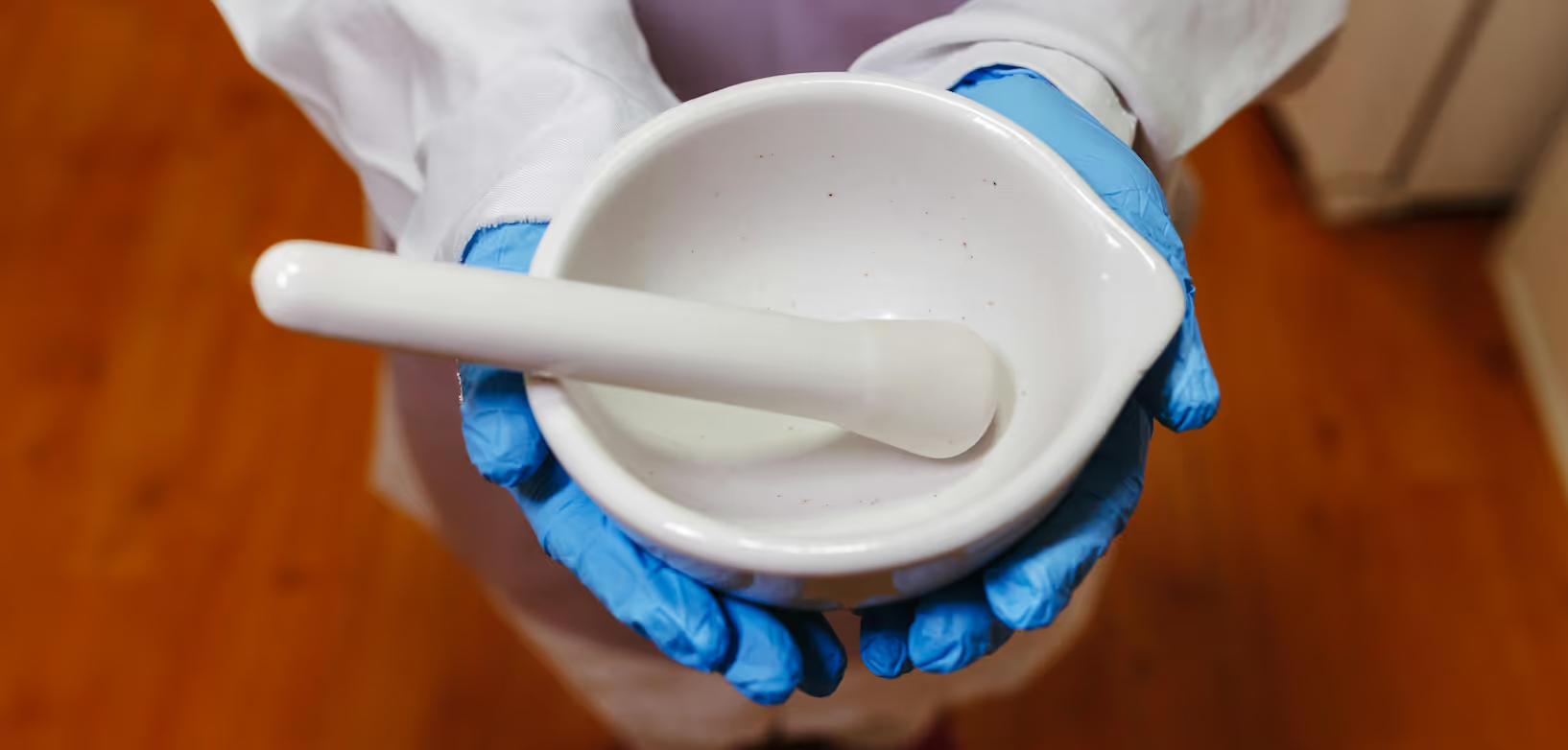
The FDA has received over 215 adverse event reports from people using compounded versions of GLP-1 medications like semaglutide (Ozempic, Wegovy) and tirzepatide (Mounjaro, Zepbound). Some required hospitalization. The agency estimates that dosing errors with these unregulated alternatives may be linked to approximately 10 deaths and 100 hospitalizations.
When drug shortages hit in 2022, compounding pharmacies legally stepped in to fill the gap. But what started as a medical necessity became a billion-dollar shadow industry—one that continues operating even after shortages ended. Here's what the medical literature reveals about compounded weight-loss drugs and why federal regulators are sounding alarms.
Pharmaceutical compounding serves legitimate purposes. When patients can't swallow pills, need preservative-free formulations, or require pediatric doses not commercially available, compounding pharmacies customize medications to meet those needs.
Federal law allows these pharmacies to operate without FDA approval under specific conditions. They must be state-licensed. They can't compound copies of FDA-approved drugs unless those drugs are in shortage. And they should create medications only for patients with documented medical needs that commercial products don't address.
When Ozempic and Wegovy shortages hit in 2022—driven by explosive demand after social media popularized them for weight loss—compounding pharmacies got legal cover to produce semaglutide alternatives. Telehealth companies, medical spas, and wellness clinics jumped in. By 2024, a billion-dollar market had emerged, with online platforms advertising "compounded semaglutide" for $200-400 monthly versus $1,000+ for brand-name versions.
The FDA ended the shortage designation for semaglutide in February 2025 and tirzepatide in October 2024. That should've shut down compounded alternatives. Instead, many pharmacies kept selling, exploiting regulatory gray zones and state-by-state enforcement gaps.
A 2021 systematic review in the Journal of Medical Toxicology examined 30 years of U.S. pharmaceutical compounding errors. Researchers found predictable patterns: contamination (bacterial, fungal, toxic), suprapotency (too much active ingredient), and subpotency (too little). The 2012 fungal meningitis outbreak from contaminated compounded methylprednisolone killed 64 people and infected 753. That tragedy led to the Drug Quality and Security Act in 2013, but enforcement remains patchy across state lines.
FDA-approved Ozempic and Wegovy contain semaglutide base—the pure active ingredient rigorously tested in clinical trials involving thousands of patients. Many compounded versions use semaglutide sodium or semaglutide acetate instead. These salt forms are chemically different compounds that have never been tested in humans. The FDA's position is unambiguous: "Products containing these salts, such as semaglutide sodium and semaglutide acetate, have not been shown to be safe and effective." There's no legal basis for compounding drugs with semaglutide salts under federal requirements.
Why would compounding pharmacies use salts instead of base? Cost and availability. Novo Nordisk—the company that makes Ozempic and Wegovy—doesn't sell semaglutide base to compounders. Salt forms are easier to source from foreign suppliers, often from unregistered facilities in China and India. Quality control is uncertain.
The University of Illinois Chicago's Drug Information Group reviewed compounding safety concerns in 2025. They noted that salt forms may not be bioequivalent to the base compound. Absorption rates could differ. Metabolism might vary. Side effects may be unpredictable. Without human trials, patients become unwitting test subjects.
Some compounded products contain fraudulent ingredients or no semaglutide at all. The FDA identified products with fake labels listing nonexistent pharmacy addresses. In one case, a batch labeled "compounded tirzepatide" turned out to be something else entirely, causing severe injection site reactions.
Brand-name Ozempic comes in prefilled pens with clear dosing. You dial 0.5 mg or 1 mg, and the pen delivers exactly that amount.
Compounded semaglutide typically arrives in multi-dose vials. Patients draw medication into syringes themselves. Instructions might say "0.5 mg" or "0.05 mL" or "5 units"—three different measurements that aren't interchangeable. Confusion between milligrams, milliliters, and syringe "units" has caused patients to inject 5 to 20 times their intended dose. The FDA received multiple reports of hospitalization from these errors. Symptoms included severe nausea, relentless vomiting, dangerous hypoglycemia (blood sugar crashes), and dehydration requiring IV fluids. Semaglutide has a week-long half-life, so overdose effects persist for days. There's no antidote.
A 2024 real-world analysis of the FDA Adverse Event Reporting System found "Incorrect Dose Administered" was the most common tirzepatide-related event, with 19,461 reports from 2022 to early 2025. That number jumped from 1,248 in 2022 to 9,800 in 2024—tracking the explosion in compounded product use. Concentration varies between compounders. One pharmacy might make 2.5 mg/mL while another uses 5 mg/mL. If patients switch pharmacies without adjusting dose calculations, they've potentially doubled their injection. Even single facilities sometimes produce multiple concentrations without clear labeling.
The American Journal of Managed Care published findings in 2025 highlighting disturbing quality issues. Some compounding facilities conducted nonsterile compounding near animal pet beds. Others used nonsterile techniques for injectable medications that go directly into bloodstreams.
Active pharmaceutical ingredients often come from unregistered foreign suppliers. The FDA's concerns focus on manufacturers operating without oversight or quality assurance. These facilities may lack Good Manufacturing Practice standards. Contamination risks are real. Potency is uncertain.
The Alabama Board of Medical Examiners noted in 2023 that some physician offices were improperly compounding semaglutide, potentially using salt forms that violate federal requirements. They purchased ingredients from non-pharmaceutical-grade sources. The Alabama Board of Pharmacy wasn't aware of any state-permitted compounding pharmacy obtaining proper pharmaceutical-grade material to compound semaglutide.
Proper storage during shipping is critical for peptide medications requiring refrigeration. But compounded products have been shipped without cold packs, potentially degrading during transit. Nobody verifies stability. Nobody tests final products for potency or contamination.
Clinical trials for FDA-approved semaglutide and tirzepatide involved tens of thousands of participants. The SURPASS and SURMOUNT trials for tirzepatide included over 10,000 patients, documenting efficacy (10-25% body weight loss), safety profiles (mainly GI side effects), and rare but serious risks.
For compounded versions? Zero randomized controlled trials exist. A 2025 systematic review in The American Journal of Managed Care concluded: "Non-FDA-approved compounded incretin products are not recommended for use due to uncertainty about their content and resulting concerns about safety, quality, and effectiveness."
Federal law doesn't require state-licensed pharmacies to report adverse events unless they're outsourcing facilities. The actual number of problems is almost certainly higher than reported figures.
Mainstream Medical Perspective
The medical establishment's position is unambiguous: stick with FDA-approved options. The American Diabetes Association issued guidance stating compounded incretin products shouldn't be used. Major medical institutions echo this stance.
From this viewpoint, compounding was appropriate during genuine shortages for patients with documented medical needs. Now that shortages have resolved, continued compounding represents illegal copying of patented medications while exposing patients to unnecessary risk for modest cost savings.
Alternative/Integrative Medicine Perspective
The Alliance for Pharmacy Compounding defended legitimate compounding during shortages, emphasizing their members follow strict protocols, source ingredients from FDA-registered facilities, and comply with state regulations. The issue isn't compounding itself—it's bad actors exploiting regulatory gaps.
This perspective maintains that Novo Nordisk's patent covers finished products, not ingredients. Multiple FDA-registered manufacturers produce semaglutide base. Legitimate compounders can access quality ingredients and produce safe medications if properly regulated.
Influencer/Public Perspective
Social media created the GLP-1 phenomenon. When people couldn't get prescriptions or afford $1,000 monthly medications, they hunted for alternatives. Telehealth companies advertised compounded semaglutide during major sporting events. Online communities shared tips for finding cheaper sources.
The public narrative focuses on access and affordability. Why should weight-loss medication cost $12,000 annually? Why do insurance companies deny coverage? But this perspective often overlooks documented risks in adverse event reports and state investigations.
All three viewpoints agree on several points: genuine drug shortages justify temporary compounding, fraudulent operations should be prosecuted, quality source materials matter, dosing clarity is essential, and affordable access to medications is important.
They diverge on acceptable risk-benefit calculations. Mainstream medicine prioritizes FDA approval for proven safety and efficacy. The compounding industry argues proper oversight enables safe personalization. The public often prioritizes affordability over regulatory concerns.
But here's the uncomfortable truth: we're conducting a massive uncontrolled experiment. Tens of thousands used compounded GLP-1s during 2023-2025. We won't know the full safety picture for years. Long-term effects, cancer risks, and whether salt forms behave identically to base compounds in human metabolism remain unknown.
The cost-evidence inverse relationship documented in research appears again here. Free lifestyle interventions (caloric restriction, exercise) have the strongest evidence for sustainable weight loss. Moderately-priced FDA-approved medications underwent rigorous testing. Cheapest compounded alternatives have the weakest evidence and highest uncertainty.
Federal preemption of large-scale compounding operations functioning as drug manufacturers would close loopholes. API source verification and tracking could document every step from raw material to patient. Standardized dosing and labeling requirements would prevent confusion. Mandatory adverse event reporting would enable early detection of safety signals.
Real-world safety studies analyzing health insurance claims data could compare outcomes between patients using FDA-approved versus compounded GLP-1s, identifying safety differences that prospective trials won't capture.
Compounded semaglutide and tirzepatide exist in a regulatory twilight zone. Some are properly made from quality ingredients. Others are fraudulent, dangerous, or chemically different from what patients expect.
The core problems are documented in FDA adverse event reports, state investigations, and medical literature. Dosing errors have hospitalized people. Salt forms haven't been tested in humans. Contamination risks are real. Quality control varies wildly.
If you're currently using or considering compounded GLP-1 medications:
Discuss FDA-approved alternatives with your doctor, including patient assistance programs that reduce brand-name costs. Weight loss medications can be genuinely life-changing, but shortcuts that compromise safety aren't worth the risk.
Credibility Rating: 3/10
While some compounding pharmacies operate responsibly, systemic quality problems, untested chemical variants, and documented adverse events make these products a risky gamble. With FDA-approved options now widely available, the case for accepting compounded alternatives' unknown risks has evaporated. If cost is prohibitive, explore patient assistance programs, alternative FDA-approved GLP-1s, or evidence-based lifestyle interventions before gambling on unregulated formulations.
Disclaimer: This article discusses compounded medications that are not FDA-approved. Compounded medications carry risks that FDA-approved alternatives do not, including unknown quality, inconsistent dosing, and untested formulations. Anyone considering GLP-1 medications should consult with a licensed healthcare provider and prioritize FDA-approved options when available. This content includes interpretation of available research and should not replace medical advice. Although the data found in this article has been produced and processed from sources believed to be reliable, no warranty expressed or implied can be made regarding the accuracy, completeness, legality or reliability of any such information. This disclaimer applies to any uses of the information whether isolated or aggregate uses thereof.