September 30, 2026
10 min
Maya Q.
July 20, 2026
5 min

You're about to hit the gym, but you're feeling a bit sluggish. You want to make the most of your workout, but you're not sure how to get that extra boost. Well, that can be solved with some pre-workout supplements. But what exactly is pre-workout, and is it really the key to unlocking your full fitness potential?
✅ What the evidence supports: Research shows that key pre-workout ingredients like caffeine, beta-alanine, creatine, and citrulline can produce measurable improvements in energy, strength, and exercise performance — particularly for high-intensity, moderate-duration activities. ⚠️ What's overstated or unsupported: Long-term safety is not well-established, most studies focus on healthy young men, and the supplement industry lacks consistent regulation — making it difficult to verify exactly what you're getting in any given product. ⚕️ LyfeiQ Score: 6/10 — Pre-workout can be a useful performance tool for healthy adults, but it's not essential and carries real risks if misused.
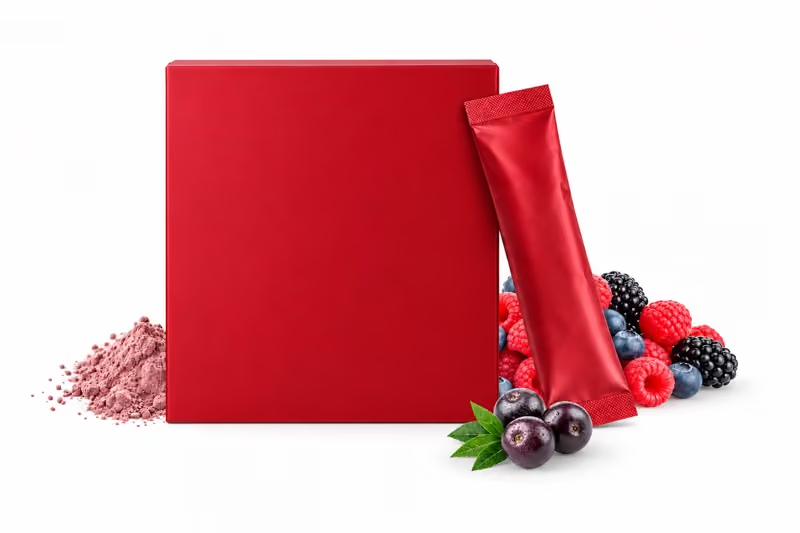
Pre-workout supplements have taken the fitness world by storm in recent years. These powdered drinks, typically mixed with water and consumed 30–60 minutes before exercise, promise to enhance energy, focus, and performance. According to a 2019 article, the most common ingredients in pre-workout supplements include caffeine, beta-alanine, creatine, and amino acids like citrulline and arginine (Jagim et al.). These are the ingredients responsible for providing your body with that extra boost during a workout.
Research suggests that these ingredients can indeed boost athletic performance. A 2019 systematic review and meta-analysis found that caffeine ingestion produces small but significant improvements in upper-body maximal strength and muscle power, though effects on lower-body strength are not clearly supported (Grgic et al.). Another review found that beta-alanine supplementation can slightly improve exercise performance, especially for moderate-length, high-intensity activities, with the biggest benefits seen for exercises that test endurance rather than speed or raw strength (Saunders et al.).
Most pre-workout supplements rely on a small set of recurring ingredients, each targeting a different aspect of performance. Caffeine is the primary stimulant, shown to increase alertness, perceived energy, and power output, though excessive intake can lead to jitters, anxiety, or sleep disruption (Institute of Medicine). Beta-alanine helps buffer muscle acidity during high-intensity exercise, which may delay fatigue but often causes a harmless tingling sensation known as paresthesia (Reimers). Creatine supports short bursts of strength and power by replenishing ATP, though it can cause water retention or mild gastrointestinal discomfort in some users (Longobardi et al.). Citrulline or citrulline malate is included to boost nitric oxide production, potentially improving blood flow and muscular endurance (Gough et al.).
Many formulas also contain branched-chain amino acids (BCAAs) or electrolytes, though their added benefit is debated when overall protein and hydration intake are adequate. Together, these ingredients aim to enhance performance, but their effectiveness depends heavily on dosage, individual response, and overall training context.
Before reaching for a scoop, it helps to understand the practical realities — including what works, what doesn't, and what to watch out for. While many ingredients have demonstrated short-term benefits, many studies have small sample sizes or use healthy young men as subjects, which may not represent the broader population. The long-term safety of pre-workout supplements is also not well-established, as most studies only look at short-term effects.
There's also the issue of variability in pre-workout formulas. With so many brands and products on the market, it's hard to know exactly what you're getting. Some supplements may contain undisclosed ingredients or higher-than-claimed doses, which can be dangerous. If you do choose to use pre-workout, look for reputable brands with transparent labels and stick to recommended doses.
The mainstream medical community tends to be cautious about pre-workout supplements. While acknowledging the potential performance benefits, they also emphasize the risks of overuse and the lack of regulation in the supplement industry.
The Mayo Clinic warns that the caffeine in pre-workout can cause side effects like jitteriness, anxiety, and sleep problems, especially in high doses (Bowman). The medical community also notes that some ingredients, like creatine, can cause digestive issues and temporary increases in body weight due to water retention. Pre-workout may also pose cardiovascular risks for individuals with underlying heart conditions, hypertension, or caffeine sensitivity.
Doctors typically recommend getting energy and nutrients from whole foods rather than supplements — prioritizing adequate sleep, hydration, and a balanced meal with complex carbohydrates and lean protein as the real foundation of performance.
In the alternative health world, pre-workout is often seen as an unnatural and unnecessary crutch. Holistic practitioners emphasize the importance of listening to your body and fueling it with natural, whole foods.
Integrative medicine experts typically caution against stimulants like caffeine for energy. Instead, they recommend natural energizers like rhodiola, ginseng, and cordyceps mushrooms — adaptogenic herbs thought to help the body cope with stress and fatigue without jittery side effects (Cleveland Clinic). Some alternative practitioners also question the safety of artificial sweeteners and colors found in many pre-workout powders, advocating for clean, minimally processed ingredients and natural alternatives like matcha green tea or beetroot juice, though evidence supporting these approaches remains largely anecdotal.
On social media, pre-workout supplements are often portrayed as essential for serious fitness enthusiasts. Many content creators promote their favorite products and attribute increased energy, focus, and workout intensity to pre-workout use, claiming it helps them feel more motivated and perform better in the gym.
At the same time, not all voices online fully endorse pre-workout. Some fitness influencers take a more cautious stance, arguing that these products are unnecessary for most individuals and that frequent use may lead to tolerance or psychological dependence over time. Safety and regulation are also common concerns, particularly given past incidents involving contaminated or mislabeled products. It's also worth noting that most influencers have some form of financial incentive to promote certain products.
The truth about pre-workout is complicated — and the gap between what's proven and what's promised is significant. There's no doubt that pre-workout can provide a short-term energy boost and potentially enhance athletic performance. But the benefits come with real risks and caveats.
The mainstream medical view emphasizes caution and moderation. While pre-workout isn't necessarily harmful at recommended doses, relying on it too heavily could lead to side effects and diminishing returns. The alternative health perspective goes a step further, questioning the need for pre-workout altogether and advocating for gentler, more natural approaches — though evidence for those alternatives remains largely anecdotal.
In the influencer world, pre-workout is a hot topic with passionate advocates on both sides. Some see it as a secret weapon for gains; others view it as an expensive placebo at best and a dangerous dependency at worst. Public opinion is similarly divided, often shaped by personal experience, brand loyalty, and the financial incentives of whoever is doing the promoting.
Several promising avenues could reshape how we understand and use pre-workout in the coming years. Advances in genetic testing and metabolic profiling may enable truly personalized formulas based on individual biology. Meanwhile, growing consumer demand for clean ingredients is pushing the market toward plant-based energizers like adaptogens and nitric oxide boosters. Perhaps most importantly, longer-term safety studies across diverse populations are still needed to establish clearer guidelines — along with tighter industry regulation and more transparent labeling practices.
Pre-workout is a tool — and like any tool, it can be used wisely or abused. When used judiciously alongside a balanced diet, smart training, and adequate rest, pre-workout may provide that extra edge to help you power through tough workouts. But it's not magic, and it's not right for everyone.
What is Pre-Workout's LyfeiQ?
Credibility Rating: 6/10
👉 Who should try this: Healthy adults who already have their sleep, nutrition, and training dialed in and want a potential short-term performance edge — particularly for high-intensity training.
👉 Who should skip this: Anyone with cardiovascular conditions, hypertension, caffeine sensitivity, anxiety disorders, or sleep difficulties. Also not recommended for those who haven't yet established a consistent training and nutrition foundation.
⚕️ LyfeiQ Score: 6/10 — Pre-workout shows real potential for boosting fitness performance, but individual responses vary and long-term safety is not fully established. If you choose to use it, stick to reputable brands with transparent labels, follow recommended doses, and always consult your doctor first.
Related: The Sweet and Salty Debate: Can Honey and Salt Boost Your Workout?
Disclaimer: This content includes personal opinions and interpretations based on available sources and should not replace medical advice. This content includes interpretation of available research and should not replace medical advice. Although the data found in this blog and infographic has been produced and processed from sources believed to be reliable, no warranty expressed or implied can be made regarding the accuracy, completeness, legality or reliability of any such information. This disclaimer applies to any uses of the information whether isolated or aggregate uses thereof.