
August 24, 2026
10 min
Maya Q.
July 20, 2026
6 min
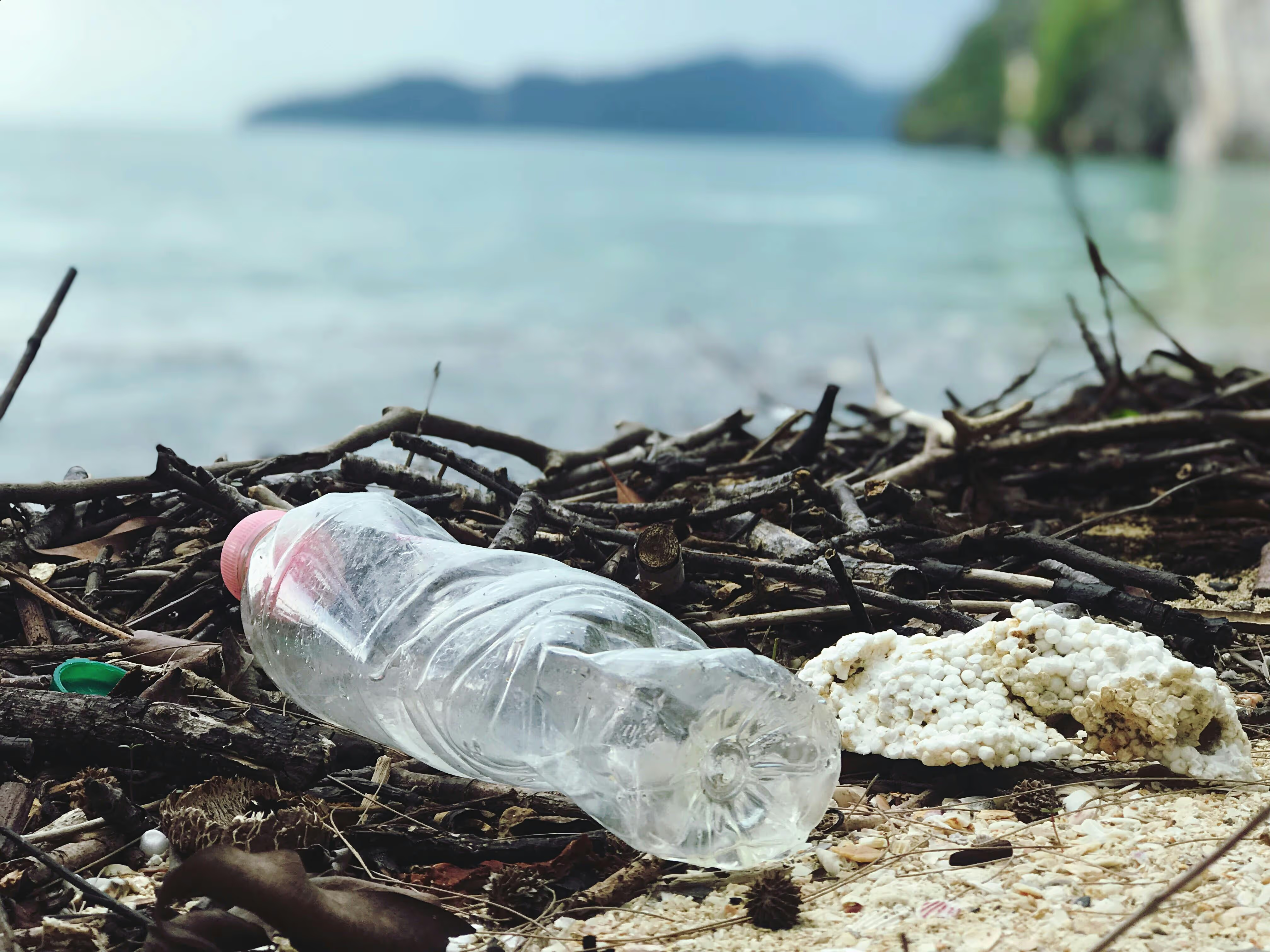
You’ve been told the plastic problem is “out there” — in the ocean, in landfills, in some future we could still prevent. The research says otherwise. The average person now consumes an estimated 39,000 to 52,000 microplastic particles every year through food alone, and these fragments have been confirmed in human blood, lung tissue, and placental samples. The question is no longer whether microplastics are inside us. It’s whether they’re doing damage.
What the evidence supports: Microplastics are ubiquitous in the environment and confirmed present in human tissues. Animal studies show inflammation, gut disruption, and oxidative stress at meaningful exposure levels.
What’s overstated or unsupported: Direct causation of specific human diseases has not been established. Many detox strategies — infrared saunas, cleansing supplements — have no scientific backing for microplastic elimination.
⚕️ LyfeiQ Score: 5/10 — Real environmental threat, but human health causation is still developing. Precautionary reduction of plastic exposure is reasonable; don’t wait for perfect evidence.
The last decade has produced an explosion of microplastics research, and the findings are consistently unsettling — even if the full human health picture remains incomplete. A landmark 2021 review in Toxics synthesized over 180 studies on marine microplastic impacts and documented effects ranging from physical entanglement in marine organisms to bacterial colonization on plastic surfaces that could facilitate novel pathogen transmission (Yang et al., 2021).
Human exposure estimates have grown more precise — and more alarming. A 2019 study in Environmental Science & Technology calculated that people consuming bottled water exclusively ingest approximately 90,000 microplastic particles per year, compared to roughly 4,000 for those who drink only tap water (Cox et al., 2019). The difference isn’t because tap water is “pure” — it’s because bottled water adds another plastic vector on top of baseline environmental exposure.
How far have microplastics traveled? Researchers have documented their presence in Arctic Ocean sea ice (Kanhai et al., 2020) and in airborne samples collected in the remote French Pyrenees mountains (Saha et al., 2025). Contamination is not a local or industrial problem — it is planetary.
The most concerning recent data comes from animal models. A 2025 literature review in PeerJ examining microplastic effects in mice found that exposure caused oxidative stress, increased intestinal permeability, immune cell infiltration, and production of pro-inflammatory factors. In mice with experimental colitis, microplastic consumption led to a more severe disease course (Zolotova et al., 2025). These are biologically plausible pathways for harm in humans — but mouse-to-human extrapolation requires caution.
Methodologically, the field is still maturing. Sampling and analysis techniques vary widely, making cross-study comparisons difficult. A 2025 article in ACS Omega proposed Raman spectroscopy as a standardized detection method (Shiwani et al., 2025), while a separate 2025 paper in Journal of Hazardous Materials: Plastics outlined methodological priorities for establishing reliable microplastic detection labs (Zhang et al., 2025). The science is catching up to the scope of the problem.
Given the evidence, practical reduction of microplastic exposure is reasonable and achievable — even before the science is fully settled. The highest-impact changes target the points where plastics most directly contact food and water:
These steps won’t eliminate exposure — microplastics are in the air we breathe and food we can’t control — but they reduce the controllable sources meaningfully. There is no validated “detox” protocol for microplastics already in the body; the focus should be on reducing ongoing intake.
Official medical and public health institutions are sounding the alarm — carefully. The World Health Organization acknowledged in 2019 that microplastics in drinking water don’t appear to pose a health risk at current levels, but simultaneously called for a crackdown on plastic pollution and significantly more research (WHO, 2019). Dr. Maria Neira, WHO’s Director of Public Health and Environment, noted the need to find out more and to stop the rise in plastic pollution worldwide.
The Mayo Clinic is actively investigating how microplastics and nanoparticles affect human biology at the cellular level (Murphy, 2024). The emerging research focus is on nanoparticles — fragments smaller than 1 micrometer — which can cross cellular membranes and potentially reach organs. This is an area where the evidence is preliminary but the biological plausibility for harm is high.
Integrative health practitioners approach microplastics through the lens of toxic burden — the cumulative load of environmental exposures the body must process. Their recommendations focus on reducing daily inputs: switching to stainless steel or cast-iron cookware, glass food storage, natural fiber textiles, and wooden utensils. The underlying premise is that chronic, low-level exposures compound over time and that reducing small, repeated contacts with plastics may lower overall toxin load.
Some holistic practitioners recommend gut microbiome support, given the emerging evidence that microplastics alter intestinal microbial composition in animal studies. Others suggest infrared saunas or detox supplements as elimination strategies. These specific interventions have no scientific evidence supporting their effectiveness for microplastic removal. The lifestyle reduction strategies, however, align with mainstream recommendations and are grounded in basic exposure logic.
Microplastics have become a significant social media topic, partly driven by emotionally resonant imagery and partly by growing personal health anxiety. On the cooking side of TikTok and Instagram, creators frequently promote stainless steel and ceramic cookware as alternatives to non-stick plastic-coated pans — which is broadly consistent with the evidence. The recommendation is sound even if some of the framing is hyperbolic.
Popular wellness creators often claim that microplastics are causing a range of chronic conditions — from hormonal disruption to cancer — without distinguishing between animal data and established human causation. This conflation of “we found plastic in the body” with “plastic is causing disease X” overstates the current evidence. More credible voices in the space, including science communicators on YouTube focused on environmental chemistry, tend to present the precautionary case without overclaiming, acknowledging that the research is concerning but not yet conclusive.
The remarkable thing about microplastics is that they’ve created rare alignment across mainstream medicine, integrative health, and the general public — all three communities agree this is a problem worth taking seriously. The disagreements are about degree and mechanism, not about whether exposure reduction is worthwhile.
Where the evidence is strong: global contamination is documented, animal toxicity data is consistent and mechanistically plausible, and human tissue presence is confirmed. Where the evidence is weak: we don’t have robust longitudinal human studies showing that a specific level of microplastic exposure causes a specific health outcome. The causal chain from “plastic in blood” to “disease X” has not been closed.
The marketing-meets-wellness complex has exploited this uncertainty in both directions. Some brands sell “microplastic detox” supplements with zero mechanistic basis. Others use microplastic anxiety to sell products that don’t actually reduce exposure in meaningful ways. The evidence-based approach is simpler and cheaper: filter your water, reduce plastic contact with food, and support policy changes that reduce production at scale.
The Precautionary Principle applies here. When a ubiquitous environmental contaminant shows consistent toxicity in animal models and is confirmed present in human tissue, waiting for definitive human causation studies before acting is not neutral — it is a choice to continue exposure. Reasonable precautionary action while research advances is the rational position.
The most important near-term research priorities are longitudinal human epidemiological studies tracking health outcomes against measured microplastic exposure levels — these are just beginning to emerge. Researchers are also investigating nanoparticles specifically, which may pose higher risks than larger microplastic fragments due to their ability to penetrate cellular barriers. On the solutions side, biodegradable polymer alternatives and bioremediation strategies (including bacterial degradation of plastics) represent promising but early-stage directions. Standardized detection methods, such as Raman spectroscopy protocols, will enable more comparable data across research groups worldwide.
Credibility Rating: 5/10
👉 Who should try this: Anyone looking to reduce microplastic exposure should start with the controllable sources — filtered tap water instead of bottled, and avoiding heating food in plastic. These are low-cost, evidence-aligned changes.
👉 Who should skip this: Expensive detox protocols and unproven supplements marketed specifically for microplastic elimination have no scientific support. Save your money.
⚕️ LyfeiQ Score: 5/10 — Microplastics are a real and legitimate environmental health concern, but human causation data is still maturing. The rational move is precautionary reduction — filter your water, reduce plastic food contact, and support systemic change — without waiting for perfect evidence.
Disclaimer: This content includes personal opinions and interpretations based on available sources and should not replace medical advice. This content includes interpretation of available research and should not replace medical advice. Although the data found in this blog and infographic has been produced and processed from sources believed to be reliable, no warranty expressed or implied can be made regarding the accuracy, completeness, legality or reliability of any such information. This disclaimer applies to any uses of the information whether isolated or aggregate uses thereof.