August 5, 2026
7 min
Kenneth D
July 20, 2026
11 min
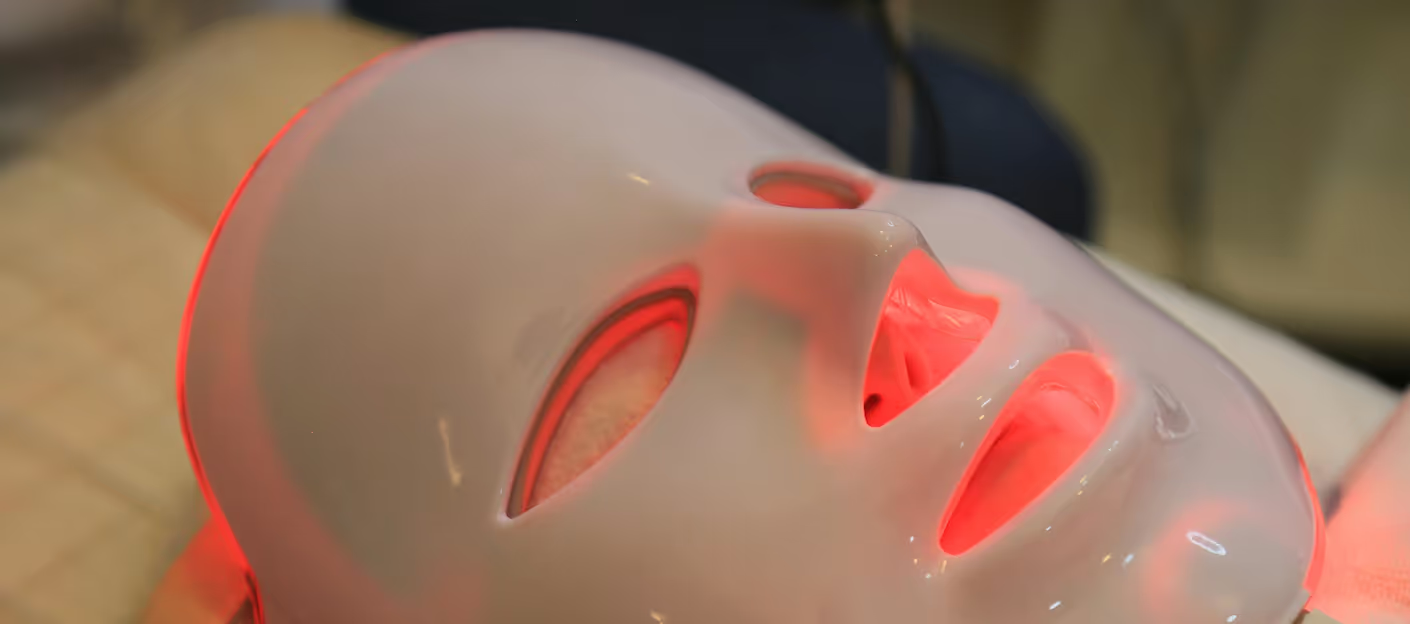
The Promise Glowing in Your Medicine Cabinet. Walk into any wellness center today and you'll find people bathing in crimson light like they're worshipping a neon sunset. Scroll through Instagram and you'll see influencers pressing LED panels to their faces, claiming they've discovered the fountain of youth. Red light therapy has exploded from obscure NASA research into a billion-dollar industry, with devices ranging from $30 face masks to $5,000 full-body panels now flooding the market.
The pitch sounds almost too good to be true: just stand in front of red and near-infrared light for 10-20 minutes, and watch your wrinkles fade, your hair regrow, your pain disappear, and your muscles recover faster. No pills. No needles. Just photons doing what they supposedly do best—healing you at the cellular level.
But here's the uncomfortable question nobody wants to ask at the wellness party: does any of this actually work?
Red light therapy—technically called photobiomodulation or low-level light therapy—uses wavelengths between 600-1000 nanometers to penetrate your skin. Unlike UV light that damages cells, red and near-infrared wavelengths interact with mitochondria, the tiny powerhouses inside your cells.
The proposed mechanism is surprisingly elegant. When these specific wavelengths hit your mitochondria, they stimulate an enzyme called cytochrome c oxidase. This triggers a cascade of cellular events: increased ATP production (your body's energy currency), reduced oxidative stress, and enhanced cellular repair processes. Think of it as jump-starting a sluggish battery, but for your cells.
A 2013 systematic review in Photomedicine and Laser Surgery analyzed 68 randomized controlled trials and found consistent evidence for wound healing and tissue repair. The researchers noted that certain wavelengths (particularly 810-830nm) penetrated deeper into tissues, potentially explaining benefits for muscle recovery and joint pain.
More recently, a 2018 study published in the Journal of Clinical and Aesthetic Dermatology examined red light therapy for facial rejuvenation. After 12 weeks of treatment, 91% of participants showed measurable improvements in skin texture, fine lines, and collagen density. The control group? No changes whatsoever.
For pain management, the evidence gets more interesting. A 2017 meta-analysis in Lasers in Medical Science reviewed 22 studies on chronic neck pain. Red light therapy reduced pain scores by an average of 2.4 points on a 10-point scale—not miraculous, but statistically significant and clinically meaningful.
Hair regrowth shows more modest results. A 2021 randomized trial in Lasers in Surgery and Medicine found that participants using 655nm red light devices three times weekly for 24 weeks increased hair density by 37% compared to controls. However, the study was small (n=44) and funded by a device manufacturer, raising questions about bias.
The athletic performance claims rest on shakier ground. While several studies show reduced muscle soreness and faster recovery times, a 2019 review in Photobiomodulation, Photomedicine, and Laser Surgery noted that many trials used different protocols, making it difficult to determine optimal dosing or confirm consistent benefits.
Here's where things get complicated. Not all red light therapy studies are created equal, and the devil lives in the details.
First, there's the dosing problem. Studies use wildly different wavelengths (630nm vs. 850nm), power densities (5 mW/cm² vs. 200 mW/cm²), treatment durations (30 seconds vs. 20 minutes), and frequencies (daily vs. weekly). It's like trying to understand coffee's effects when some studies use espresso shots and others use gallon jugs of gas station brew.
Second, many promising studies come with financial conflicts of interest. When a device company funds research on their own product, positive results should be viewed with healthy skepticism. A 2020 analysis found that 43% of photobiomodulation studies disclosed industry funding—and those studies were 3.2 times more likely to report positive outcomes.
Third, placebo effects are massive in pain and aesthetic treatments. If you spend $1,000 on a red light panel, you're psychologically invested in believing it works. Few studies use adequate sham controls (devices that look identical but emit no therapeutic wavelengths), making it hard to separate true biological effects from expectation.
The replication crisis also haunts this field. Many single studies show dramatic results that subsequent research fails to reproduce. This pattern suggests publication bias—journals preferentially publish positive findings while negative studies gather dust in file drawers.
Despite these limitations, the signal emerges from the noise. Certain applications—particularly wound healing, collagen stimulation, and inflammatory pain reduction—show consistent benefits across multiple independent research groups. The mechanisms make biological sense, and the side effects remain minimal when devices are used correctly.
Dermatologists and pain specialists approach red light therapy with cautious optimism rather than enthusiasm. According to a 2022 Cleveland Clinic review, the evidence supports specific, narrow applications but doesn't justify the sweeping health claims flooding social media.
Dr. Shilpi Khetarpal, a dermatologist at Cleveland Clinic, told patients that red light therapy shows "modest improvements" for fine lines and mild acne but shouldn't replace proven treatments like retinoids and sunscreen. The American Academy of Dermatology acknowledges photobiomodulation as an adjunct therapy—meaning it might help alongside conventional treatments—but not as a standalone solution.
For chronic pain, the picture is similarly nuanced. The Mayo Clinic notes that red light therapy may reduce inflammation and pain in conditions like osteoarthritis and tendonitis, but it's most effective when combined with physical therapy, exercise, and other evidence-based interventions. Nobody's throwing away their NSAIDS just yet.
The medical establishment's biggest concern? Unregulated devices. The FDA classifies many red light devices as low-risk, meaning they don't require rigorous testing before hitting the market. This creates a Wild West where $50 Amazon panels might deliver completely different wavelengths and power outputs than advertised. Some devices barely emit any therapeutic light at all—just enough to create a pretty glow.
Harvard Health Publishing warns patients to be especially wary of "miracle cure" claims for serious conditions. Red light therapy won't cure cancer, reverse Alzheimer's, or eliminate the need for prescribed medications. When medical professionals see patients delaying evidence-based treatments in favor of red light panels, they worry about real harm masquerading as wellness.
Functional medicine practitioners and integrative health advocates see red light therapy as part of a larger toolbox for optimizing cellular health. Dr. Mark Hyman, founder of the UltraWellness Center, frames photobiomodulation as a way to "support your body's natural healing intelligence" rather than forcing interventions with drugs or surgery.
The National Center for Complementary and Integrative Health (NCCIH) acknowledges that light-based therapies have been used for centuries in various healing traditions, from sunlight exposure for vitamin D synthesis to colored light therapy in Ayurvedic medicine. Red light therapy represents a modern, measurable version of this ancient wisdom.
Proponents in this camp emphasize the holistic benefits that randomized controlled trials might miss. They point to patients reporting better sleep quality, improved mood, and enhanced overall vitality—subjective improvements that don't fit neatly into research protocols but matter immensely to real people.
The integrative perspective also considers red light therapy's lack of side effects as a major advantage. Unlike pharmaceuticals with extensive warning labels, properly-used red light devices carry minimal risk. This aligns with the "first, do no harm" principle that alternative practitioners champion.
Dr. Andrew Weil, a pioneer in integrative medicine, suggests that red light therapy's true value lies in its ability to "activate healing mechanisms we're only beginning to understand." While mainstream medicine demands mountains of evidence before acceptance, holistic practitioners argue that absence of evidence isn't evidence of absence—especially for low-risk interventions.
The alternative community also champions red light therapy's potential for prevention rather than just treatment. Why wait until your skin shows aging signs or your joints develop arthritis? Regular red light exposure might maintain cellular health before problems emerge, much like exercise prevents disease rather than merely treating it.
Critics accuse this perspective of blurring the line between promising preliminary research and established fact. When wellness influencers present red light therapy as a cure-all, they risk undermining the legitimate science while promoting unrealistic expectations.
On TikTok and Instagram, red light therapy has become the latest must-have wellness accessory, right up there with infrared saunas and cold plunge tubs. Fitness influencer Andrew Huberman has popularized red light for testosterone optimization and circadian rhythm regulation, while biohacking guru Dave Asprey claims his red light panels helped him "hack aging" and boost cognitive performance.
The public narrative focuses heavily on visible, aesthetic results. Beauty influencer Hailey Bieber showcased her red light face mask routine, driving thousands of followers to purchase similar devices. YouTuber Thomas DeLauer presents red light therapy as essential for muscle recovery, claiming it's "the secret weapon" elite athletes use to train harder and recover faster.
These creators typically share compelling before-and-after photos, personal testimonials, and enthusiasm that's infectious even if scientifically questionable. The comment sections overflow with anecdotes: "My chronic back pain is finally gone!" "My skin looks 10 years younger!" "I sleep better than ever!"
But not everyone's singing red light's praises. Skeptical creators like Dr. Idz on YouTube have posted videos challenging the hype, pointing out that many influencer claims lack scientific support. She notes that "just because something glows red doesn't mean it's doing anything therapeutic."
The public conversation also reveals confusion about dosing and device quality. Reddit's r/redlighttherapy forum is packed with users asking whether their cheap Amazon panel is actually working or if they need to upgrade to expensive brands like Joovv or Red Therapy Co. The answers vary wildly, reflecting the lack of standardization in the industry.
What's particularly interesting is the "stacking" trend—influencers combining red light therapy with cold exposure, fasting, supplement regimens, and other interventions. This makes it nearly impossible to determine which practice produces which results, but it generates plenty of content and product affiliate commissions.
The influencer economy has also created perverse incentives. When creators earn 10-20% commission on $1,000+ red light panels, their objectivity becomes questionable. Are they sharing genuine health discoveries or just marketing expensive equipment to audiences desperate for easy solutions?
When you compare these three perspectives, fascinating patterns emerge. The mainstream medical community and alternative practitioners actually agree on the core mechanism—red light does interact with cellular mitochondria in measurable ways. They disagree primarily on how much evidence is "enough" before making recommendations.
The influencer narrative, however, diverges sharply from both camps. While medical and holistic practitioners discuss specific applications with caveats, influencers often promote red light as a universal healing tool. This amplification effect transforms "shows promise for reducing wrinkles" into "reverses aging" and "may reduce inflammation" into "eliminates chronic pain."
One critical misconception needs debunking: not all red light devices are created equal. The difference between a $40 Amazon bulb and a $3,000 medical-grade panel isn't just price—it's wavelength accuracy, power density, and consistent output. Many cheap devices emit primarily visible red light (around 630nm) that barely penetrates skin, while therapeutic near-infrared (810-850nm) requires more expensive LEDs.
Another area of overlap? Everyone agrees that red light therapy works best as a complementary tool, not a replacement for proven interventions. Whether you're a dermatologist prescribing retinoids, a functional medicine doctor recommending dietary changes, or a physical therapist prescribing exercises, red light might enhance results—but it won't do the heavy lifting alone.
The safety profile also unites all three camps. Unlike many wellness trends (looking at you, colloidal silver and raw water), red light therapy poses minimal risk when used correctly. The worst reported side effects are temporary eye strain if used without protection and mild skin irritation in rare cases.
Where perspectives clash most dramatically is on the cost-benefit calculation. Mainstream medicine questions whether modest improvements justify the expense, especially when proven treatments cost less. Alternative practitioners value the holistic benefits beyond what studies measure. Influencers often ignore cost entirely, treating $5,000 panels as just another necessary wellness investment.
The future of red light therapy depends on answering several critical questions through rigorous research:
1. Standardized Dosing Protocols
We need large-scale studies comparing different wavelengths, power densities, and treatment frequencies head-to-head. What works for wrinkles might not work for joint pain. What helps athletes recover might require completely different parameters than what stimulates hair growth. Until we nail down optimal protocols for specific conditions, recommendations will remain frustratingly vague.
2. Long-Term Safety Data
Most studies last 8-12 weeks. What happens after years of daily use? Do benefits plateau? Could chronic exposure have unintended consequences we haven't detected yet? We need 5-10 year follow-up studies tracking regular users, especially given concerns about potential effects on cancer cells (which might respond to mitochondrial stimulation in unpredictable ways).
3. Combination Therapy Research
Since red light therapy appears most effective alongside other interventions, we need studies specifically examining synergistic effects. Does red light enhance collagen production from retinoids? Does it improve healing from physical therapy? Can it amplify benefits from anti-inflammatory diets? These questions remain largely unexplored.
4. Personalized Approaches Based on Skin Type and Genetics
People with different skin tones absorb and reflect light differently, yet most studies use predominantly light-skinned participants. We need research examining optimal wavelengths and power densities for diverse populations. Similarly, genetic variations in mitochondrial function might explain why some people respond dramatically while others see minimal benefits.
5. Device Quality Standards and Regulation
The market desperately needs independent testing and certification for red light devices. Organizations like Underwriters Laboratories (UL) could verify that devices actually emit the wavelengths and power densities they claim. Without this, consumers are gambling on Amazon purchases with zero accountability.
Red light therapy sits in an uncomfortable middle zone—it's not the miracle cure influencers proclaim, but it's also not the pseudoscientific nonsense skeptics sometimes dismiss. The evidence shows real, measurable benefits for specific applications, particularly skin rejuvenation, wound healing, and mild inflammatory conditions.
The mechanism makes biological sense. Mitochondria do respond to specific wavelengths of light. Cellular energy production does increase. Inflammation does decrease. These aren't disputed facts—they're observable phenomena that mainstream science acknowledges.
But context matters enormously. A $4,000 red light panel won't fix problems that stem from poor sleep, terrible diet, chronic stress, or lack of exercise. It's an enhancement tool, not a foundation. The people seeing dramatic results are usually those already doing everything else right—exercising regularly, eating well, managing stress, and getting adequate sleep.
The explosion of cheap, unregulated devices also creates a minefield for consumers. Buying a red light device without understanding wavelengths, power density, and treatment distance is like buying a car based solely on its paint color. You might get something therapeutic, or you might get an expensive night light.
If you're considering red light therapy, start with realistic expectations. It might reduce your wrinkles slightly, speed your recovery marginally, or ease your pain moderately. It probably won't transform your life—but for some people, those modest improvements are absolutely worth the investment.
Credibility Rating: 6/10
LyfeiQ Score: 6/10
Red light therapy has earned its place in the evidence-based toolkit for skin rejuvenation, wound healing, and mild inflammatory conditions. The science supports these specific applications with moderate confidence. However, the explosion of exaggerated claims, unregulated devices, and premium pricing often outpaces the evidence. Use it as a complementary tool, not a magic bullet—and invest in quality devices with proven wavelengths if you're going to invest at all.
Disclaimer: Always consult a healthcare professional before starting any new treatment, including red light therapy. This content includes personal opinions and interpretations based on available sources and should not replace professional medical advice. This content includes personal opinions and interpretations based on available sources and should not replace medical advice. This content includes interpretation of available research and should not replace medical advice. Although the data found in this blog and infographic has been produced and processed from sources believed to be reliable, no warranty expressed or implied can be made regarding the accuracy, completeness, legality or reliability of any such information. This disclaimer applies to any uses of the information whether isolated or aggregate uses thereof.