

August 5, 2026
7 min
Ken D
July 20, 2026
12 Min
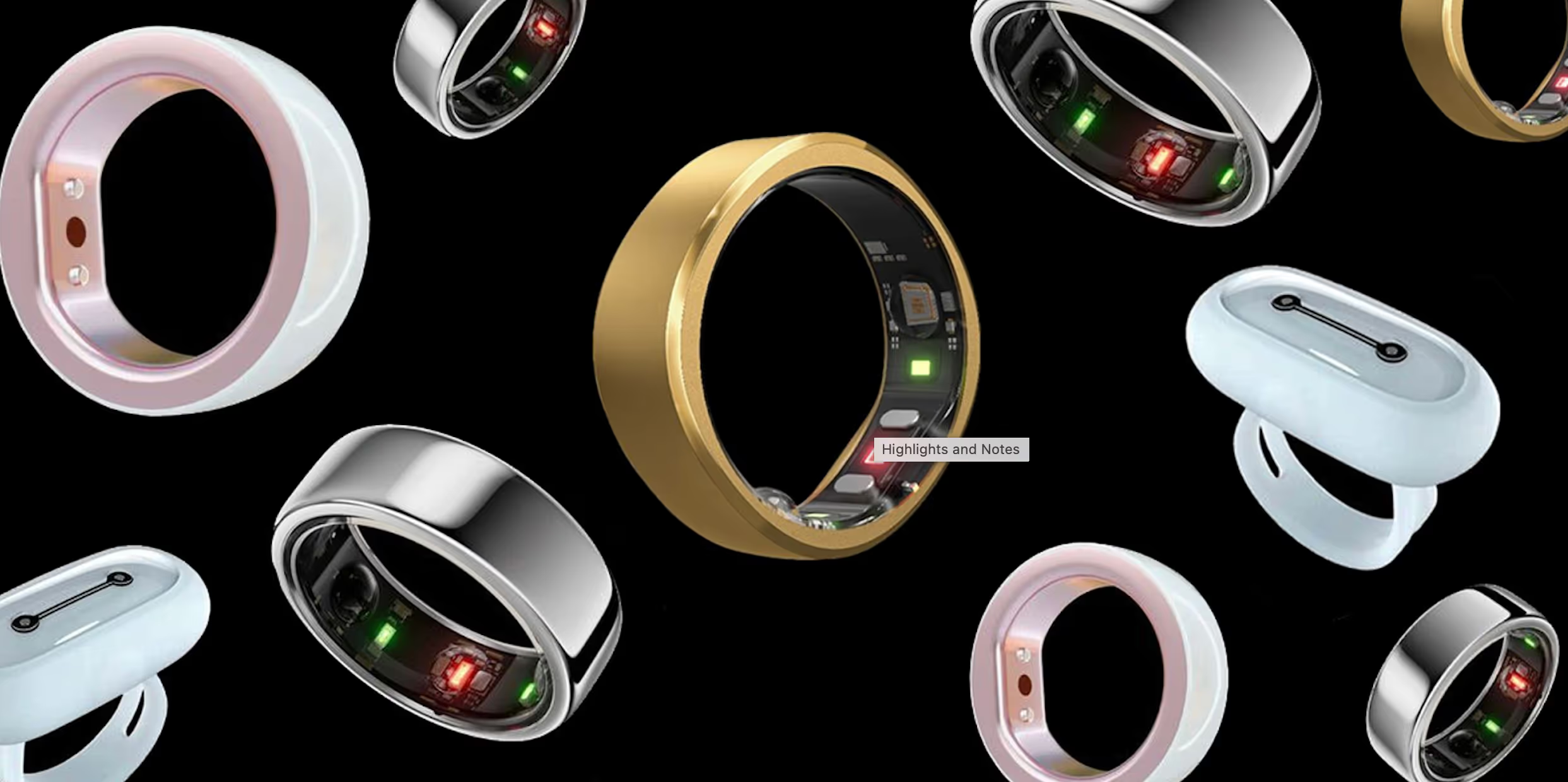
Your wrist is crowded. Between watches, fitness trackers, and notifications buzzing every five seconds, it's no wonder people are ditching the bulk for something smaller. Enter smart rings—sleek, silent health trackers that slip onto your finger and promise to monitor everything from sleep cycles to cardiovascular recovery without the constant screen glare.
But here's the real question: Do these tiny devices actually deliver useful health insights, or are they just expensive jewelry with Bluetooth?
Smart rings are flooding the market with claims about precision health monitoring. They track heart rate variability, sleep stages, body temperature, blood oxygen, and activity levels—all from a device weighing less than a AAA battery. The appeal is obvious: 24/7 health data without the bulk of a smartwatch, and no screen to distract you during dinner.
Yet beneath the sleek marketing lies a more complex story. Some metrics these rings measure are backed by solid science and validated against medical-grade equipment. Others? Not so much. And the flood of data they generate raises a crucial question most manufacturers avoid: What health information actually helps you make better decisions, and what's just noise?
Let's cut through the hype and examine what smart rings really do, which data points matter, and whether this technology deserves a spot on your finger.
Smart rings aren't just shrunken fitness trackers. They use photoplethysmography (PPG)—infrared and green LEDs that detect blood volume changes in your finger's arteries—combined with accelerometers, gyroscopes, and temperature sensors to build a picture of your physiological state.
The finger offers distinct advantages over the wrist. Blood flow is stronger and more consistent in finger arteries, creating cleaner PPG signals. This matters because cleaner signals mean more accurate measurements, especially during sleep when you're relatively still.
A 2024 meta-analysis published in Applied Sciences examined 19 studies evaluating smart ring accuracy across cardiovascular and sleep parameters. The results were impressive: smart rings measured heart rate with a mean bias of just -0.4 beats per minute compared to medical-grade electrocardiogram monitors. That's remarkably accurate. For context, many hospital-grade wrist monitors show similar precision.
Sleep tracking showed equally strong results. When researchers compared smart rings against polysomnography—the gold standard sleep lab test using brain wave monitoring—they found no statistically significant differences for total sleep time, sleep efficiency, or wake after sleep onset. Sleep stage accuracy ranged from 75.5% for light sleep to 90.6% for REM sleep across 388 participants in six independent studies.
Heart rate variability (HRV) tells a more nuanced story. A 2022 validation study in the Journal of Medical Internet Research found smart rings accurately captured nocturnal heart rate and RMSSD (a key HRV metric) when compared to medical ECG monitoring in 35 individuals. However, some advanced HRV parameters showed only moderate accuracy in short 5-minute windows, though they improved substantially when averaged across the full night.
An independent 2025 study funded by the Air Force Research Laboratory tested five consumer wearables against chest strap criterion measurements across 500+ nights of sleep data. Finger-worn devices consistently showed stronger agreement for both HRV and resting heart rate measurements compared to wrist-worn alternatives.
The bottom line? Smart rings excel at passive monitoring during rest and sleep. They're less reliable during intense exercise or rapid physiological changes where motion artifacts interfere with optical sensors. But for the metrics they're designed to capture—nighttime recovery, sleep architecture, resting cardiovascular function—the evidence shows they're legitimate health monitoring tools, not glorified step counters.
Let's break down what these devices track and what each metric actually tells you:
Sleep Architecture: Smart rings categorize sleep into light, deep, and REM stages using heart rate patterns, body temperature, and movement. They calculate total sleep time, sleep efficiency, and wake episodes. The data is validated—but here's the catch. Knowing you got 47 minutes of deep sleep versus 62 minutes doesn't tell you why or what to do about it without additional context.
Heart Rate Variability (HRV): This measures the variation in time between heartbeats. Higher HRV generally indicates better cardiovascular fitness and recovery capacity. Lower HRV can signal stress, illness, or overtraining. Smart rings track HRV during sleep when measurements are most stable. But HRV is highly individual—your baseline might be 25ms or 125ms, and both can be perfectly healthy. The rings establish your personal baseline over time, then flag meaningful deviations.
Resting Heart Rate: Perhaps the simplest yet most clinically meaningful metric. Consistent elevation suggests illness, dehydration, or inadequate recovery. Gradual decline over months indicates improved cardiovascular fitness. Smart rings measure this accurately during sleep.
Body Temperature Trends: Modern smart rings detect continuous temperature changes as small as 0.13°C with greater than 99% accuracy compared to research-grade sensors. This isn't your absolute temperature—it's your deviation from personal baseline. Rising temperature can flag impending illness 1-2 days before symptoms appear or track menstrual cycle phases.
Blood Oxygen (SpO2): Newer smart rings measure nighttime oxygen saturation. Normal is 95-100%. Consistent dips below 90% warrant medical evaluation for sleep apnea or respiratory issues. However, a 2024 systematic review found smart ring SpO2 accuracy showed a root mean square error of approximately 2.1%—acceptable for screening but not diagnostic.
Activity Tracking: Here's where smart rings struggle. Step counting via hand motion works reasonably well, but hand gestures—typing, cooking, gesturing while talking—often register as steps. A 2020 validation study found step count accuracy varied significantly across devices, with hand-based activities causing systematic overcounting. Rings weren't designed for detailed workout tracking, and they know it.
Readiness and Recovery Scores: Most smart rings synthesize multiple metrics into a single "readiness" score predicting your capacity for physical or cognitive exertion. These are proprietary algorithms, not standardized medical assessments. They're useful for pattern recognition but shouldn't dictate medical decisions.
The medical establishment remains cautiously optimistic about smart rings, viewing them as promising screening tools rather than diagnostic devices.
According to a 2021 review in npj Digital Medicine, wearables show potential for remote patient monitoring when integrated into healthcare systems with proper clinical oversight. The key phrase is "clinical oversight"—doctors emphasize these devices supplement, not replace, medical evaluation.
Medical experts note that finger-based wearables offer superior performance for passive physiological monitoring due to richer blood flow and higher vascular density compared to wrist-worn devices. However, they emphasize validation studies are conducted on healthy populations—accuracy may differ for individuals with cardiovascular disease, arrhythmias, or peripheral circulation issues.
The Cleveland Clinic acknowledges consumer wearables can increase health awareness and encourage beneficial behaviors like improved sleep hygiene. Yet they caution against over-interpreting minor fluctuations in metrics like HRV or sleep stages, which show substantial day-to-day variability even in healthy individuals.
A 2024 systematic review in BMC Public Health examining wearable activity trackers in adolescents found no statistically significant effect on increasing physical activity when wearables were used alone. Effectiveness increased substantially when combined with behavior change techniques like goal-setting, feedback, and social support. The technology enables behavior change—it doesn't cause it.
The medical consensus? Smart rings provide validated physiological data. But data without context or action is just trivia. They're most useful when paired with health literacy and professional guidance for interpretation.
Integrative medicine practitioners embrace smart rings as tools for understanding the body's biorhythms and stress responses—concepts often overlooked in conventional medicine.
Functional medicine doctors like Dr. Mark Hyman view continuous health monitoring as essential for personalized wellness optimization. In their framework, subtle HRV patterns reveal autonomic nervous system balance, temperature trends reflect metabolic health, and sleep architecture indicates recovery capacity. These practitioners emphasize smart rings help identify problems before they become diseases—the foundation of preventive medicine.
The National Center for Complementary and Integrative Health (NCCIH) suggests wearable devices can support mind-body interventions by providing objective feedback on physiological stress. For instance, seeing HRV improve after meditation or yoga validates the practice's biological impact, potentially increasing adherence.
Andrew Weil's Center for Integrative Medicine views sleep tracking as particularly valuable since sleep quality affects inflammation, hormonal balance, and mental health. They argue conventional medicine often treats sleep problems with medication while ignoring behavioral causes that wearables can illuminate.
However, even holistic practitioners acknowledge limitations. MindBodyGreen wellness experts caution against "data obsession"—constantly checking metrics and becoming anxious about minor variations. They emphasize wearables work best when insights drive meaningful lifestyle changes rather than fueling health anxiety.
The alternative medicine perspective sees smart rings as bridges between subjective experience and objective physiology, validating holistic approaches to wellness. But they warn technology should enhance body awareness, not replace it.
Social media tells a different story—one of optimization, competition, and occasionally, obsession.
On TikTok and Instagram, smart ring hashtags have generated millions of views from biohackers, athletes, and wellness influencers showcasing their readiness scores, sleep efficiency, and HRV trends. Fitness creators regularly post screenshots, claiming the technology "changed how I understand my body's recovery needs." Many credit temperature trend tracking with early illness detection, allowing them to modify training before getting sick.
Yet not all influencer experiences are positive. Tech reviewers on YouTube have noted that while some smart rings impress with long battery life and no subscription requirements, the activity tracking proves less detailed than dedicated fitness watches. The consensus? Smart rings excel at passive monitoring but can't replace workout-focused devices.
Criticism emerges around cost and subscription models. Some manufacturers require monthly memberships for full feature access, drawing comparisons to "health data ransom" on Reddit forums. Other brands gained traction by offering subscription-free alternatives, though often with fewer features and less extensive validation.
The metabolic health crowd has embraced smart rings that integrate with continuous glucose monitors, creating what proponents call "a closed-loop system" connecting activity, sleep, and metabolic response. Influencers in the low-carb and ketogenic communities particularly embraced this comprehensive approach.
Concerns about data accuracy surface regularly. Several TikTok creators have posted videos comparing smart rings to medical devices, finding occasional discrepancies in SpO2 and step counts. Others report frustration with inconsistent Bluetooth connectivity or batteries dying mid-sleep.
The public perspective reflects enthusiasm tempered by practical concerns: cost, subscription fatigue, data accuracy questions, and uncertainty about what to do with the information collected. Many users love their rings. Many also acknowledge they don't consistently act on the insights provided.
Smart rings represent genuine technological advancement in passive health monitoring, but their value depends entirely on context and application.
The Evidence Supports:
The Evidence Doesn't Support:
What Separates Useful Data from Digital Noise?
The most actionable metrics smart rings provide are those connected to modifiable behaviors:
High-Value Metrics:
Lower-Value Metrics:
A 2021 study in Frontiers in Physiology demonstrated this distinction. Fifty-six participants using biometric tracking rings received either guided behavioral feedback or generic wellness education. Only the guided feedback group showed significant sleep and fitness improvements over 12 months. The technology enabled change, but human support drove it.
The critical insight? Data quality isn't the limiting factor—it's interpretation and implementation. Smart rings collect validated physiological information. But converting that information into better health requires health literacy, clear action steps, and often, professional guidance.
Several promising developments could expand smart ring utility beyond current capabilities:
The technology exists. The barrier is infrastructure—connecting wearable data streams with healthcare systems in secure, standardized formats that clinicians can actually use.
Smart rings succeeded where many wearables failed by prioritizing comfort and passive monitoring over feature bloat. A 2024 user survey found the best sleep tracking device wasn't the one with the most features—it was the one people actually wore every night.
The form factor matters. Rings don't have screens demanding attention. They don't buzz with notifications. They don't need charging every night. This "invisible monitoring" approach reduces user fatigue—the main reason one-third of fitness tracker owners abandon devices within six months.
What they get right:
What they miss:
The technology delivers on its core promise: accurate passive physiological monitoring without lifestyle disruption. But it doesn't eliminate the need for health literacy, behavior change support, or medical oversight.
If you're considering a smart ring for health monitoring, focus on these factors rather than brand names:
Validation and Accuracy: Look for devices with published peer-reviewed validation studies comparing their measurements to medical-grade equipment. Independent research matters more than manufacturer claims.
Business Model: Decide whether you prefer subscription-based services with ongoing feature updates or one-time purchases with basic functionality. Neither model is inherently better—it depends on your preferences and budget.
Data Accessibility: Ensure you can export your health data in standard formats. Your physiological information belongs to you, and you should be able to share it with healthcare providers or move it between platforms.
Battery Life and Maintenance: Consider whether you're willing to charge a device every few days or prefer longer battery life with less frequent charging. This impacts consistent data collection.
Integration Capabilities: If you use other health monitoring tools (glucose monitors, fitness apps, health records), check whether the ring integrates with your existing ecosystem.
Privacy and Security: Understand where your health data is stored, who has access to it, and what privacy protections exist. GDPR compliance and data sovereignty matter for many users.
Return Policy and Trial Period: Given the personal nature of wearables, choose manufacturers offering trial periods or generous return policies so you can test comfort and utility before committing.
The market now offers options across price points ($200-$400), feature sets, and business models. Focus on which metrics you'll actually use and which ecosystem fits your needs rather than chasing the most features or brand recognition.
Smart rings occupy a unique niche in health technology—validated physiological monitoring in a package small enough to forget you're wearing.
The science supports their accuracy for sleep tracking, resting cardiovascular measurements, and temperature trends. Multiple peer-reviewed studies confirm they match medical-grade equipment for these specific applications. If you want objective feedback on sleep quality, recovery patterns, or early illness detection, these devices deliver.
But accuracy alone doesn't guarantee utility. A 12-month randomized trial showed wearables drive lasting behavior change only when paired with guidance, goal-setting, and support. Raw data without interpretation is just numbers.
The ideal smart ring user is someone who:
If that describes you, smart rings offer legitimate value. If you want detailed workout analytics, medical diagnosis, or technology to drive behavior change without personal effort, look elsewhere.
Credibility Rating: 7/10
Smart rings represent validated health monitoring technology with genuine clinical utility for specific applications—primarily sleep optimization and recovery tracking. The evidence supports accuracy claims for passive monitoring metrics. However, their value depends heavily on user health literacy and willingness to act on insights. They're tools, not solutions. Used appropriately with realistic expectations, they offer legitimate benefit. Treated as medical devices or behavior change magic, they disappoint.
The data is real. What you do with it determines whether the ring on your finger is health technology or expensive jewelry.
Disclaimer: Always consult a healthcare professional before making health decisions based on wearable device data. This content includes personal opinions and interpretations based on available sources. Smart rings are wellness devices, not medical diagnostic tools. Although the data found in this blog and infographic has been produced and processed from sources believed to be reliable, no warranty expressed or implied can be made regarding the accuracy, completeness, legality or reliability of any such information. This disclaimer applies to any uses of the information whether isolated or aggregate uses thereof.