September 30, 2026
10 min
Kenneth D
October 1, 2026
10 min
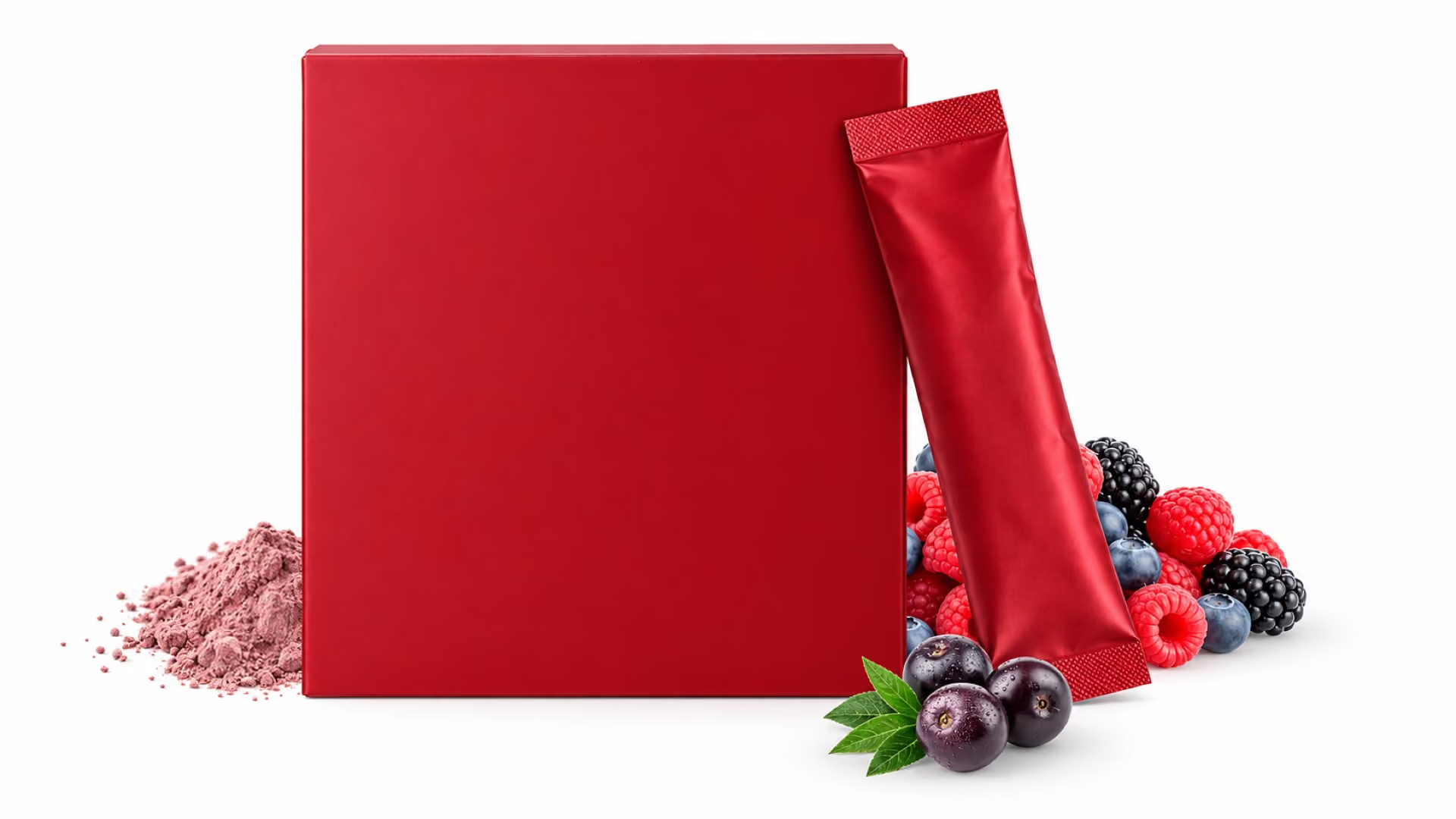
“Clinically Proven,” reads IM8’s science page, next to four big numbers: 95% more energy, 80% better sleep, 85% less bloating, 75% sharper focus. We traced each piece back to its source — the trial registry, IM8’s own Supplement Facts panels, and the peer-reviewed research — and found three problems anyone can verify.
What the evidence supports: IM8’s NSF Certified for Sport status is real and verifiable, and two of its headline ingredients, berberine and astaxanthin, have solid human trials behind them at studied doses.
What’s overstated or unsupported: “Clinically proven” rests on an unpublished, company-sponsored trial with no placebo that tested a formula IM8 has since replaced. The ingredient science is borrowed from studies using far higher doses, and IM8’s science page lists three ingredients its label doesn’t.
⚕️ LyfeiQ Score: 4/10 — A clean, well-tested multivitamin at a premium price, not a proven energy, gut, or longevity product.
All four percentages trace back to one company-sponsored study, and its public registry record tells a more modest story. IM8 is a supplement line from Prenetics, co-founded with David Beckham and launched in November 2024. Its flagship, Daily Ultimate Essentials, is a berry-flavored powder the company says contains 90 ingredients, sold for $89 a month on subscription. According to ClinicalTrials.gov entry NCT06655597, Prenetics sponsored the trial, planned to enroll 60 adults, and compared the powder with a “usual diet” arm that received nothing. Only the investigator was masked, so participants knew whether they were drinking the supplement.
That matters for self-reported outcomes like energy and bloating. To qualify, people had to self-identify as having fatigue and abdominal issues. Recruit people at a low point, ask them weeks later whether they feel better, and most will say yes, whatever they drank.
The Longevity trial, NCT06714162, is thinner still. Despite a title calling it randomized and controlled, the record describes a single-group study with no masking and an estimated 30 participants, testing a “Longevity pill.” At launch, Longevity was a single capsule. Today it’s a powder sachet with a different formula.
IM8’s ingredient claims describe research on individual compounds, not on IM8. Its science page presents a patent-pending “Cell Rejuvenation Technology 8” (CRT8) blend and lists seven ingredients with their benefits: fucoidan, berberine HCl, Haematococcus pluvialis algae (for astaxanthin), trans-resveratrol, spermidine HCl, and two brown seaweed extracts, Ascophyllum nodosum and Fucus vesiculosus.
IM8’s own Supplement Facts panel for Essentials PRO tells a different story. It lists CRT8 as a single 100 mg proprietary blend of six ingredients: pomegranate, trans-resveratrol, turmeric, berberine HCl, Haematococcus pluvialis, and spermidine HCl. Fucoidan and both brown seaweed extracts aren’t on it, and we found them in no product in IM8’s U.S. store. The science page is selling ingredients the tub doesn’t contain.
The Longevity product page goes further, saying every ingredient is dosed on published human clinical trials at “therapeutic doses proven effective.” As the next section shows, that’s hard to square with its own spermidine dose.
Several of these ingredients have real human evidence. Almost none of it comes from doses IM8’s powder can deliver. That 100 mg is the whole CRT8 blend, shared by six ingredients.
This is the strongest ingredient on the list. A 2022 meta-analysis of 37 trials found berberine lowered fasting glucose and HbA1c in type 2 diabetes, and a 2025 meta-analysis of placebo-controlled trials found lower triglycerides, fasting glucose, and waist circumference in metabolic syndrome. But classic trials such as Yin and colleagues’ 2008 study used 500 mg three times a day. Essentials contains 100 mg at most.
Longevity uses 100 mg of dihydroberberine, sold as GlucoVantage, a trademark of NNB Nutrition. The main human study is a five-person pilot that found higher blood berberine levels but no change in glucose or insulin. One author disclosed a paid advisory role with NNB Nutrition.
A Cochrane review found insufficient evidence for any effect in type 2 diabetes, and a 17-trial blood-pressure meta-analysis found no significant overall effect, with benefits appearing only at 300 mg a day or more and in people with diabetes. Essentials can’t reach 300 mg. Longevity’s 250 mg comes close.
A 2021 meta-analysis found oral astaxanthin improved skin moisture and elasticity versus placebo, though not wrinkle depth, and a 2022 meta-analysis found a modest drop in one oxidative-stress marker. Trials used 4 to 6 mg a day (Ito, 2018; Tominaga, 2012). IM8’s algae powder is labeled 3% astaxanthin, so even if the whole 100 mg blend were algae, it would supply 3 mg. Longevity lists “astaxanthin (std. min. 3%)” at 6 mg, wording that leaves unclear whether that’s 6 mg of astaxanthin or of extract.
A cohort study of 829 adults linked higher dietary spermidine to lower mortality. But the best randomized trial, SmartAge, gave older adults 0.9 mg a day for 12 months and found no effect on memory or biomarkers, and a 2023 pharmacokinetic study found even 15 mg a day didn’t raise blood spermidine. No trial has shown Longevity’s 3 mg dose to be effective.
These aren’t on the label, but the research IM8 borrows is thin anyway. A 25-person fucoidan trial at 500 mg a day reported lower LDL and diastolic blood pressure, while a 72-person trial at 1,000 mg a day found no effect on insulin resistance. An 80-person Ascophyllum trial found no change in inflammation.
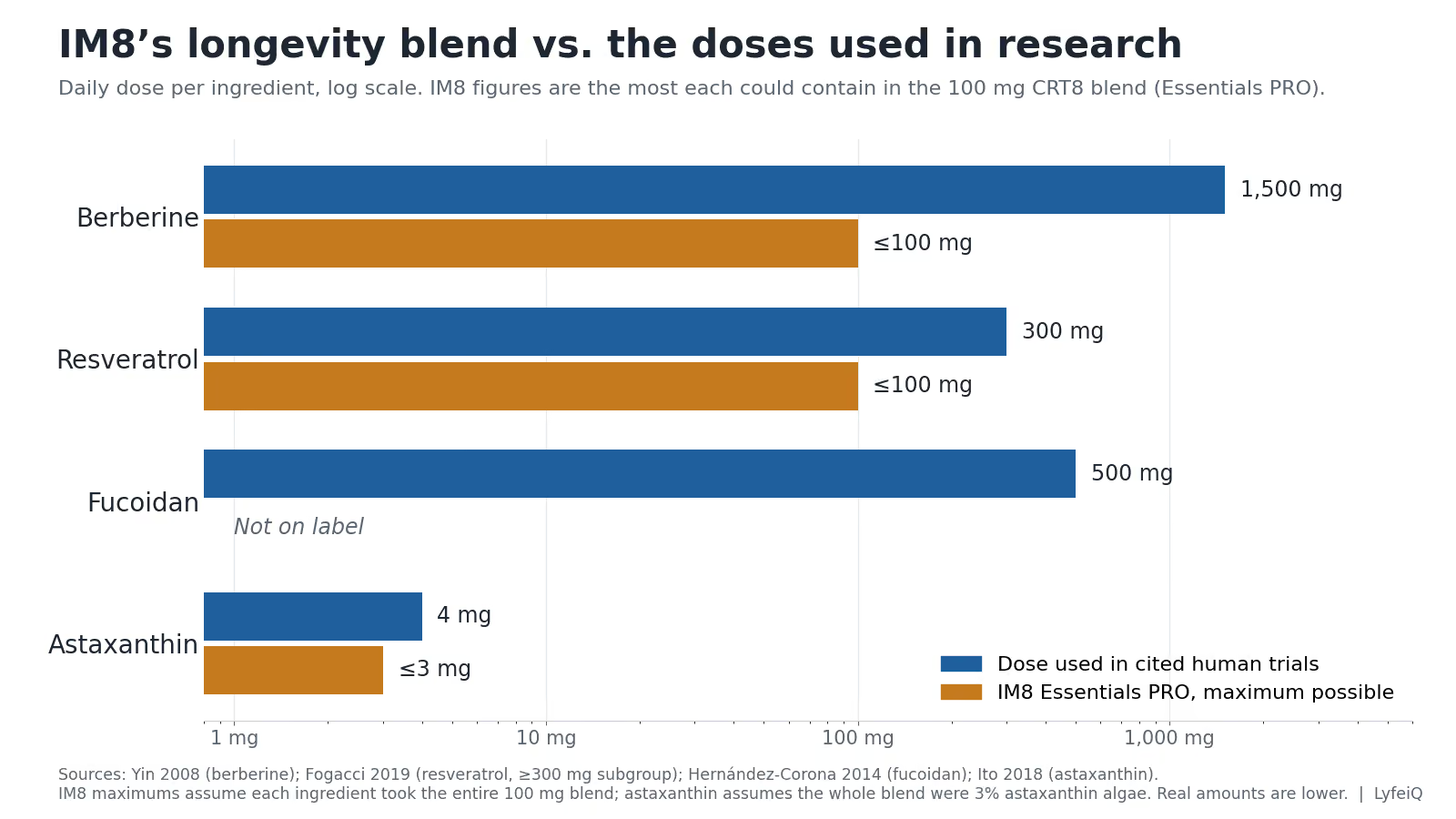
IM8 maximums assume each ingredient took the entire 100 mg CRT8 blend, which it can’t; real amounts are lower. Trial doses from Yin 2008, Fogacci 2019, Hernández-Corona 2014, and Ito 2018.
This is IM8’s most credible claim, and it checks out. NSF announced the certification for Essentials in January 2025, and the NSF Certified for Sport database lists Essentials, Essentials + Hydration, and Daily Ultimate Longevity. The program screens for more than 280 banned substances, tests for contaminants, verifies label amounts, and tests production lots. IM8’s testing page also posts batch certificates.
Two caveats. Certification covers purity and label accuracy, not whether a product works. And “trusted by WADA, NFL, MLB, NHL, and PGA” means those organizations recognize the NSF program. They haven’t endorsed IM8.
If you buy IM8, treat it as a well-tested multivitamin with extras, not an energy, gut, or longevity treatment.
Mainstream bodies are skeptical of all-in-one supplements for healthy adults. The NIH Office of Dietary Supplements notes that the U.S. Preventive Services Task Force found insufficient evidence that multivitamins prevent cardiovascular disease or cancer. The FTC’s health-claims guidance treats randomized, placebo-controlled, double-blinded trials as the expected standard, and says consumer surveys and testimonials are never enough.
Integrative voices are more open to the ingredients than to the packaging. IM8’s advisory board includes integrative-leaning physicians and a Cedars-Sinai microbiome researcher, and proponents point to the research on berberine and astaxanthin. The NCCIH urges care: “natural” doesn’t mean safe, supplements can interact with medications, and the FDA doesn’t review them before sale. Edzard Ernst, a longtime researcher of complementary medicine, questioned the evidence behind IM8’s claims in 2024.
IM8’s marketing leans on celebrity and podcast reach. Beckham is the co-founder and face of the brand, IM8’s site highlights tennis player Aryna Sabalenka, and its advisory board includes podcast hosts such as Simon Hill and Dr. Amy Shah. The dissent comes from dietitians: registered dietitian Abby Langer called IM8 clever marketing wrapped around weak science in July 2026.
It’s a familiar pattern: real research on ingredients, borrowed by a product that doesn’t deliver them at tested doses, and sometimes doesn’t deliver them at all. Berberine lowers blood sugar at 1,500 mg a day. That’s true, and it has almost nothing to do with a 100 mg blend of six things.
The trial works the same way. “Randomized, controlled clinical trial” is technically accurate. But a no-treatment control, participants who know what they’re taking, self-reported outcomes, unpublished results, and a formula that’s since changed add up to something closer to a satisfaction survey with a registry number.
What’s left is real: a comprehensive multivitamin, useful amounts of CoQ10 and MSM, probiotics, and some of the most thorough contamination testing in the category. That’s a respectable product. It just isn’t the one the percentages describe.
Three things would move this score. Publishing the Essentials trial in a peer-reviewed journal, with between-group results against a placebo, would be the biggest. Testing the current PRO formula, not its predecessor, would make those results relevant. And disclosing individual CRT8 doses, while matching the science page to the label, would be the easiest fix of all.
Credibility Rating: 4/10
👉 Who should try this: Drug-tested athletes who want an NSF-certified all-in-one, or people who value convenience and are willing to pay for a clean multivitamin.
👉 Who should skip this: Anyone buying it for energy, gut, or longevity results; people on diabetes, blood-pressure, or thyroid medication without a doctor’s okay; and anyone who can get the core nutrients for less.
⚕️ LyfeiQ Score: 4/10 — A clean, carefully tested multivitamin at a premium price. The energy, gut, and longevity claims outrun the evidence, so buy it for convenience, not for the percentages.
Related: Is Neuro Gum’s “Get Smarter” Claim Legit?
Disclaimer: This content includes personal opinions and interpretations based on available sources and should not replace medical advice. This content includes interpretation of available research and should not replace medical advice. Although the data found in this blog and infographic has been produced and processed from sources believed to be reliable, no warranty expressed or implied can be made regarding the accuracy, completeness, legality or reliability of any such information. This disclaimer applies to any uses of the information whether isolated or aggregate uses thereof.