
December 1, 2025
11 min
Maya Q.
March 11, 2026
8 Min

Your body runs like a factory; It converts food into energy, stores fuel, and sends signals about what it needs. For decades, doctors only got snapshots of this process through occasional blood tests. Now, tiny sensors and smart devices promise a 24/7 window into your metabolic health. Scientists, wellness coaches, and social media influencers can't quite agree on who actually benefits from all this data.
LyfeiQ Score: 6/10 Metabolic monitoring offers genuine value for people with diabetes and shows promise for wellness applications. However, evidence supporting CGM use in healthy populations remains limited. The technology is safe, but benefits for people without metabolic disease are not clearly established. Consider your personal goals and discuss with a healthcare provider before investing in continuous monitoring for general wellness.
Metabolic monitoring has grown from a niche medical tool into a mainstream wellness trend. The research base is expanding quickly, though it still has some notable gaps.
The most established form of metabolic monitoring involves continuous glucose monitors, or CGMs. These small sensors stick to your skin and measure glucose levels in the fluid just beneath it. According to a 2020 multicenter study published in the Journal of Clinical Endocrinology and Metabolism, healthy people without diabetes typically spend about 96% of their day with glucose levels between 70 and 140 mg/dL (Tian et al.). This research gave scientists a benchmark for what "normal" glucose patterns actually look like in healthy individuals.
Wearable devices have expanded far beyond glucose. A 2024 Scientific Reports study found that heart rate data from fitness trackers could identify early signs of metabolic syndrome. In a real-world study of 564 adults, heart-rate metrics derived from wearable devices, particularly inactive and minimum heart rate in men and heart-rate dips in women, were more strongly associated with pre-metabolic and metabolic syndrome than clinical resting heart rate, suggesting wearables may improve early detection (Mun et al.).
Beyond heart rate and glucose, researchers are exploring sweat sensors that can detect lactate, sodium, and even amino acids. A 2024 study published in Nature Biomedical Engineering introduced a wearable biosensor called "NutriTrek" that monitors vitamins and amino acids through sweat. Early results showed strong correlations between sweat and blood levels of these nutrients. This could eventually allow people to track their nutritional status without blood draws.
A large population study from South Korea examined 46,579 participants in a national mobile healthcare program. Published in JMIR mHealth and uHealth in 2025, it compared wearable activity trackers to smartphone step counters for reducing metabolic syndrome risk. Both wearable activity trackers and built-in step counters significantly improved walking behavior, health habits, and reduced metabolic syndrome risk, with built-in step counters showing a modestly greater risk reduction, especially in young adults, suggesting device choice may enhance mobile health intervention effectiveness (Joung et al.).
The evidence base for metabolic monitoring is promising but uneven. Understanding the strengths and weaknesses of current research helps separate hype from reality.
CGM research in diabetics is robust. Decades of clinical trials support using these devices to manage blood sugar and prevent dangerous highs and lows. The evidence for non-diabetics is much thinner. A 2025 study from Mass General Brigham, published in Diabetes Technology and Therapeutics, found something important. CGM metrics correlated well with hemoglobin A1c in people with diabetes. But this relationship weakened for people with prediabetes and disappeared entirely for those with normal blood sugar. This suggests CGM data may not mean the same thing for everyone (Mass General Brigam).
Some physicians have raised concerns about interpreting CGM data in healthy people. They point out that occasional glucose spikes after meals are normal. Tracking them too closely might cause unnecessary anxiety without clear health benefits. There haven't been major clinical trials showing that CGM use prevents diabetes or improves long-term health in people who don't already have blood sugar problems.
Wearable heart rate and activity studies face their own challenges. Most rely on observational data rather than randomized controlled trials. This makes it harder to prove that wearing a device actually causes health improvements versus simply attracting people who are already health-conscious.
The newest biosensors for sweat metabolites are still in early validation stages. While laboratory accuracy looks promising, real-world conditions introduce variables like sweat rate, skin temperature, and individual variation that affect reliability. Most of these devices haven't undergone large-scale clinical testing yet.
Replication is another issue. Many wearable studies come from single research groups or device manufacturers. Independent verification of results across different populations and settings remains limited. Standards for comparing data across different devices and platforms don't exist yet, making it hard to combine findings from different studies.
Mainstream medicine approaches metabolic monitoring with cautious optimism for specific applications and healthy skepticism for broader wellness claims.
For people with diabetes, CGMs represent a genuine breakthrough. The American Diabetes Association recommends them for managing blood sugar and preventing dangerous hypoglycemia. These devices have transformed diabetes care by providing real-time feedback that helps patients adjust insulin doses and meal timing (American Diabetes Association).
However, medical professionals are more reserved about CGMs for people without diabetes. Dr. Vijaya Surampudi, an endocrinologist at UCLA Health, notes that CGMs can help some people identify foods that spike their blood sugar unexpectedly. She has also seen patients become overly anxious about readings and restrict their diets too severely, which is actually an anecdote from her own pregnancy. The devices measure glucose in interstitial fluid, not blood, so readings may differ slightly from actual blood sugar levels (Surampudi).
Johns Hopkins researchers emphasize that traditional lab tests remain the gold standard for assessing metabolic health (Johns Hopkins Medical Institutions). Hemoglobin A1c reflects blood sugar control over months, while CGMs only show moment-to-moment fluctuations. Dr. Michael Fang from Johns Hopkins notes that "in people without diabetes, we don't really know how to act on differing glucose patterns." (Winny)
The medical consensus supports using wearables for general fitness tracking. Step counts, sleep monitoring, and heart rate trends can motivate healthy behaviors. But doctors warn against obsessing over every data point or making major health decisions based solely on consumer device readings.
Functional and integrative medicine practitioners embrace metabolic monitoring as part of a whole-person approach to health. They see these tools as windows into underlying imbalances that conventional medicine might miss.
Practitioners in this space often use CGMs alongside comprehensive lab panels that go beyond standard tests. They look at patterns in glucose, cortisol, thyroid hormones, and gut health markers to identify root causes of symptoms. The National Center for Complementary and Integrative Health recognizes growing interest in personalized monitoring as part of preventive care.
Dr. Leila Kirdani, a metabolic and functional medicine provider, describes her approach as "healing from the inside out" (Leila Kirdani). Rather than treating symptoms with medications, functional practitioners aim to restore optimal metabolic function through diet, supplements, and lifestyle changes. Continuous monitoring provides feedback that helps personalize these interventions.
Integrative medicine centers like MindStream Integrative Medicine in Nashville combine wearable data from devices like WHOOP, Apple Watch, and Lumen with resting metabolic rate testing and personalized nutrition counseling. They view metabolic monitoring as one piece of a larger wellness puzzle that includes stress management, sleep optimization, and gut health.
Holistic practitioners also tend to recommend more frequent and varied testing than conventional doctors. They might suggest comprehensive hormone panels, food sensitivity testing, and heavy metal screening alongside glucose monitoring. They argue that catching subtle imbalances early prevents chronic disease later.
Critics point out that many functional medicine tests lack standardization. Optimal ranges often differ from lab reference ranges, and not all recommendations have strong clinical evidence behind them.
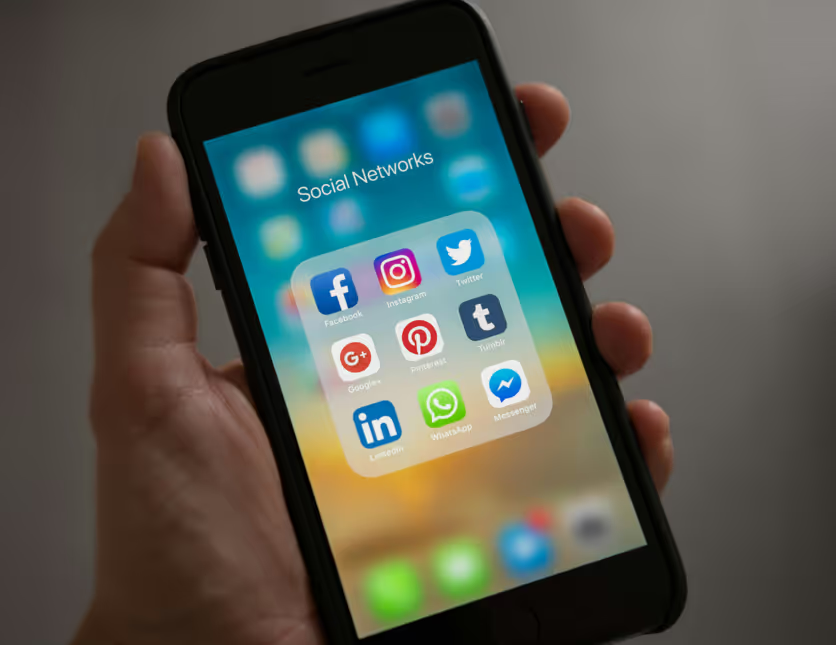
Social media has transformed metabolic monitoring into a widespread cultural trend, with continuous glucose monitoring (CGM) content generating massive engagement across platforms. Users frequently share visually striking glucose graphs showing their body’s responses to different foods, turning personal metabolic data into entertainment and lifestyle guidance.
Much of this content blends basic nutrition science with simplified “rules” or quick fixes intended to prevent glucose spikes, often using dramatic before-and-after comparisons to make the message more compelling. Popular posts frame CGM data as uncovering hidden metabolic truths about everyday foods, sometimes challenging common assumptions about health, fitness, and diet.
At the same time, a growing number of companies now offer CGMs to non-diabetic consumers as wellness tools. These programs typically combine glucose sensors with smartphone apps, personalized insights, and coaching, promoting benefits such as weight management, improved energy, and better metabolic health.
Not all CGM-related content is misleading. Many individuals living with diabetes use social media to share authentic experiences, educate the public, and foster supportive communities. This type of content can improve health literacy and reduce stigma around chronic disease management.
However, medical experts have expressed concern that CGM use in healthy individuals may lead to misinterpretation of glucose fluctuations. Isolated glucose spikes do not necessarily indicate that a food is unhealthy overall, as nutritional quality also depends on factors such as fiber, micronutrients, and fat composition. There are also broader public health concerns that increased demand for CGMs among wellness users could strain supply and limit access for individuals who medically rely on these devices.
All three perspectives agree on some fundamental points. Metabolic health matters. Chronic diseases like diabetes and heart disease cause enormous suffering. Catching problems early could prevent them. Personalized approaches work better than one-size-fits-all recommendations.
The disagreement centers on timing, interpretation, and application. Mainstream medicine wants strong clinical evidence before recommending monitoring to healthy people. Functional practitioners argue that waiting for disease misses prevention opportunities. Influencers often skip nuance entirely in favor of dramatic content.
The glucose spike debate illustrates this tension well. Blood sugar rising after a meal is normal physiology, not a crisis. However, consistently high spikes might indicate insulin resistance developing over time. Mainstream doctors say we don't have evidence that monitoring or manipulating these spikes improves long-term health. Functional practitioners believe addressing them early prevents future problems. Influencers sometimes present any spike as inherently bad, which oversimplifies the science.
Where might everyone be right? CGMs probably do help some healthy people make better food choices. Seeing real-time feedback motivates behavior change in ways that abstract advice cannot. But this benefit may not apply to everyone. Some people might develop disordered relationships with food by obsessing over numbers. Others might ignore more important health factors while fixating on glucose.
The holistic emphasis on comprehensive testing has merit too. Standard medical checkups miss subtle changes that precede full-blown disease. More complete metabolic profiling could enable earlier intervention. However, testing without clear evidence-based treatment plans risks creating anxiety without improving outcomes.
1. Multi-Analyte Wearable Sensors
Current CGMs measure only glucose. Next-generation devices may track glucose, lactate, cortisol, and ketones simultaneously. The NutriTrek biosensor already monitors amino acids and vitamins. Combining multiple biomarkers in one device could provide a more complete metabolic picture. Researchers are exploring sweat-based sensors that require no skin penetration at all.
2. AI-Powered Pattern Recognition
Raw metabolic data can overwhelm users. Artificial intelligence could identify meaningful patterns and translate them into actionable recommendations. Machine learning algorithms might predict glucose responses to specific foods based on individual history. This could make continuous monitoring useful without requiring users to interpret complex data themselves.
3. Integration with Clinical Care
Currently, wearable data often stays separate from medical records. Future systems might automatically share relevant trends with healthcare providers. This could enable remote monitoring of patients at risk for metabolic disease. The WEAR-ME study combining Fitbit data with laboratory testing points toward this integrated approach.
4. Population-Specific Validation Studies
Most CGM research comes from primarily white, Western populations. Metabolic responses vary across ethnic groups, ages, and health conditions. Large studies in diverse populations would establish whether monitoring benefits extend broadly. Research in children, elderly adults, and people with different metabolic phenotypes is particularly needed.
5. Mental Health Considerations
The psychological effects of constant self-monitoring deserve more attention. Some people thrive with feedback while others develop obsessive tracking behaviors. Research into who benefits versus who might be harmed could help personalize recommendations. Guidelines for healthy relationships with monitoring data would be valuable.
Credibility Rating: 6/10
LyfeiQ Score: 6/10 Metabolic monitoring offers genuine value for people with diabetes and shows promise for wellness applications. However, evidence supporting CGM use in healthy populations remains limited. The technology is safe, but benefits for people without metabolic disease are not clearly established. Consider your personal goals and discuss with a healthcare provider before investing in continuous monitoring for general wellness.
Always consult a healthcare professional before making changes to your health routine. This content includes interpretations based on available scientific sources and represents multiple perspectives on an evolving topic. Individual results with metabolic monitoring may vary. Although the data found in this article has been produced and processed from sources believed to be reliable, no warranty expressed or implied can be made regarding the accuracy, completeness, legality or reliability of any such information. This disclaimer applies to any uses of the information whether isolated or aggregate uses thereof.
References:
American Diabetes Association. “Devices & Technology | ADA.” Diabetes.org, diabetes.org/about-diabetes/devices-technology. Accessed 19 Feb. 2026.
Johns Hopkins Medical Institutions. “Commonly Used Test Could Identify Millions of People with Undiagnosed Diabetes.” ScienceDaily, 1 Aug. 2008, www.sciencedaily.com/releases/2008/07/080731140127.htm. Accessed 19 Feb. 2026.
Joung, Kyung-In, et al. “Comparative Effectiveness of Wearable Devices and Built-in Step Counters in Reducing Metabolic Syndrome Risk: A Population-Based Cohort Study in South Korea (Preprint).” JMIR Mhealth and Uhealth, vol. 13, 25 Feb. 2025, pp. e64527–e64527, mhealth.jmir.org/2025/1/e64527, https://doi.org/10.2196/64527. Accessed 19 Feb. 2026.
Leila Kirdani. “What Is Metabolic Medicine? | Anti-Aging Medicine | Dr. Leila Kirdani.” Dr Leila Kirdani | Anti-Aging Medicine | Quality of Life Medicine, drleila.com/what-is-metabolic-medicine/. Accessed 19 Feb. 2026.
Mass General Brigam. “For People without Diabetes, Continuous Glucose Monitors May Not Accurately Reflect Blood Sugar Control | Mass General Brigham.” Massgeneralbrigham.org, 1 Oct. 2025, www.massgeneralbrigham.org/en/about/newsroom/press-releases/continuous-glucose-monitoring-for-people-without-diabetes. Accessed 19 Feb. 2026.
Mun, Sujeong, et al. “Assessment of Heart Rate Measurements by Commercial Wearable Fitness Trackers for Early Identification of Metabolic Syndrome Risk.” Scientific Reports, vol. 14, no. 1, 12 Oct. 2024, www.nature.com/articles/s41598-024-74619-7, https://doi.org/10.1038/s41598-024-74619-7. Accessed 19 Feb. 2026.
Surampudi, Vijaya. “Continuous Glucose Monitoring Is Becoming Popular among Non-Diabetics.” Uclahealth.org, UCLA Health, 19 Apr. 2023, www.uclahealth.org/news/article/continuous-glucose-monitoring-becoming-popular-among-non. Accessed 19 Feb. 2026.
Tian, Tiffany, et al. “Diabetes Technology Meeting 2023.” Journal of Diabetes Science and Technology, 25 Mar. 2024, pmc.ncbi.nlm.nih.gov/articles/PMC11418435/, https://doi.org/10.1177/19322968241235205. Accessed 24 May 2024.
Winny, Annalies. “Is Glucose Monitoring Useful for Non-Diabetics? | Johns Hopkins Bloomberg School of Public Health.” Johns Hopkins Bloomberg School of Public Health, 28 Jan. 2026, publichealth.jhu.edu/2026/is-glucose-monitoring-useful-for-non-diabetics. Accessed 19 Feb. 2026.