
December 1, 2025
11 min
Maya Q.
December 31, 2025
7 min
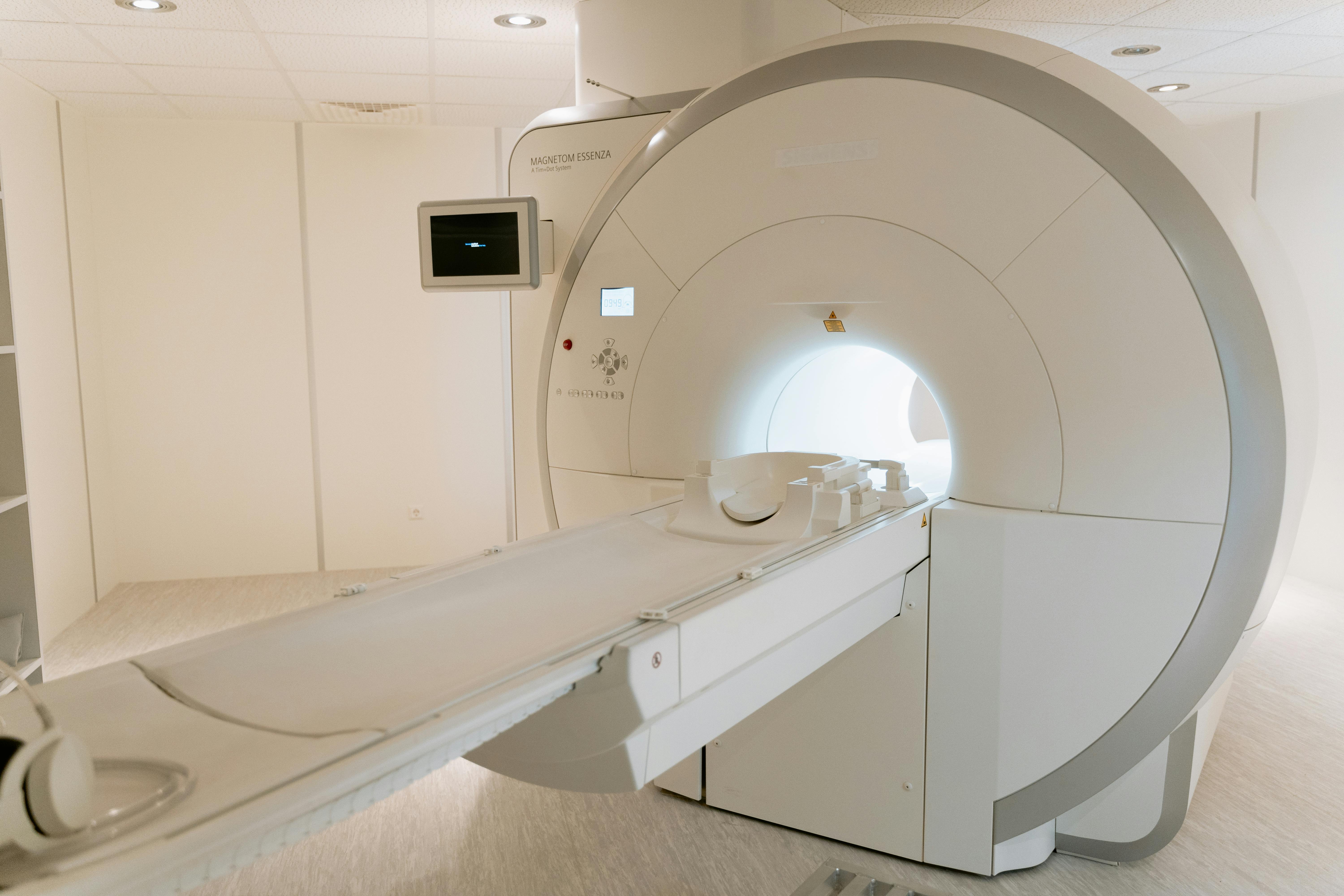
In our health-conscious world, some people are opting for yearly MRI scans, even without any symptoms or medical necessity. But before you book that annual appointment, let's take a closer look at how MRIs actually work and whether the benefits outweigh the risks for routine screening.
Magnetic resonance imaging, or MRI, has revolutionized medicine by allowing doctors to visualize soft tissues, organs, and abnormalities without radiation or invasive procedures. MRIs use powerful magnets and radio waves to create detailed cross-sectional images of the body (Weaver et al.).
An article published in Healthline notes that MRIs are extremely helpful in detecting brain, spinal, and other cancers. However, they note that it is possible for an MRI to miss certain aspects, such as a small tumor, which can lead to misdiagnoses. For example, an MRI cannot diagnose blood cancer, as specific tests will need to be done to confirm its presence (Srakocic).
According to the FDA, MRIs do not use ionizing radiation like X-rays or CT scans. This makes them safer for repeated imaging. However, the strong magnetic fields can interact with metal implants, pacemakers, and other devices, making MRIs unsuitable for some people. Gadolinium contrast dyes used in some MRIs can also rarely cause adverse reactions (FDA).
MRIs are incredibly valuable, but they do have limitations. One problem with MRIs are motion artifacts, which are caused by patient motion and physiological processes, which may interfere with the results. A 2017 study showed that movement artifacts significantly degrade MRI image quality, especially in high-resolution and low-signal applications, but can be reduced through optimized imaging techniques, patient management, and motion-correction strategies (Havsteen et al.).
Traditionally, the majority of the literature regarding whole body MRI (WB-MRI) in the context of cancer screening research has primarily concentrated on high-risk populations such as individuals with hereditary cancer syndromes. In comparison to the previous literature, a 2025 systematic review and meta-analysis examined the use of whole body MRIs in asymptomatic, average-risk patients. Across 10 studies including more than 9,000 participants, WB-MRI detected confirmed cancers in about 1.57% of individuals. In addition to being a valid technique that was also non-invasive, the technique was associated with frequent incidental findings, variability in imaging protocols, and a lack of data regarding post-maintenance care. Additionally, there was little evidence on cost-effectiveness or long-term clinical benefit, suggesting that despite growing commercial interest, WB-MRI currently has limited utility as a population-level cancer screening tool in asymptomatic individuals (Martins et al.).
Mainstream Medical
A single MRI can be quite expensive, time consuming, and resource intensive which is why physicians are generally selective when ordering one. In the mainstream medical perspective, MRIs are typically reserved for cases in which other imaging modalities, such as an ultrasound or CT scan, are insufficient. Additionally, it can be reserved for detailed soft-tissue characterization that is essential for diagnosis or treatment planning. This cautious approach helps balance the diagnostic benefit with cost, availability, and the risk of incidental findings that may lead to unnecessary follow-up testing.
Additionally, the American College of Radiology has issued this statement:
“The American College of Radiology® (ACR®), at this time, does not believe there is sufficient evidence to justify recommending total body screening for patients with no clinical symptoms, risk factors or a family history suggesting underlying disease or serious injury.
To date, there is no documented evidence that total body screening is cost-efficient or effective in prolonging life. In addition, the ACR is concerned that such procedures will lead to the identification of numerous non-specific findings that will not ultimately improve patients' health but will result in unnecessary follow-up testing and procedures, as well as significant expense.
The ACR will continue to monitor scientific studies concerning the utility of screening total body MRI” (ACR).
Alternative/Holistic
From an alternative and holistic perspective, routine yearly MRI scans in asymptomatic individuals raise important considerations about the balance between early detection and overall well-being. While advanced imaging can provide detailed anatomical information, it does not necessarily equate to better health outcomes in the absence of symptoms or clinical indications. Holistic health models emphasize listening to the body, maintaining lifestyle practices that support long-term health, such as regular movement, stress management, sleep quality, and nutrition, and using medical imaging as a tool rather than a routine checkup. Unnecessary scans may uncover incidental findings that do not pose immediate health risks but can lead to anxiety, further testing, and interventions that may disrupt a person’s physical and emotional equilibrium. From this viewpoint, imaging is best reserved for situations where clinical signs, risk factors, or changes in health warrant deeper investigation.
Influencer/Public
Recently, annual whole-body scans through MRIs have appeared on public radar through celebrities like members of the Kardashian family, who have been vocal about these ‘peace of mind’ scans. Such scans have been popularized through social networks, as a ‘cutting-edge self-care tool’ or ‘the ultimate health check-up.’ Although this has increased public discourse about preventive healthcare, it has also led to a convergence of conventional medicine and ‘wellness’ trends. According to medical professionals, while these scans may be available and comforting for celebrities or individuals with deep pockets, it is not necessarily so for others. As a trend propagated by influencers every year, it can lead people to believe that ‘more’ means ‘better’ when it comes to their healthcare, which may not be the case. For many, annual full-body MRI scans have become a luxury wellness service, accessible primarily to those with the financial means rather than a medical necessity (Blum and Holtermann).
MRIs offer an unprecedented, non-invasive look inside the human body with exceptional soft-tissue contrast and resolution. They are invaluable tools for diagnosing disease, monitoring progression, and guiding treatment decisions. For patients presenting symptoms, having risk factors, or requiring detailed imaging, MRIs can be life-saving.
However, when it comes to healthy, asymptomatic individuals, the benefits of routine or yearly whole-body MRI scans are unclear. Evidence shows a low detection rate for unsuspected cancers, while incidental findings are common, often leading to additional tests, anxiety, and potentially unnecessary interventions. The high cost and resource demands of MRI further limit its practicality as a universal screening tool.
Medical, holistic, and public perspectives converge on the importance of using MRIs wisely:
Ultimately, MRIs should be reserved for specific clinical indications, risk-based screening, or research contexts. For average-risk individuals, smart, evidence-based preventive health practices, such as age-appropriate screenings, healthy lifestyle choices, and symptom monitoring, remain the most effective strategies. While the allure of a full-body scan is understandable, the path to meaningful peace of mind is guided not just by high-tech images but by informed, judicious decision-making.
While MRIs are highly accurate and informative for diagnosing disease, their value for screening healthy people remains unclear. Until evidence proves otherwise, an annual MRI is more likely to rattle your nerves than extend your life. Talk to your doctor about your individual risks and options before signing up for a scan.
ACR. “ACR Statement on Screening Total Body MRI.” Acr.org, 17 Apr. 2023, www.acr.org/News-and-Publications/Media-Center/2023/ACR-Statement-on-Screening-Total-Body-MRI. Accessed 31 Dec. 2025.
Blum, Dani, and Callie Holtermann. “The New Status Symbol Is a Full-Body M.R.I.” The New York Times, 19 Sept. 2023, www.nytimes.com/2023/09/19/well/live/mri-prenuvo-full-body-scan.html. Accessed 31 Dec. 2025.
FDA. “Benefits and Risks.” U.S. Food and Drug Administration, 9 Dec. 2017, www.fda.gov/radiation-emitting-products/mri-magnetic-resonance-imaging/benefits-and-risks. Accessed 31 Dec. 2025.
Havsteen, Inger, et al. “Are Movement Artifacts in Magnetic Resonance Imaging a Real Problem?—a Narrative Review.” Frontiers in Neurology, vol. 8, no. 232, 30 May 2017, www.ncbi.nlm.nih.gov/pmc/articles/PMC5447676/, https://doi.org/10.3389/fneur.2017.00232. Accessed 31 Dec. 2025.
Martins, João, et al. “Whole-Body MRI for Opportunistic Cancer Detection in Asymptomatic Individuals: A Systematic Review and Meta-Analysis.” European Radiology, 30 Aug. 2025, pubmed.ncbi.nlm.nih.gov/40884613/, https://doi.org/10.1007/s00330-025-11976-5. Accessed 31 Dec. 2025.
Srakocic, S. “Can an MRI Detect Cancer? What It Can and Can’t Detect.” Healthline, 10 Mar. 2023, www.healthline.com/health/cancer/can-mri-detect-cancer. Accessed 31 Dec. 2025.
Weaver, Jennifer S., et al. “Magnetic Resonance Imaging of Musculoskeletal Infections.” Polish Journal of Radiology, vol. 87, no. 1, 5 Mar. 2022, pp. 141–162, pmc.ncbi.nlm.nih.gov/articles/PMC9047866/, https://doi.org/10.5114/pjr.2022.113825. Accessed 31 Dec. 2025.
Disclaimer: This article is intended for informational and educational purposes only and should not be considered medical advice, diagnosis, or treatment. The content presented reflects current research, expert perspectives, and publicly available sources but is not a substitute for personalized guidance from a qualified healthcare professional. Medical decisions, including whether to undergo MRI imaging or other screening tests, should always be made in consultation with a licensed physician who can evaluate individual symptoms, medical history, and risk factors. The authors and publishers of this article are not responsible for any actions taken based on the information provided herein. Although the data found in this blog and infographic has been produced and processed from sources believed to be reliable, no warranty expressed or implied can be made regarding the accuracy, completeness, legality or reliability of any such information. This disclaimer applies to any uses of the information whether isolated or aggregate uses thereof.