
August 24, 2026
10 min
Maya Q.
July 20, 2026
6 min
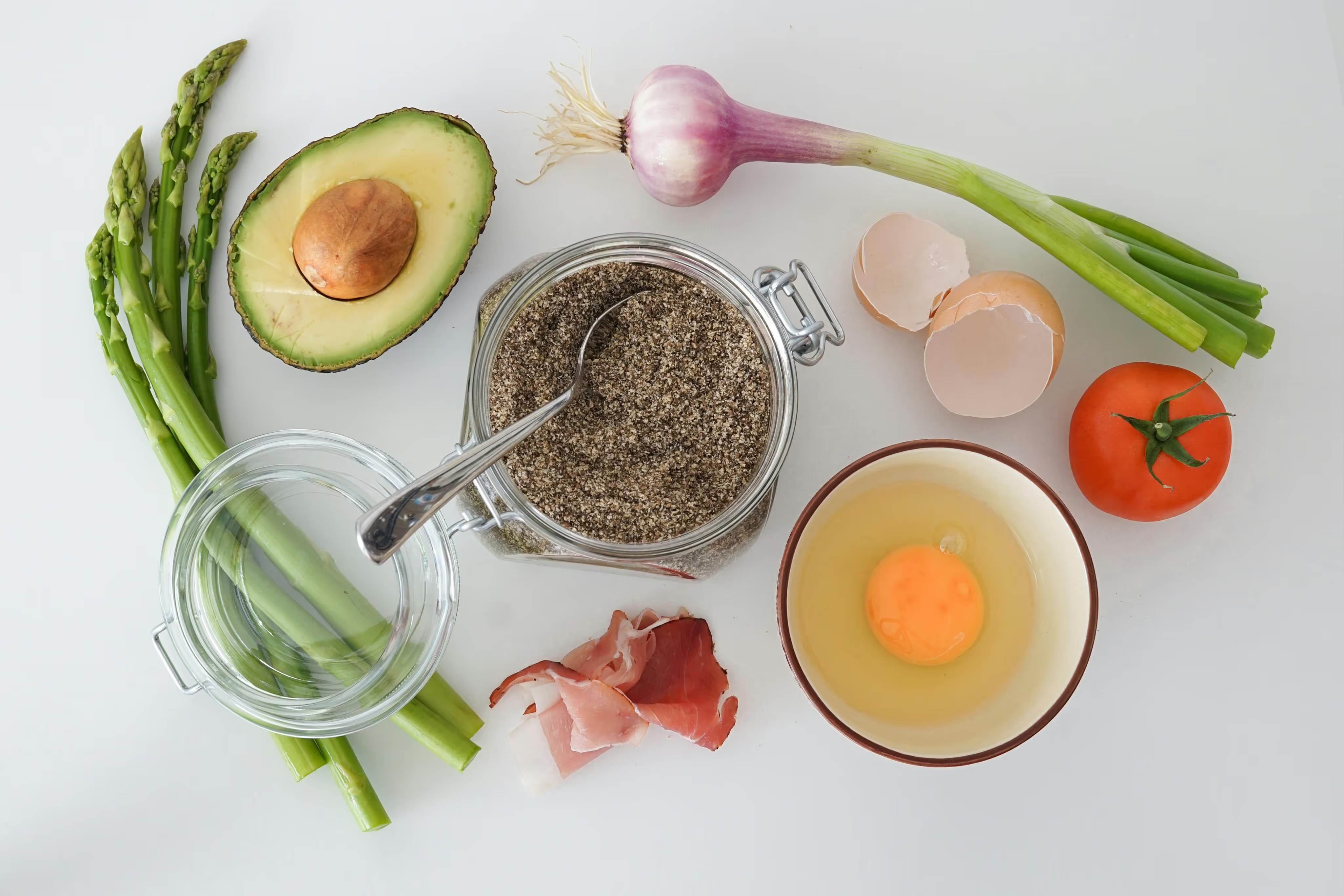
Most of the ingredients that generate the most consumer panic have been reviewed by regulatory agencies and found safe for the vast majority of people. The fear, it turns out, is often older than the science that eventually revised it. This article looks at three of the most debated food additives — MSG, high fructose corn syrup, and artificial colors — and separates what the evidence actually shows from what the internet decided decades ago.
What the evidence supports: Regulatory agencies including the FDA have extensively reviewed MSG, HFCS, and artificial colors and classify them as generally safe at typical dietary exposures. Most people consume these ingredients without measurable harm. What’s overstated or unsupported: Early fears about MSG causing “Chinese Restaurant Syndrome” were based on methodologically flawed studies. The link between artificial food dyes and ADHD is overstated — effects are small and affect a subset of children, not the general population. ⚕️ LyfeiQ Score: 8/10 — For most people, these additives are safe in normal amounts. Focus on overall diet quality rather than individual ingredients.
The science on controversial food additives is more nuanced than the headlines suggest. Here is what peer-reviewed research and regulatory review actually tell us about the three most debated ingredients.
Monosodium Glutamate (MSG): Despite its notorious reputation, MSG is simply a concentrated form of glutamate, an amino acid naturally present in many foods like tomatoes, cheese, and mushrooms. A comprehensive review by Zanfirescu et al. (2019) in Comprehensive Reviews in Food Science and Food Safety found no credible evidence that MSG causes adverse health effects in the general population. The FDA considers it “generally recognized as safe.”
High Fructose Corn Syrup (HFCS): This sweetener is derived from corn starch and has been linked to obesity and metabolic disease. A 2014 study by Cozma and Sievenpiper found that moderate fructose intake does not appear directly harmful, but high doses or caloric excess may contribute to obesity and metabolic risk. The Cleveland Clinic notes that HFCS can promote inflammation and excess fat storage at higher intake levels.
Artificial Colors: Synthetic dyes like Red 40 and Yellow 5 have been scrutinized for potential links to hyperactivity in children. A 2022 systematic review by Miller et al. in Environmental Health found that synthetic dyes can adversely affect children’s behavior and raised pointed questions about whether current FDA acceptable daily intakes are adequate for susceptible children. A separate study by Arnold et al. (2012) in Neurotherapeutics found small but measurable behavioral effects across children with and without ADHD — suggesting a broader population signal rather than a disorder-specific sensitivity.
Many of the studies linking these ingredients to harm have significant limitations. Several findings are based on animal models or observational designs, neither of which establishes causation in humans. The early studies linking MSG to “Chinese Restaurant Syndrome” were later criticized for methodological flaws and small sample sizes — a pattern documented by Bawaskar et al. (2017) in Indian Journal of Critical Care Medicine.
The most practical framework is dose-response: the same compound that is harmless in small amounts may be harmful in large ones, and vice versa. For most people, typical dietary exposures to food additives are far below levels expected to cause harm.
That said, individual sensitivity is real. If you or your child notice consistent behavioral or physical reactions after consuming foods with synthetic dyes or MSG, reducing those specific ingredients is a reasonable and low-risk experiment. For the general population, eliminating these additives entirely is unlikely to produce meaningful health benefits — especially if it crowds out attention from bigger dietary levers like overall food quality, fiber intake, and ultra-processed food consumption.
Regulatory agencies have conducted extensive reviews and concluded that synthetic food additives are safe when consumed within established limits. The FDA’s GRAS designation for MSG is backed by decades of evidence. Sewell et al. (2022) in Archives of Toxicology underlines the core principle: dose thresholds, not ingredient names, determine toxicological risk. Sensitivity reactions can occur in a small subset of individuals, but current regulations are designed to protect the general population at typical exposure levels.
From a holistic perspective, even ingredients classified as safe by regulatory standards are synthetic and processed — and some practitioners argue this is inherently less compatible with long-term human health. Proponents of whole-food approaches point to the precautionary principle: if you can avoid a synthetic additive without meaningful sacrifice, why not? The NCCIH and integrative practitioners often frame this as reducing “unnecessary chemical load,” particularly for children and those with sensitivities. The evidence for this position is largely theoretical, but it is not unreasonable as a precautionary stance.
Across social media and wellness culture, the concern about food additives is often amplified well beyond the evidence. Influencers and clean-eating advocates frequently frame MSG as a neurotoxin, HFCS as metabolic poison, and artificial dyes as a root cause of childhood behavioral disorders — characterizations the science does not support. Popular TikTok creators often claim that cutting all synthetic additives will produce dramatic improvements in energy, mood, and focus. That claim has no solid evidence base. What is worth noting: some creators in the evidence-based nutrition space, such as registered dietitians on YouTube and Instagram, push back on additive fearmongering and advocate for nuance — a small but growing counterweight.
The gap between what the science says and what wellness culture says about food additives is significant — but not entirely without basis on either side. Regulatory agencies have done extensive review. The consensus is clear: these ingredients are safe for most people at typical consumption levels.
At the same time, the research on artificial dyes and children’s behavior is real, if modest. Miller et al.’s call for re-evaluation of FDA daily intake thresholds for sensitive populations is a peer-reviewed concern, not fringe thinking. That matters.
Where the evidence ends and marketing begins is in the leap from “small effects in some children” to “everyone should avoid all synthetic additives.” That extrapolation is not supported by the data. The most important variables for health remain overall diet quality and caloric balance — not the presence or absence of a specific dye or sweetener.
As genetic testing matures, personalized nutrition may eventually allow identification of individuals genuinely susceptible to specific additives — making blanket avoidance unnecessary for most while providing targeted guidance for those who need it. Consumer demand for “clean label” products is already pushing food scientists toward plant-based color and sweetener alternatives. And perhaps most usefully, the field of science communication is beginning to develop better frameworks for conveying nuanced dose-response findings to a public that tends to process food safety in binary terms.
Credibility Rating: 8/10
👉 Who should try this: Most adults and children consuming these ingredients as part of a varied, balanced diet have nothing to worry about based on current evidence.
👉 Who should skip this: Parents of children who display consistent behavioral changes after consuming artificial dyes, or individuals who notice physical reactions to MSG, have good reason to experiment with elimination. Low-risk and worth testing.
⚕️ LyfeiQ Score: 8/10 — For most people, stressing about MSG or food dyes is majoring in the minors. Focus on overall diet quality. If you or your child notice a consistent reaction, a brief elimination trial is low-risk and reasonable. Always consult your doctor if you suspect a sensitivity.
Related: Food Preservatives: Why “Chemicals You Can’t Pronounce” Isn’t the Health Warning You Think It Is
Disclaimer: This content includes personal opinions and interpretations based on available sources and should not replace medical advice. This content includes interpretation of available research and should not replace medical advice. Although the data found in this blog and infographic has been produced and processed from sources believed to be reliable, no warranty expressed or implied can be made regarding the accuracy, completeness, legality or reliability of any such information. This disclaimer applies to any uses of the information whether isolated or aggregate uses thereof.