

August 24, 2026
10 min
Maya Q.
July 20, 2026
5 min
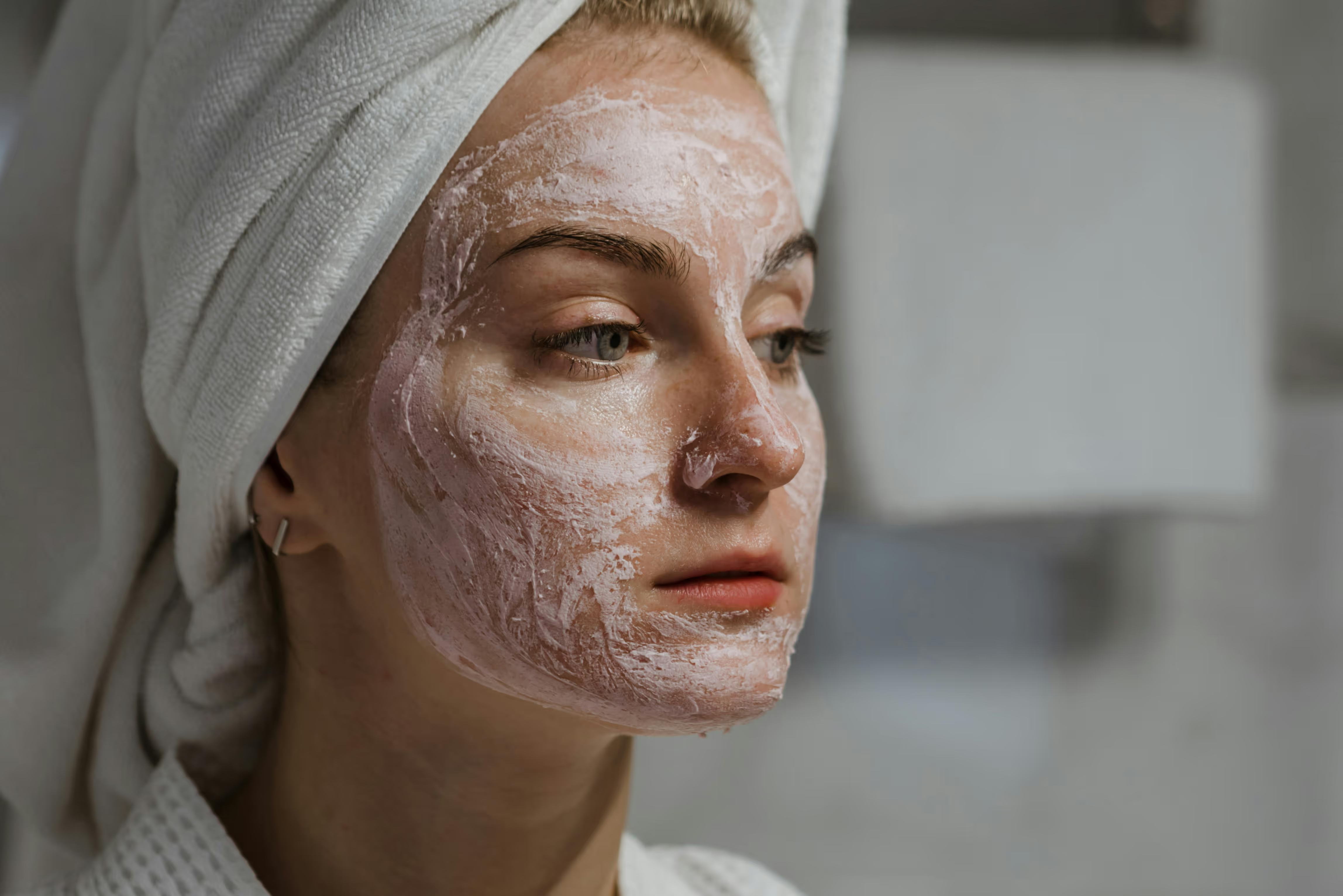
Ceramides may sound like a weird science concept, but these little lipids are the unsung heroes of healthy, hydrated skin. Found naturally in our skin's outer layer, ceramides play a crucial role in maintaining the skin's barrier function. As we age or face environmental stressors, our ceramide levels can decrease, leading to dryness, irritation, and even signs of aging.
✅ What the evidence supports: Ceramide-containing moisturizers significantly improve skin hydration and barrier function, with particular benefit for conditions like atopic dermatitis and age-related dryness — supported by systematic reviews and multiple peer-reviewed studies. ⚠️ What's overstated or unsupported: Most research focuses on topical application, not oral supplements. Optimal concentrations and long-term effects are still not well established, and plant-based ceramides lack the same clinical evidence base as synthetic or bioidentical formulations. ⚕️ LyfeiQ Score: 8/10 — A safe, well-supported addition to most skincare routines, especially for dry, sensitive, or aging skin.
Ceramides are among the most well-studied molecules in skin health, with a growing body of evidence supporting their role in barrier function, hydration, and the treatment of inflammatory skin conditions. A 2025 study published in Experimental Dermatology found that in adults with dry and eczema-prone skin, aging is associated with worsening dryness and barrier dysfunction, driven by marked shifts in the stratum corneum lipidome — particularly an increase in shorter-chain NdS ceramides. This may help explain the higher prevalence of xerosis and eczema later in life (Williams et al.).
Ceramides work alongside other lipids like cholesterol and fatty acids to form a protective barrier that prevents moisture loss and defends against external irritants — what most skincare products refer to when they promote "barrier healing." Research has established ceramides as essential for barrier integrity and hydration, widely used in treating inflammatory skin conditions like atopic dermatitis, and increasingly explored as a biomarker and therapeutic agent, though advanced applications such as cancer treatment remain pre-clinical (Yong et al.). Understanding their synthesis, role in skin disease, and effective delivery or stimulation strategies is considered key to advancing both therapeutic and cosmetic approaches for improving skin health (Huang et al.).
Ceramides are primarily applied topically in the form of moisturizers, serums, and barrier creams — and dermatologists widely recommend them as part of both therapeutic and preventative skincare regimens. Dermatologist-recommended brands such as CeraVe incorporate ceramides to help restore and maintain the skin's natural lipid balance. These products are frequently marketed as restorative, anti-aging, or suitable for sensitive and compromised skin, including individuals with atopic dermatitis, eczema, or age-related xerosis.
The optimal concentration and combination of ceramides with other ingredients may vary depending on product formulation and individual skin needs. More research is needed to determine long-term effects of ceramide supplementation and to establish standardized dosing guidelines. From a holistic perspective, diets rich in healthy fats — such as those found in avocados, nuts, seeds, and fatty fish — may provide essential building blocks for the body's natural ceramide synthesis and overall skin barrier health.
Dermatologists widely recognize ceramides as a cornerstone ingredient for maintaining skin health. Dr. Joshua Zeichner, Director of Cosmetic and Clinical Research in Dermatology at Mount Sinai Hospital, explains that ceramides are like the mortar between bricks — they help hold skin cells together, and when ceramide levels decline, the skin barrier weakens, leading to dryness and irritation.
A literature review found that ceramide-containing topical formulations improve skin hydration and barrier function in atopic dermatitis, though larger double-blinded clinical trials are needed to confirm their clinical efficacy (Kono et al.). A 2023 systematic review in the Indian Journal of Dermatology concluded that moisturizers containing ceramides significantly improve clinical severity of atopic dermatitis compared with other moisturizers (Nugroho et al.). As ceramide levels naturally decline with age and in inflammatory skin diseases, consistent use of ceramide-containing moisturizers is often recommended as part of both therapeutic and preventative skincare regimens.
From a holistic perspective, supporting ceramide production extends beyond topical skincare alone. Diets rich in healthy fats, such as those found in avocados, nuts, seeds, and fatty fish, may provide essential building blocks for the body's natural ceramide synthesis and overall skin barrier health. Plant-derived ceramide sources, including wheat or rice, are sometimes used in skincare and wellness approaches due to their proposed barrier-supporting properties. However, while these plant-based ceramides show promise, further research is needed to determine how their efficacy compares with the synthetic or bioidentical ceramides commonly used in clinically tested skincare formulations.
Across social media platforms, skincare enthusiasts and beauty creators frequently highlight ceramide-infused products as essentials for achieving hydrated, resilient skin. Many users report that incorporating ceramide serums or moisturizers into their routines leaves their skin feeling noticeably plumper, smoother, and more comfortable — often describing the effect as deeply nourishing and barrier-strengthening. This widespread enthusiasm reflects a growing public awareness of the role ceramides play in locking in moisture and supporting overall skin health.
However, some consumers are confused about the difference between ceramides and other popular skincare ingredients. A common question on skincare forums is whether you need ceramides if you're already using hyaluronic acid. While both ingredients help with hydration, they work differently: ceramides strengthen the barrier, while hyaluronic acid attracts and holds moisture.
Ceramides have strong scientific backing for topical use, but the gap between clinical evidence and marketing claims is worth noting. Mainstream dermatology and alternative wellness approaches actually converge on one point: ceramides matter for skin barrier health. The mainstream focuses on topical, clinically tested formulations; the holistic perspective extends to dietary support and plant-based sources. Both have merit, though the clinical evidence for topical ceramides is far stronger than for dietary or plant-based approaches.
The influencer space has done a reasonable job spreading accurate information about ceramides, though some confusion persists — particularly around how ceramides compare to or interact with other popular ingredients like hyaluronic acid. Combining ceramides with other hydrating and protective ingredients may offer a synergistic approach to maintaining healthy, resilient skin. Where marketing tends to overreach is in the oral supplement space and in overstating the uniqueness of any one brand's ceramide formulation. The underlying molecule is well-studied; specific product claims require more scrutiny.
The field is moving toward more personalized and targeted applications. Emerging directions include personalized ceramide formulations based on individual skin types and needs, combination therapies pairing ceramides with other barrier-supporting ingredients such as niacinamide or cholesterol, and further exploration of plant-based ceramides as a sustainable and accessible alternative to synthetic sources. Researchers are also developing targeted ceramide treatments for specific conditions such as atopic dermatitis or aging skin.
Ceramides are the invisible workhorses behind healthy, well-hydrated skin. As a crucial component of the skin's moisture barrier, they play a significant role in protecting against moisture loss. When the skin ages or develops certain conditions, ceramide deficiencies can lead to dehydrated, irritated, and aged-looking skin. Adding ceramides to your skincare routine — whether through topical applications or a comprehensive wellness plan — can be beneficial in helping to repair and rebuild barrier function. Although further research is needed to better determine optimal levels and ideal ingredient combinations, the positive effects of ceramides on skin health are well established.
What is Ceramides' LyfeiQ?
Credibility Rating: 8/10
👉 Who should try this: Anyone dealing with dry, sensitive, aging, or eczema-prone skin is likely to benefit from ceramide-containing moisturizers. They are safe for most skin types and widely available.
👉 Who should skip this: Those with no skin barrier concerns and a well-functioning skincare routine may find ceramide products redundant rather than harmful — it's more a question of necessity than risk.
⚕️ LyfeiQ Score: 8/10 — Ceramides are a safe and effective addition to most skincare routines, with strong scientific evidence supporting their benefits for skin hydration, barrier function, and overall health. As always, individual results may vary, and it's best to consult with a dermatologist to determine the optimal products and ingredients for your specific skin needs.
Related: Do Skincare Peptides Actually Work?
References:
Disclaimer: This content includes personal opinions and interpretations based on available sources and should not replace medical advice. This content includes interpretation of available research and should not replace medical advice. Although the data found in this blog and infographic has been produced and processed from sources believed to be reliable, no warranty expressed or implied can be made regarding the accuracy, completeness, legality or reliability of any such information. This disclaimer applies to any uses of the information whether isolated or aggregate uses thereof.