

December 18, 2025
10 min
Nathan J
July 20, 2026
7 min

A single high-strength pouch tucked under the lip can deliver as much nicotine as several cigarettes at once — no smoke, no smell, no spit. That discretion is exactly why pouches spread so fast, and exactly why the habit is so easy to underrate. The product is cleaner than a cigarette. The addiction is not.
What the evidence supports: For an adult who already smokes or dips, switching completely to pouches almost certainly lowers exposure to the carcinogens that come from burning or fermenting tobacco. Early oral-health data even shows gum measures improving in smokers who switch. What’s overstated or unsupported: “Tobacco-free” does not mean harm-free or non-addictive. Pouches still deliver dependence-forming doses of nicotine, still cause local gum and mouth lesions, and have almost no long-term human safety data. For a never-smoker — especially a teenager — they introduce a real addiction with no upside. ⚕️ LyfeiQ Score: 4/10 — A legitimate harm-reduction tool for committed smokers; a bad bet for everyone else.
The honest answer is: not nearly enough yet, and most of what exists comes from the people selling the product. Nicotine pouches are small fiber sachets holding nicotine powder, flavoring, sweeteners and pH adjusters, held between the lip and gum. They contain no tobacco leaf, which is the basis for the “tobacco-free” label. A 2024 comprehensive review from Johns Hopkins researchers concluded that pouches likely produce less harm to the individual user than cigarettes or moist snuff, and can blunt withdrawal in smokers — but flagged that most existing studies are industry-funded and that no randomized trials have followed users long enough to characterize real-world health effects.
On the mouth specifically, the data is thin and low-quality. A 2024 systematic review in BMC Oral Health found only three eligible studies covering 190 people total, all rated high risk of bias. The consistent finding was local mucosal change at the spot where the pouch sits — ranging from mild wrinkling to white lesions — plus dry mouth, soreness, gum blisters and an odd jaw sensation, roughly tracking with how many pouches a person used and for how long.
A larger 2024 critical review in the Harm Reduction Journal synthesized 52 studies on non-combustible products and reached a nuanced verdict: users of these products tend to have better oral-health scores than cigarette smokers, but worse scores than people using nothing at all. Most studies ran only a few years and struggled to confirm that people were truly using one product exclusively.
The youth numbers are the part that should give everyone pause.
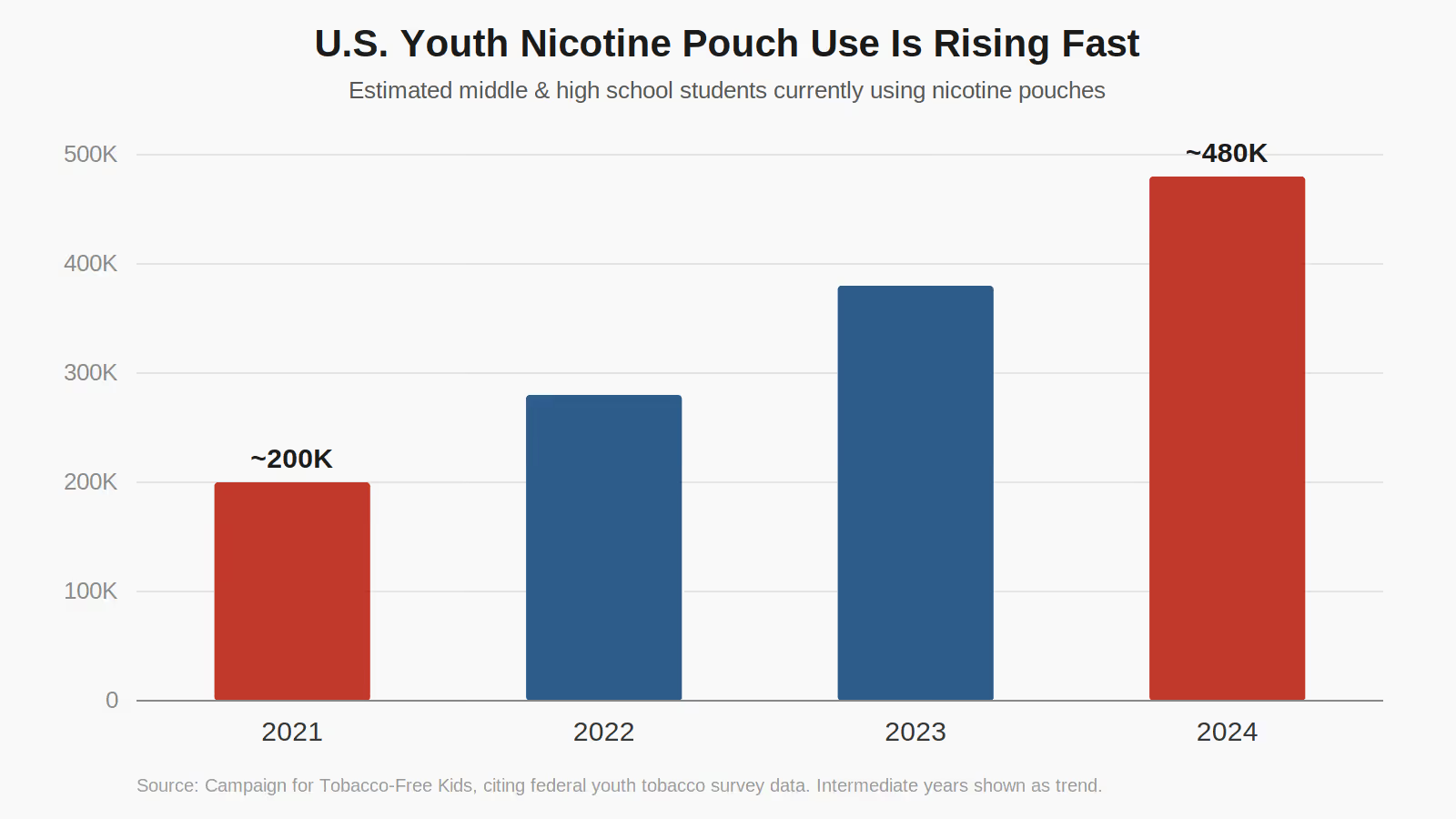
The single most important variable is what you’re replacing. The FDA’s logic when it authorized 20 Zyn products in January 2025 rested entirely on adults who smoke or dip switching completely — not on adding pouches on top of cigarettes, and not on never-smokers picking them up. Dual use likely erases most of the benefit.
A few practical anchors worth knowing:
Regulators and major health bodies hold two ideas at once. The FDA explicitly stated that authorization does not mean these products are safe, that there is no safe tobacco product, and that youth and non-users should not start. Its decision was a population-level bet that smokers switching would outweigh youth uptake. The U.S. Surgeon General’s position, cited by the Campaign for Tobacco-Free Kids, is blunter: youth nicotine use in any form is unsafe and can harm the parts of the adolescent brain responsible for attention, memory and learning.
A growing harm-reduction camp argues pouches are among the least bad options on the shelf. Proponents — including researchers running an in-progress network meta-analysis of non-combustible products — point to the absence of combustion and the lower carcinogen load relative to smoking. An industry-funded randomized trial published in Oral Health & Preventive Dentistry found that smokers who switched to pouches over 24 weeks actually improved on gum-inflammation and bleeding measures versus those who kept smoking. The signal is plausible — but it’s a short study, funded by the maker, comparing against cigarettes rather than against using nothing.
Online, the framing is almost entirely about lifestyle, not risk. Zyn went viral on TikTok well before the FDA ruling, with creators treating pouches as a clean, odorless, gym-and-desk-friendly nicotine fix — the “Zynfluencer” phenomenon that drew political scrutiny. The dissenting voices are also online: a visible community of people documenting their attempts to quit pouches describes genuine dependence, gum recession and the difficulty of stopping something they can use invisibly all day. That contrast — effortless to start, quietly hard to quit — is the part the marketing leaves out.
All three perspectives actually agree on the core facts; they just weight them differently. Everyone concedes pouches are less harmful than cigarettes. Everyone concedes they’re addictive. The fight is about who’s using them. “Tobacco-free” is the phrase doing the most work in the marketing, and it’s technically true and practically misleading — the tobacco leaf is gone, but the nicotine, the dependence, and the cardiovascular stimulation are not.
The youth angle is where the harm-reduction case gets shakiest. An editorial in the Journal of Psychosocial Nursing describes youth-targeted flavors and influencer marketing driving uptake among adolescents, and reviews of adolescent nicotine neurobiology show the developing brain is unusually vulnerable to forming durable nicotine dependence. A product that helps a 45-year-old smoker and addicts a 16-year-old non-smoker is not simply “good” or “bad” — its value depends entirely on who picks it up.
Three gaps stand out. First, independent, non-industry randomized trials running longer than a few months — nearly all current human data is short-term and maker-funded. Second, real-world studies that can actually distinguish exclusive pouch users from dual users, since dual use likely cancels the benefit. Third, dedicated adolescent research, because the population most drawn to flavored pouches is also the one with the most to lose neurologically and the least represented in the existing evidence.
Related: Can Nicotine Gum Actually Help You Quit Smoking? Here’s What Science Says
Credibility Rating: 4/10
👉 Who should try this: Adult smokers or dippers who have struggled to quit and are willing to switch completely, ideally as a step toward stopping nicotine altogether.
👉 Who should skip this: Anyone who doesn’t already use nicotine — especially teenagers and young adults — and people with cardiovascular conditions who should weigh the blood-pressure effect.
⚕️ LyfeiQ Score: 4/10 — A defensible exit ramp from smoking, not a harmless habit to pick up. If you don’t smoke, there’s no version of this that makes you healthier.
Research findings sourced via PubMed.
Disclaimer: This content includes personal opinions and interpretations based on available sources and should not replace medical advice. This content includes interpretation of available research and should not replace medical advice. Although the data found in this blog and infographic has been produced and processed from sources believed to be reliable, no warranty expressed or implied can be made regarding the accuracy, completeness, legality or reliability of any such information. This disclaimer applies to any uses of the information whether isolated or aggregate uses thereof.