August 24, 2026
10 min
Maya Q.
July 20, 2026
8 min
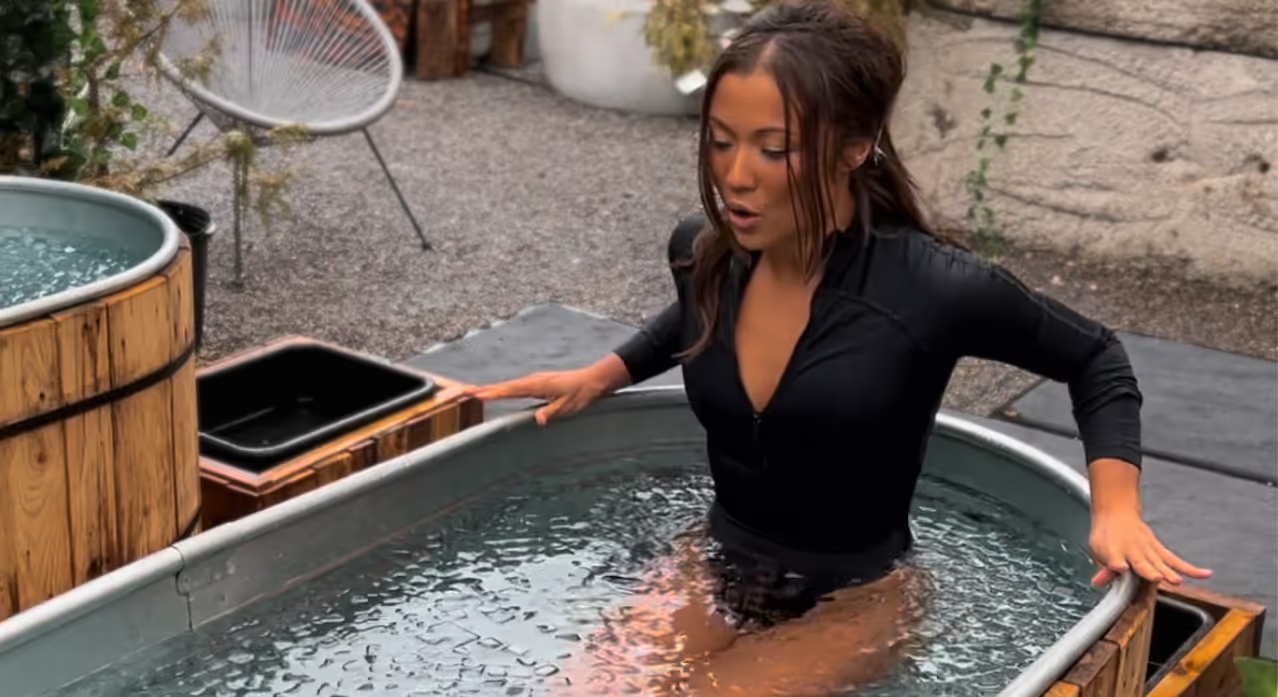
Open Instagram and you’ll find shirtless influencers soaking in ice buckets preaching about dopamine rushes and superhuman recovery. Walk into a sports medicine facility and you may hear the opposite. Cold plunges have become a popular and profitable wellness market — but does plunging into ice-cold water actually live up to the hype, or is this another exaggerated gimmick?
What the evidence supports: Cold water immersion has measurable physiological effects — modest benefits for athletic recovery and promising early evidence for mood and mental health via norepinephrine and endorphin release. What’s overstated: Claims around metabolism, longevity, and general wellness far outpace the evidence. Timing matters too: cold plunges immediately after resistance training may blunt muscle growth. ⚕️ LyfeiQ Score: 6/10 — A real tool with real limitations. Useful in specific contexts; not the all-purpose health upgrade it’s sold as.
Cold exposure activates a series of well-documented physiological mechanisms — but the leap from acute response to lasting health benefit is where the science gets complicated. When your body encounters cold water, blood vessels constrict (vasoconstriction) and then dilate upon re-warming. This vascular “workout” is theorized to improve circulation and reduce inflammation. Cold stress also activates brown adipose tissue (BAT), a specialized fat that burns calories to generate heat, with potential metabolic implications. And the cold shock stimulates the sympathetic nervous system, triggering norepinephrine release that may boost focus and mood.
For athletic recovery, mainstream institutions have found some support. The Mayo Clinic has noted that cold plunges may reduce exercise-induced muscle damage, and the Cleveland Clinic similarly acknowledges potential benefits for sore muscles and circulation. However, a study published in the Journal of Physiology found that cold water plunges were no more effective than active recovery — tempering the more dramatic claims. There is also a critical caveat for anyone doing resistance training: the inflammatory response that cold suppresses is also part of how muscles grow and adapt. Timing your cold plunge carefully relative to your training type matters more than most influencer content suggests.
For mental health, the signal is more promising. Studies on cold water swimming suggest potential reductions in depression and anxiety symptoms, likely through endorphin release and enhanced norepinephrine activity. These findings are intriguing — and preliminary.
For metabolism, brown fat activation is real, but the caloric burn from a typical cold plunge session is modest. The evidence does not currently support cold plunging as a meaningful weight loss or metabolic transformation strategy for most people.
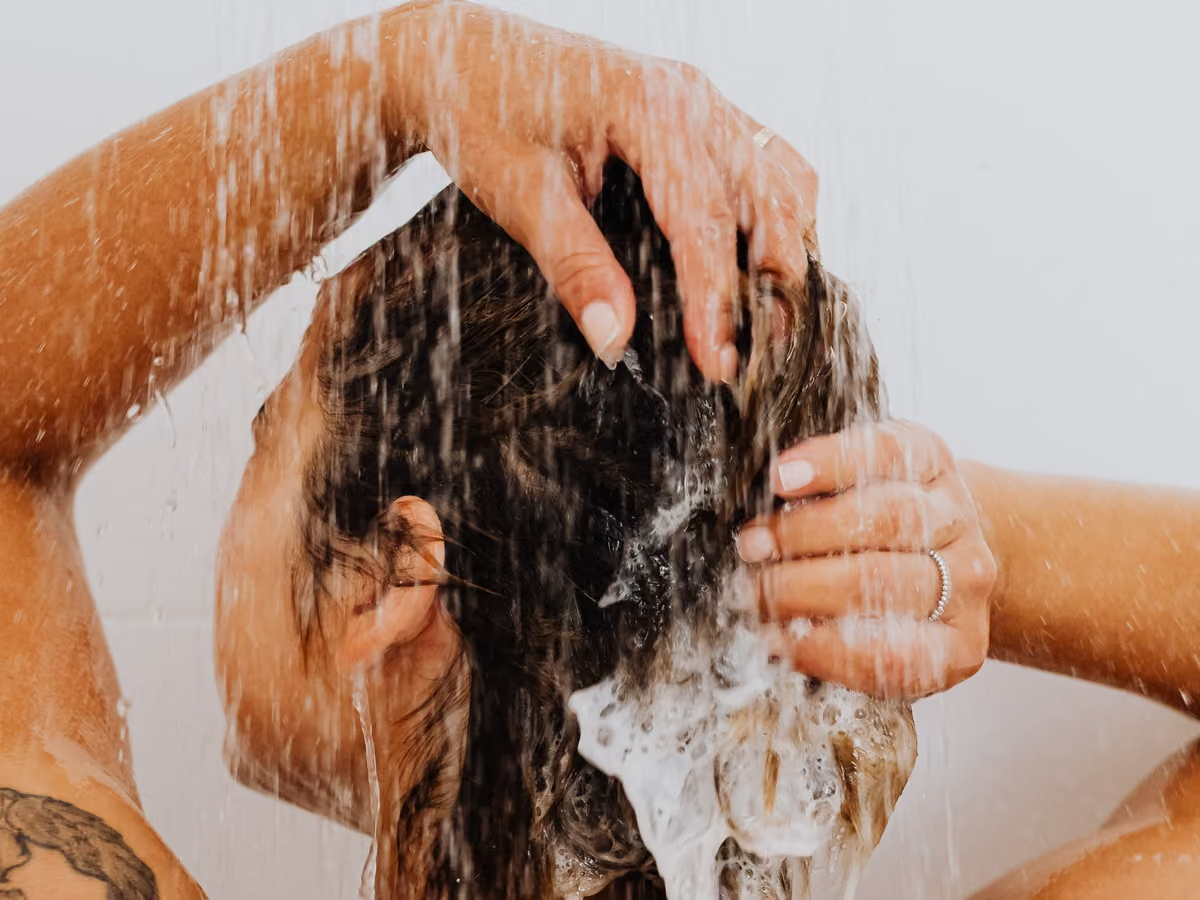
Protocol and timing are everything — “just jump in” is not a plan. For those looking to experiment, starting with cold showers is the safest entry point. Gradually lower the temperature over days or weeks rather than going straight to ice water. A typical cold plunge protocol involves water at 10–15°C (50–59°F) for 5–15 minutes, though individual tolerance varies widely.
If your primary goal is building muscle through resistance training, avoid cold plunges immediately after your workout. The inflammatory signals you dampen are also part of the muscle adaptation process. For endurance athletes or in sports with back-to-back competition demands, the recovery trade-off looks more favorable.
Never plunge alone — particularly in open water. Never consume alcohol beforehand. And if you have cardiovascular disease, hypertension, Raynaud’s syndrome, or any heart condition, talk to your physician before trying cold immersion. The American Heart Association has specifically flagged cardiovascular risks of cold water immersion for vulnerable individuals.
Mainstream medicine’s position on cold plunges is cautiously supportive in narrow applications — and appropriately skeptical of sweeping wellness claims. The Mayo Clinic acknowledges potential benefits for muscle soreness from intense exercise, and the Cleveland Clinic cites possible improvements to circulation and mental focus. Neither institution endorses cold plunging as a treatment for metabolic disease or longevity extension.
The field’s largest concern is safety. Cold water immersion can provoke dangerous cardiovascular reactions — including arrhythmias — particularly in people with pre-existing heart conditions. Hyperventilation triggered by cold shock can cause drowning in unprepared swimmers. The American Heart Association has noted explicitly that cold water immersion carries real, underreported cardiovascular risks for vulnerable populations.
A study in the Journal of Physiology found that cold water plunges performed equal to — but not better than — active recovery for muscle repair, undercutting one of the most common justifications for the practice. Mainstream sports medicine also now recognizes that cold water immersion is context-specific: what helps an endurance athlete may not help, and could potentially hinder, someone training for strength and muscle size.
The integrative wellness world has embraced cold exposure enthusiastically — and while their core intuition about hormetic stress has some scientific grounding, the extrapolations frequently outrun the data. The concept of hormesis — mild stressors that trigger adaptive body responses — is legitimate science. Cold exposure qualifies as a hormetic stressor, and the Finnish sauna-and-ice-plunge tradition represents centuries of empirical practice that deserves respect.
Dutch extreme athlete Wim Hof is the defining figure of the modern cold exposure movement. A 2014 paper co-authored with researchers showed that subjects trained in his combined cold immersion and breathing protocol could voluntarily modulate their immune response to an injected endotoxin — a finding that generated enormous excitement in integrative health circles. What often gets lost in the retelling: the subjects underwent an intensive multi-week training protocol, and the immune effects cannot be attributed to cold exposure alone. The study involved trained individuals, not average people doing weekend ice baths.
Integrative practitioners often present cold plunges as a way to reduce reliance on pharmaceuticals for mood disorders, enhance overall vitality, improve sleep, and even slow cellular aging. They cite anecdotal evidence from individuals with autoimmune conditions reporting improvements after regular cold exposure. Within responsible integrative communities, practitioners do emphasize gradual progression and individual variation — the same cautions mainstream medicine applies. Where this community oversteps is in treating anecdote as evidence and in oversimplifying the Wim Hof research.
Scroll through wellness Instagram, TikTok, or Facebook and you’ll encounter thousands of posts promoting cold plunges — most of them mixing real science with selective reporting and financial incentive. Fitness creators frequently share dramatic transformation stories attributing reduced body fat, improved performance, or resolved health conditions to cold plunging, almost never accounting for other lifestyle variables or confounding factors.
Most high-profile cold plunge content creators have affiliate relationships with tub manufacturers, coaching programs, or supplement brands. This creates a structural incentive to emphasize benefits and downplay risks. Eye-catching content — someone gasping in an ice-filled barrel at 5 a.m. — drives engagement regardless of what the research actually says.
The more extreme influencer claims — cold plunges “detoxify” the body, radically extend lifespan, or cure major illnesses — have no credible scientific foundation. They exploit the genuine desire people have for simple, accessible health tools, and they can cause real harm by encouraging people to delay or replace legitimate medical care. That said, some science-literate creators have pushed back on the most extreme claims and contextualized the evidence honestly — including the muscle-growth trade-off that the broader influencer ecosystem routinely ignores.
The honest picture is that cold water immersion occupies a genuinely interesting scientific space — not a pseudoscientific one, but not a proven wellness cure either. The physiological effects are real. The neurochemical responses are measurable. The athletic recovery data is directionally positive for endurance activities. The mental health signal is worth watching.
Where evidence ends and marketing begins is at specificity. The research supports cold water immersion for short-term recovery from high-intensity exercise and for potential acute mood improvement. It does not support it as a weight loss intervention, a longevity protocol, an immune system upgrade for the average person, or a replacement for established medical or psychiatric care.
Mainstream medicine’s conservatism is appropriate given genuine safety concerns and the still-limited evidence base. The alternative community’s enthusiasm is understandable but frequently untethered from study quality or population specificity. And the influencer ecosystem, while occasionally accurate, is compromised by financial incentives that structurally favor dramatic claims over nuanced ones.
The middle ground: cold plunges may become a valuable tool in the health toolkit for some people — particularly athletes and individuals managing mood — but they are not necessary, not sufficient on their own for most health goals, and genuinely not for everyone.
The most promising frontier is the intersection of cold exposure and mental health — specifically whether structured protocols can serve as adjunct interventions for depression and anxiety. Future research should also clarify dose-response relationships, examine long-term habituation effects on the neurochemical response, and study populations currently underrepresented in the literature: women, older adults, and people with metabolic conditions. The interaction between cold exposure, breathwork, and social factors also deserves untangling.
Credibility Rating: 6/10
👉 Who should try this: Endurance athletes looking for a recovery tool between training sessions, and healthy individuals curious about the mood and focus effects. Start with cold showers and work down gradually before committing to full immersion.
👉 Who should skip this: Anyone with cardiovascular disease, hypertension, arrhythmias, or Raynaud’s syndrome should consult a physician first. If your primary goal is building muscle through resistance training, cold plunges immediately after lifting may blunt your gains.
⚕️ LyfeiQ Score: 6/10 — Cold water immersion produces real physiological effects and has a legitimate, narrow evidence base. Use it strategically and treat the longevity, metabolism, and detox claims with healthy skepticism.
Related: [RELATED ARTICLE TITLE]
Disclaimer: This content includes personal opinions and interpretations based on available sources and should not replace medical advice. This content includes interpretation of available research and should not replace medical advice. Although the data found in this blog and infographic has been produced and processed from sources believed to be reliable, no warranty expressed or implied can be made regarding the accuracy, completeness, legality or reliability of any such information. This disclaimer applies to any uses of the information whether isolated or aggregate uses thereof.