September 30, 2026
10 min
Nathan J
October 2, 2026
8 min

The whey in your protein shake costs close to double what it did two years ago, and some suppliers are already sold out for the rest of 2026. Milk isn’t the problem. The prescription in your neighbor’s medicine cabinet is closer to it.
What the evidence supports: The shortage is real and driven by demand, not by a lack of milk. USDA market data show high-protein whey concentrate up roughly 40% in recent months, and peer-reviewed research explains the trigger — people losing weight on GLP-1 medications shed substantial muscle and are told to eat far more high-quality protein to protect it.
What’s overstated or unsupported: This is not a milk shortage, it is unlikely to be permanent, and whey is not irreplaceable. Soy and several other proteins deliver a complete amino acid profile at a fraction of the current price.
⚕️ LyfeiQ Score: 8/10 — A genuine supply squeeze with a well-understood cause. Skip the panic-buying, understand the mechanics, and buy smarter.
The whey shortage is a demand story wearing the costume of a supply crisis. Whey is the liquid left over when cheesemakers separate out the curds, so the raw material only exists in proportion to how much cheese gets made. Cheese output is rising, but slowly, and the real bottleneck sits downstream: the specialized filtration and drying capacity needed to turn liquid whey into concentrate (WPC) and isolate (WPI). Those plants are running near full, and adding more takes years.
The price signals are hard to miss. Citing USDA market data, Fortune reported that high-protein whey concentrate has jumped about 40% in a matter of months. ABC News reported that University of Wisconsin-Madison agricultural economist Leonard Polzin, analyzing the same USDA series, found mid-grade WPC 34% up about 20% in six months and nearly 83% over two years, with some suppliers sold out for the remainder of the year. For one protein-bar maker, David Protein, the whey in its bars went from $7 a pound in late 2024 to roughly $12 today.
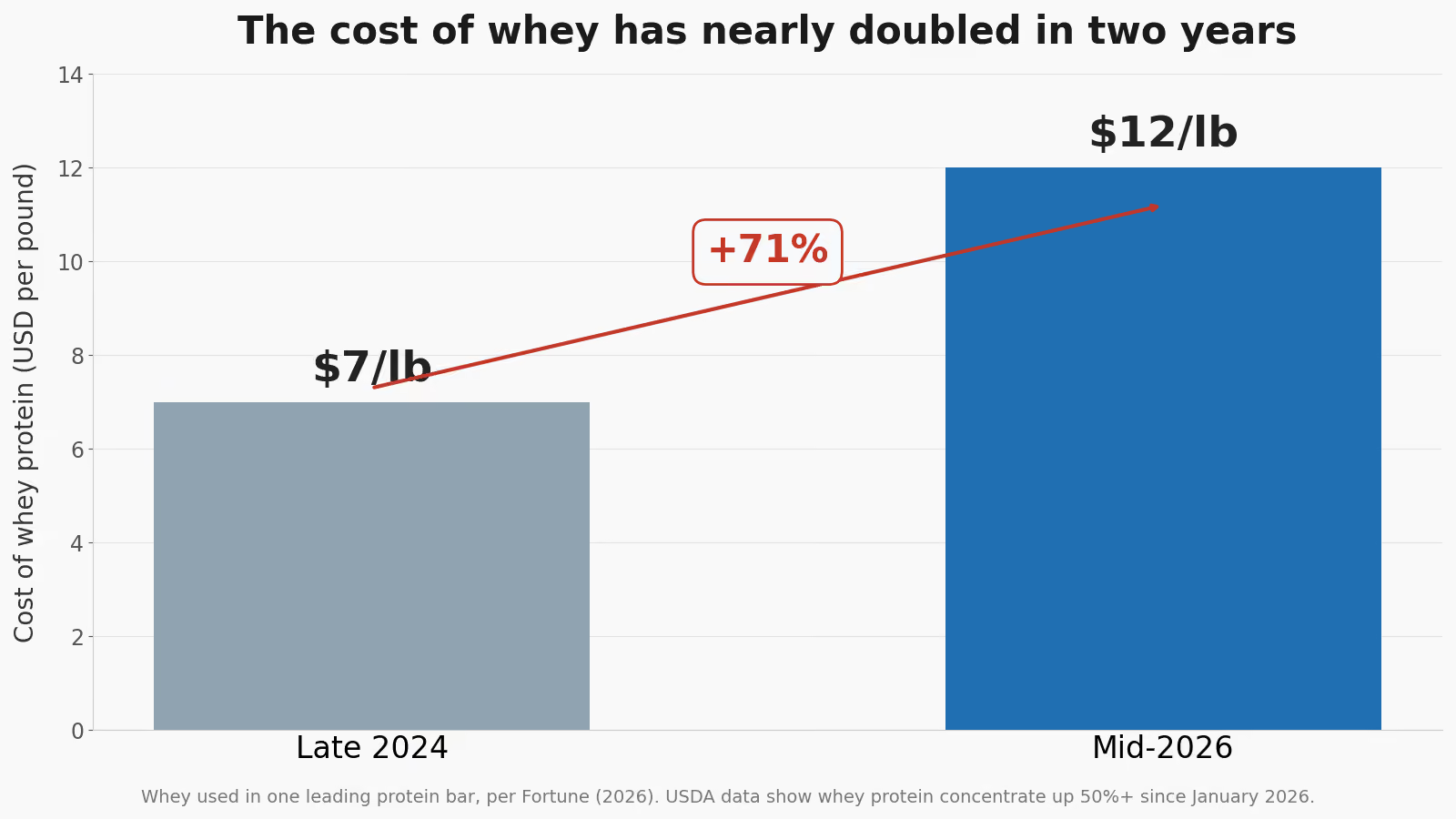
The whey used in one leading protein bar rose from about $7 to $12 per pound between late 2024 and 2026 (Fortune). USDA data show high-protein whey concentrate up roughly 40% in recent months.
Two demand forces stacked on top of each other. The first is proteinmaxxing — protein added to coffee, cereal, pasta, popcorn, cake mix, even bottled water, with federal dietary guidance revised in early 2026 to lean harder on protein-rich foods. Kathleen Wolfley of Ever.Ag Insights told both outlets that high-protein whey stocks fell 7% year over year in March even as first-quarter production rose 6%. Demand is simply outrunning it.
The second force is bigger, and it is where the health science comes in. About one in ten U.S. adults has now used a GLP-1 medication such as semaglutide or tirzepatide. According to a review in Obesity Reviews led by Jeffrey Mechanick, participants in obesity trials lost 10% or more of their muscle mass over 68 to 72 weeks — roughly two decades of age-related muscle loss compressed into about a year and a half. In the pivotal STEP-1 semaglutide trial, about 40% of the weight lost was lean mass. Clinicians responded by telling patients to raise protein intake and lift weights, and whey — fast-digesting, leucine-rich, and better tasting in bars and shakes than most alternatives — became the default. That medically driven demand landed on a supply chain built for steady, predictable growth.
You almost certainly need less whey than the marketing implies, and you have cheaper ways to hit your target. Reviews of protein needs during weight loss and GLP-1 therapy generally land in the range of 1.2 to 2.0 grams of protein per kilogram of body weight per day, with the lower end of that band often suggested for older adults on these drugs. For a 75 kg person that is about 90 to 150 grams a day — reachable through food for most people.
Where whey genuinely earns its place is around workouts, and when appetite is suppressed enough that finishing whole-food protein becomes a chore. That second situation is common on GLP-1 drugs, and it is the strongest practical case for a powder. If the price stings, you have options: a whey-plant blend, a straight soy isolate (which carries a complete amino acid profile), or plain whey concentrate instead of the pricier isolate. Check for third-party testing — look for NSF Certified for Sport or Informed Sport on the label. And skip the stockpiling. Powder is perishable, and if enough brands switch away from whey, the resulting drop in demand could pull prices back down.
Mainstream medicine’s concern is not the shortage — it is what happens to muscle when people do not get enough protein during rapid weight loss. The Obesity Reviews paper, built on a scientific roundtable of obesity and nutrition specialists, is blunt about it: anyone using incretin-mimetic drugs for obesity should be in a program that emphasizes adequate high-quality protein and resistance training to preserve muscle mass and function. A 2025 review in Nutrients reaches a similar conclusion for weight loss generally, with resistance exercise doing much of the heavy lifting. The consensus is that protein quality and lifting matter far more than which brand of powder you buy.
Integrative nutrition has been making the protein-quality-plus-leucine argument for years, mostly in the context of aging. A review in Nutrients (Cereda et al., 2022) found that whey combined with leucine and vitamin D improved muscle mass and strength across sarcopenia trials. The more recent Nutrients work on amino acid supplementation reports that essential amino acids may help preserve lean mass during weight loss, especially alongside resistance exercise, while noting that obesity itself blunts muscle’s response to protein. Proponents suggest targeted amino acids help most when overall intake is low. Early studies indicate benefit, though branched-chain amino acids on their own show variable results. Plant blends, meanwhile, are increasingly formulated to match whey’s leucine content — which undercuts the argument that whey is uniquely necessary. Whey’s edge in head-to-head protein comparisons is real but narrower than the marketing suggests.
On social media, protein has stopped being a fitness niche and become a personality. Popular TikTok and fitness creators often frame high protein intake as universally beneficial, tracking grams and adding scoops to everything. But the loudest voices are not unanimous, and some of the sharpest skepticism comes from inside the industry. David Protein founder Peter Rahal told Fortune the surge is protein capitalism at play, and predicted that other brands will switch protein bases and trigger what he called demand destruction for whey. Aelie Swift, who runs the small protein-baking brand HelloAmino, described being cut off by a supplier and spending months reformulating around substitutes. Market analysts quoted by ABC News expect the trend to keep running, but also expect the innovation pipeline to slow and manufacturers to shift toward alternative protein sources. Even inside the hype, the premium is starting to look self-correcting.
Whey earns its reputation, but not the panic. All three perspectives overlap on one solid point: high-quality protein plus resistance training preserves muscle. Where marketing overreaches is in implying whey is uniquely irreplaceable, or that everyone needs powder at all. Most people who are not on GLP-1 drugs or training hard already hit their protein targets through food. An editorial in Clinical Nutrition ESPEN warns that poorly supervised GLP-1 use risks turning obesity into an iatrogenic problem of muscle loss and weight cycling. The real issue is not running out of whey. It is people losing muscle they never needed to lose. The shortage is a symptom of a genuine clinical need colliding with a marketing frenzy.
Relief is coming, just not immediately. Investment is flowing into cheese and whey processing capacity, but whey supply is structurally tied to cheese demand, so producers cannot simply make more of it on request. Expect two things instead: new drying and filtration capacity coming online over the next year or two, and reformulation, as brands quietly move toward soy, milk protein isolate, and precision-fermented alternatives. Watch the label on your favorite bar. If the protein source changes and the texture goes chalky, you are looking at this shortage in edible form.
What is the whey shortage’s LyfeiQ?
Credibility Rating: 8/10
👉 Who should prioritize whey right now: People on GLP-1 medications, older adults at risk of muscle loss, and hard-training athletes who struggle to hit their protein target through food alone.
👉 Who should skip the premium: Anyone already meeting their protein needs through diet. You would be paying up for a problem you do not have.
⚕️ LyfeiQ Score: 8/10 — The shortage is real and the science behind the demand is sound, but whey is not magic. Hit your protein target whichever way is cheapest, and check for third-party testing before you buy.
Disclaimer: This content includes personal opinions and interpretations based on available sources and should not replace medical advice. This content includes interpretation of available research and should not replace medical advice. Although the data found in this blog and infographic has been produced and processed from sources believed to be reliable, no warranty expressed or implied can be made regarding the accuracy, completeness, legality or reliability of any such information. This disclaimer applies to any uses of the information whether isolated or aggregate uses thereof.