
September 30, 2026
9 min
Kenneth D
October 2, 2026
6 min
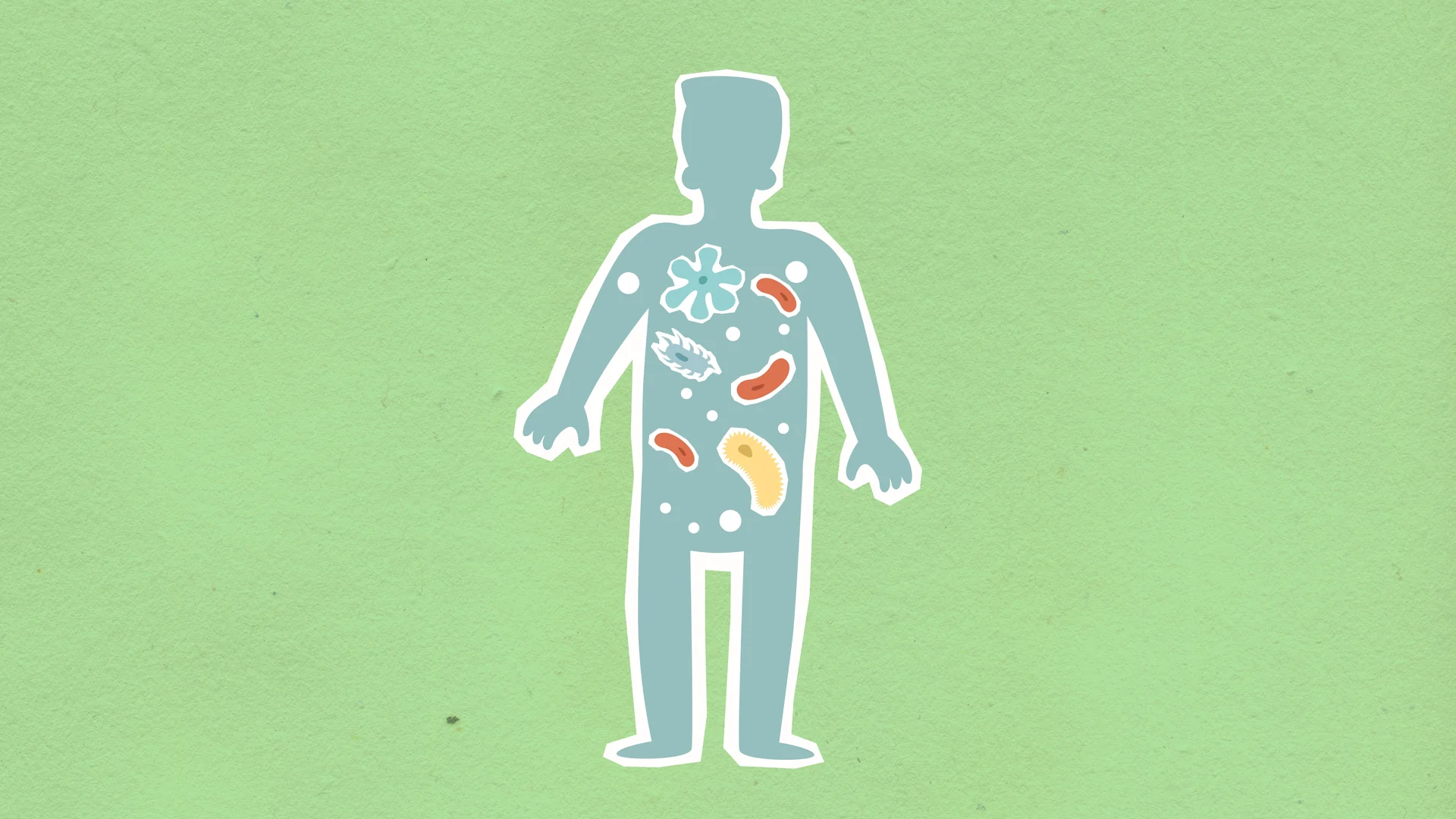
You buy the probiotic to rebalance your gut. Then you finish the bottle and you’re told to buy another. If it worked, why isn’t the job done?
What’s actually true: Your adult gut microbiome is a resilient ecosystem set mostly by long-term diet and your own biology. It resists newcomers and drifts back to its personal baseline — which is why most probiotic strains pass through as short-term guests and vanish within days of your last dose.
What’s misleading or unregulated: The idea that one course “resets” your gut into a new, self-sustaining state. No probiotic supplement is FDA-approved to treat or prevent anything, any benefit generally lasts only while you keep taking it, and the repeat-purchase model is built into how the category is sold.
Here’s the uncomfortable math of the probiotic aisle: the product is built around the idea that your gut is broken, but the biology underneath says your gut is mostly just stubborn.
Your gut isn’t an empty garden waiting to be seeded. It’s a packed ecosystem — trillions of microbes already holding every niche, every food source, every square millimeter of gut wall. Microbiologists call the result colonization resistance: the residents make it hard for a newcomer to move in and stay. That’s not a malfunction. It’s the system working.
In a landmark 2018 study in the journal Cell, researchers at the Weizmann Institute fed healthy volunteers an 11-strain probiotic and then went looking — not just in stool, but directly along the gut lining. What they found broke the tidy story. Some people’s guts let the strains take up temporary residence; others rejected them almost entirely, and you couldn’t tell which was which from a stool sample. Even in the “permissive” people, once supplementation stopped, the strains stopped showing up. They were passing through, not moving in.
That passing-through is the rule, not the exception. Across trials, most probiotic strains given to healthy adults are detectable for only a few days after you stop — the resident community reasserts itself and the guests wash out. So what actually shapes the community? Mostly what you feed it.
A 2014 study in Nature showed the gut microbiome shifts within a single day when people switch to an all-animal or all-plant diet — and drifts back just as fast when the diet ends. That’s the whole principle behind prebiotics and fiber: you’re not installing new microbes, you’re feeding the ones already there. Stop feeding them and the effect fades. The substrate is gone; the bloom recedes.
Which is the quiet answer to the question everyone asks. Your gut doesn’t “fix itself and stay fixed” after a supplement because a supplement was never the input holding it in place. Your daily diet is.
So here’s what to do with that. If a specific probiotic makes you feel better — steadier digestion, fewer issues after a course of antibiotics — that’s a real reason to keep taking it. Just don’t mistake “it helps while I take it” for “it rewired my gut.” For most strains, the benefit is use-dependent by design. The durable lever isn’t in a capsule; it’s fiber and fermented foods, eaten consistently, feeding the microbes you already have.
It also helps to read the label like a lawyer. On a US product, a probiotic can describe how it “supports” or “maintains” gut function, but it legally cannot claim to treat, cure, or prevent a disease — which is exactly why every supplement carries the line that the FDA has not evaluated the claim and the product isn’t meant to diagnose, treat, cure, or prevent any disease. Phrases like “restore balance” and “clinically proven” are where to slow down.
The regulators have been blunt about that gap. The FDA has not approved a single probiotic as a drug to prevent or treat any condition; the ones on shelves are foods or dietary supplements that can’t lawfully make disease claims. In 2010 the FTC settled with Dannon over Activia and DanActive, charging that the “clinically proven” digestive and immunity claims were unsupported — the ads never mentioned that Activia’s benefit required three servings a day — and the company paid 21 million dollars to settle with 39 state attorneys general. Europe went further: EU food-safety regulators treat the very word “probiotic” on a label as an implied health claim that isn’t backed by evidence, a position the European Ombudsman upheld again in late 2024.
The industry, to its credit, doesn’t entirely hide the biology. Strains are selected to survive stomach acid and bile and stay active on the way through — not to colonize permanently, which most can’t. Some of the more careful brands now say it plainly: probiotics are transient, and once you stop, the effects don’t persist. That’s an honest description of the science. It’s also, conveniently, a description of a product you have to rebuy forever — which sits underneath a global market worth tens of billions of dollars.
Which is where the pitch usually gets oversold. “Reset your gut,” “restore your balance,” “heal your microbiome” — the language almost always implies a fix with an endpoint. Feeds layer on the science-y vocabulary: leaky gut, the gut-brain axis, gut “reset” protocols. Some of that points at real research — intestinal permeability is measurable and the gut-brain axis is an active field — but “leaky gut syndrome” isn’t a recognized medical diagnosis, and neither idea supports the promise that a bottle of capsules will remodel you for good.
Here’s the part that’s easy to lose in the cynicism: the reason you keep taking probiotics isn’t only a sales trick. It’s real biology. A resilient ecosystem shrugging off newcomers is your gut working correctly. The problem isn’t that supplements do nothing — some strains have decent evidence for specific, narrow uses — it’s that they’re sold on a “one reset and you’re fixed” model the biology doesn’t support.
There is one intervention that genuinely reshapes the community for the long haul, and what it takes is telling. To durably shift a gut ecosystem you essentially have to transplant a whole functioning one. The FDA has now approved two fecal-microbiota products — Rebyota in 2022 and the oral Vowst in 2023 — but only to stop recurrent C. difficile infection after antibiotics, and only as prescription biologics. A whole-community transplant, regulated as a drug, for a dangerous infection: that’s the bar for “actually remodels your gut.” A daily gummy isn’t it, and shouldn’t be treated as one.
What’s still unsettled is worth naming. Whether transient strains deliver real benefit as they pass through (for some strains and some conditions, the evidence says maybe), why some people are “permissive” and others “resistant,” and whether the next generation of engineered live biotherapeutics will ever safely engraft the way a transplant does. Until then, the honest framing is simple.
Your gut doesn’t stay fixed because it was never broken the way the label implies — and the surest way to change it is the one thing no one can sell you in a bottle: what you eat, every day.
Related: Antifreeze in Soda? A Common Ingredient Confusion
Disclaimer: This content includes personal opinions and interpretations based on available sources and should not replace medical advice. This content includes interpretation of available research and should not replace medical advice. Although the data found in this blog and infographic has been produced and processed from sources believed to be reliable, no warranty expressed or implied can be made regarding the accuracy, completeness, legality or reliability of any such information. This disclaimer applies to any uses of the information whether isolated or aggregate uses thereof.