August 24, 2026
10 min
Maya Q.
July 20, 2026
8 min
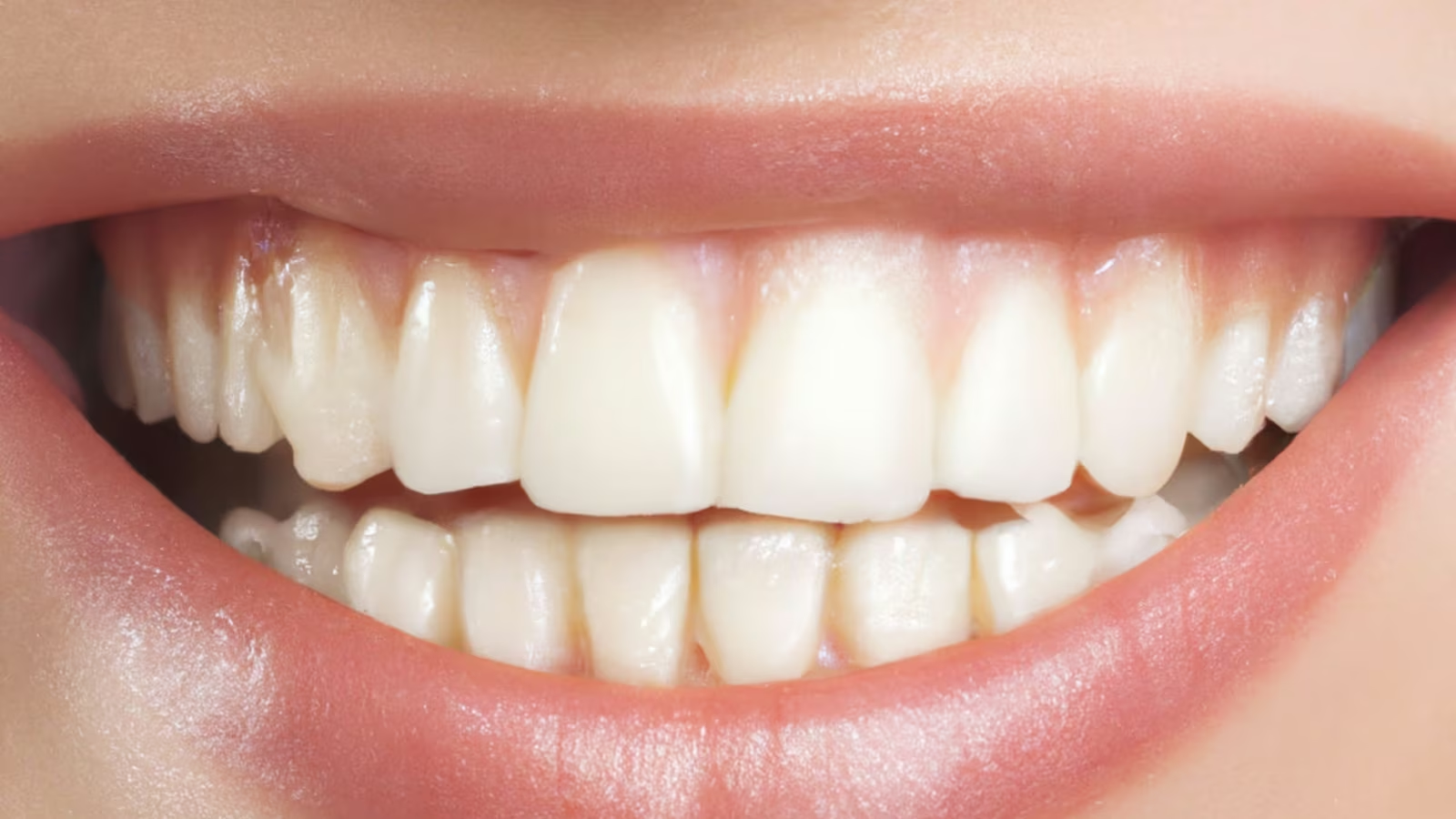
You’ve probably been told that gum rots your teeth. For one specific kind, the opposite may be closer to the truth. Xylitol — the sweetener in a growing share of “dental” gums — is the rare candy your dentist might actually nudge you toward. The catch is that the evidence is real but smaller than the marketing suggests, and one detail about it could save your dog’s life.
What the evidence supports: Chewing sugar-free gum — xylitol included — modestly lowers your risk of new cavities, on the order of a 25–33% reduction versus not chewing. Xylitol also measurably reduces the cavity-causing bacteria in plaque and saliva, and that mechanism is well understood.
What’s overstated or unsupported: The idea that xylitol is a proven cavity “cure” or a replacement for brushing and fluoride. Much of the human trial evidence is low quality, and the strongest single result comes from xylitol toothpaste, not gum. Dose and frequency matter more than the marketing admits.
⚕️ LyfeiQ Score: 6.5/10 — A genuinely useful add-on with a sound mechanism, held back by uneven evidence. Worth chewing after meals; not worth believing the hype.
The honest headline is that xylitol works, but not as dramatically as the label on the pack implies. The most relevant pooled analysis of sugar-free gum, a 2019 systematic review and meta-analysis in JDR Clinical & Translational Research, found that chewing sugar-free gum reduced new cavities with a prevented fraction of about 28%. When the authors looked only at the trials using xylitol gum specifically, that figure rose to roughly 33%. The same review was blunt about the limitation: the trials varied widely in quality and design, so the number is a reasonable estimate rather than a settled fact.
A 2024 meta-analysis in the Journal of Dentistry narrowed the question to permanent teeth in children and adolescents. Across 15 trials and more than 6,000 participants, xylitol came out significantly ahead of placebo at preventing decay, outperforming sorbitol. But the authors flagged that most of the included studies carried a moderate-to-high risk of bias — a recurring theme in this field.
Then there’s the skeptic’s anchor. The 2015 Cochrane review of xylitol products, which sets the bar for rigor, concluded that the best evidence was for a fluoride toothpaste containing 10% xylitol cutting cavities by about 13% over fluoride alone — and even that rested on low-quality evidence from two studies by the same group. For gum, lozenges, and wipes, Cochrane found the evidence too thin to draw firm conclusions. That tension, between promising real-world trials and cautious systematic reviewers, is the whole story in miniature.
Why would a sweetener fight cavities at all? Because the main culprit behind decay, Streptococcus mutans, can’t ferment xylitol into the acid that erodes enamel. The bacterium still takes the sugar alcohol up, then burns energy trying to process something it can’t use — a “futile cycle” that starves it. Lab work backs this up: a 2020 study in BMC Microbiology showed that xylitol disrupted S. mutans biofilm formation and altered the genes the bacteria use to stick to teeth. A dental-simulator study in Archives of Oral Biology found the same directional effect, with xylitol reducing bacterial colonization of tooth-like surfaces. The mechanism isn’t marketing. It’s the part of the story with the firmest ground under it.
If you’re going to bother, dose and timing are what separate a real effect from a placebo habit. The trials that show benefit generally use repeated daily exposure — commonly several grams of xylitol spread across multiple chewing sessions, not one stick after lunch. A practical target most clinicians cite is chewing xylitol gum for about five to ten minutes after meals and snacks, a few times a day, so the bacteria get hit repeatedly rather than once.
Check the ingredient list, not the front of the pack. For the anti-cavity effect, xylitol should be at or near the top of the sweetener list — some “dental” gums use it as a minor flavoring while sorbitol does most of the sweetening. There’s a ceiling, too: xylitol is a sugar alcohol, and eating a lot of it in a short window can cause gas, bloating, or a laxative effect. Most people tolerate gum-sized amounts fine, but if you’re chewing all day, that’s where the discomfort comes from.
And the single most important safety note has nothing to do with your teeth. Xylitol is dangerous to dogs. Even small amounts can trigger a sharp insulin release, dangerous hypoglycemia, and liver failure. A piece of gum left in a bag a dog can reach is a genuine veterinary emergency. (Interestingly, cats appear far less susceptible — a 2018 study in the Journal of Veterinary Pharmacology and Therapeutics found that xylitol did not produce the same toxic effects in cats — but the canine risk is not negotiable.)
The mainstream dental view is supportive but measured. Major institutions treat sugar-free gum as a reasonable adjunct, not a substitute for brushing with fluoride. The American Dental Association awards its Seal of Acceptance to several sugar-free gums for helping reduce cavity risk, and that’s roughly where the profession lands: a helpful extra, especially when you can’t brush after eating, sitting comfortably alongside fluoride and flossing rather than replacing them.
The integrative and natural-health camp leans harder into xylitol’s appeal as a “natural” sugar alcohol that does something useful instead of just being inert. Proponents point to the bacterial-reduction data and to xylitol’s role in products like nasal sprays and saline rinses. Some of those uses are genuinely promising; others are preliminary. The fair reading is that the oral-bacteria effect is real and the broader “xylitol for everything” framing runs ahead of the evidence.
On social media, xylitol has quietly become a wellness darling. Popular TikTok and Instagram creators in the “tooth health” and “mouth taping” niches often present xylitol gum, mints, and even nasal sprays as near-essential, sometimes folding it into elaborate oral-microbiome routines. Not everyone’s buying it: plenty of dentists have built large followings precisely by pushing back, reminding viewers that gum doesn’t replace a toothbrush and that the cavity reductions in the literature are modest. That contrast — enthusiastic wellness creators versus eye-rolling clinicians — is the most useful thing to watch, because the truth sits between them.
Strip away the packaging and the three camps actually agree on the core fact: xylitol reduces cavity-causing bacteria, and chewing gum after meals modestly lowers decay risk. The disagreement is about size and certainty. The marketing implies transformation; the data shows a useful nudge. A roughly one-quarter to one-third reduction in new cavities is worth having — but it’s an addition to fluoride and brushing, not a swap.
The clearest place the story oversells itself is dose. A single stick of low-xylitol gum once a day is closer to a breath freshener than a caries intervention, yet that’s how many people use it. The trials that produced the good numbers used repeated, meaningful daily exposure. The other soft spot is evidence quality: when the most rigorous reviewer in the room (Cochrane) keeps saying “low-quality evidence,” that’s not a detail to skip past. Xylitol probably helps. It is not a miracle, and anyone selling it as one is ahead of the science.
A few threads are worth watching. Larger, lower-bias randomized trials of xylitol gum specifically — rather than pooled “sugar-free gum” studies — would settle how much of the effect is xylitol versus the act of chewing and the saliva it stimulates. There’s also growing interest in erythritol, another sugar alcohol that performed comparably to xylitol in some lab work and may be gentler on the gut. And the maternal-transmission angle is intriguing: at least one meta-analysis has explored whether reducing a mother’s oral bacteria during pregnancy lowers her child’s later cavity risk, a prevention strategy that could matter well beyond gum.
What is xylitol gum’s LyfeiQ?
Credibility Rating: 6.5/10
👉 Who should try this: Anyone cavity-prone, people who can’t brush after lunch, parents managing kids’ snack habits, and dry-mouth sufferers who benefit from the extra saliva.
👉 Who should skip this: People with IBS or sensitivity to sugar alcohols, anyone expecting it to replace brushing — and any household with a dog that gets into bags.
⚕️ LyfeiQ Score: 6.5/10 — Keep a pack of high-xylitol gum and chew it after meals when you can’t brush. Treat it as a helpful extra, store it where the dog can’t reach it, and don’t let it lull you out of flossing.
Related: Can Nicotine Gum Actually Help You Quit Smoking? Here’s What Science Says
Disclaimer: This content includes personal opinions and interpretations based on available sources and should not replace medical advice. This content includes interpretation of available research and should not replace medical advice. Although the data found in this blog and infographic has been produced and processed from sources believed to be reliable, no warranty expressed or implied can be made regarding the accuracy, completeness, legality or reliability of any such information. This disclaimer applies to any uses of the information whether isolated or aggregate uses thereof.