

August 24, 2026
10 min
Maya Q.
July 20, 2026
8 min
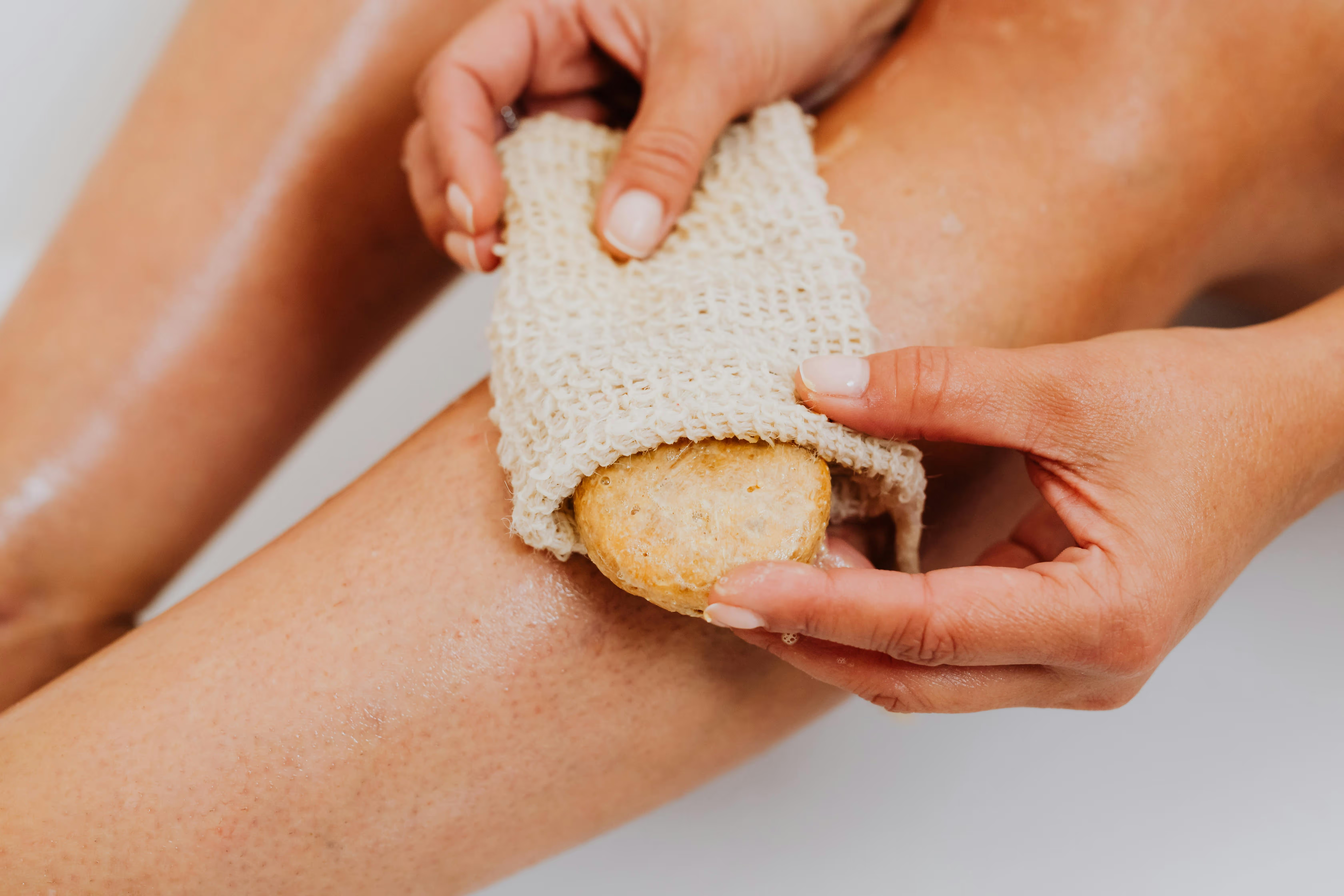
Walk into any skincare aisle today and you’ll find bottles screaming about acids — Glycolic, Salicylic, Hyaluronic. The names sound intense and maybe even a little scary. But here’s something fascinating: your skin naturally contains acids. They help it stay healthy and protected every single day. The skincare industry reached over $200 million in azelaic acid products alone by 2023, and social media searches for ingredients like retinol and hyaluronic acid exploded during the pandemic — yet confusion about which acid does what, and who should actually use them, remains widespread.
What the evidence supports: Multiple randomized controlled trials and systematic reviews confirm that acids like glycolic, salicylic, azelaic, and hyaluronic acid deliver measurable improvements in acne, hyperpigmentation, hydration, and skin texture when used at appropriate concentrations. What’s overstated or unsupported: Over-the-counter products typically contain far lower concentrations than those used in clinical trials, meaning real-world results may differ. Many newer ingredients in this space also rely on smaller, less robust studies. ⚕️ LyfeiQ Score: 8/10 — Skincare acids are among the most evidence-backed topical ingredients available, but matching the right acid to your specific concern — and using it correctly — is what separates results from irritation.
Scientists have studied skincare acids for decades, and the evidence paints a clear picture of what works — broken down by category.
Alpha hydroxy acids are water-soluble molecules derived from sugary fruits and milk. Glycolic acid comes from sugarcane; lactic acid comes from milk. These acids break down the bonds holding dead skin cells together. Research has demonstrated decreased roughness and improved collagen density after consistent use, and dermatologists have used them to effectively treat conditions including acne, photoaged skin, and various keratoses. A randomized double-blind study found that 10% glycolic acid significantly improved mild acne compared to placebo. Lactic acid offers similar benefits but tends to be gentler, while mandelic acid works slowest due to its larger molecular size — making it ideal for sensitive skin. It’s worth noting that most over-the-counter products contain much lower concentrations than clinical treatments.
Salicylic acid dominates this category, and its key advantage comes down to chemistry. Unlike water-soluble AHAs, salicylic acid is oil-soluble, meaning it can penetrate through sebum and get deep into pores — making it exceptional for acne-prone and oily skin. Research published in the Journal of Clinical and Aesthetic Dermatology confirms that BHAs effectively reduce acne lesions and improve overall skin texture. Clinical evidence supports concentrations between 0.5% and 2% for over-the-counter use. The oil-solubility that makes BHAs so effective also means they can cause dryness if overused.
PHAs are the newest generation of exfoliating acids, and their larger molecular structure is what sets them apart. With gluconolactone and lactobionic acid being the most common types, PHAs work exclusively on the skin’s surface. A study found that PHAs provide antiaging and skin-smoothing effects comparable to AHAs but with significantly less irritation, and have been proven compatible with clinically sensitive skin conditions including rosacea and atopic dermatitis. PHAs also function as humectants, meaning they moisturize while they exfoliate.
Hyaluronic acid is not an exfoliating acid — it’s a glycosaminoglycan that exists naturally in your skin, capable of binding 1,000 times its weight in water. Research reviewing multiple randomized controlled trials showed significant improvements in skin hydration, elasticity, and wrinkle depth compared to placebo. Molecular weight matters: low molecular weight hyaluronic acid (20–300 kDa) penetrates the stratum corneum effectively, while high molecular weight versions mostly stay on the surface but create an excellent moisture barrier. Your skin naturally loses hyaluronic acid starting around age 25, and studies demonstrate improvements visible within 30 days of consistent topical use.
Azelaic acid is a naturally occurring saturated dicarboxylic acid produced by yeast that lives on the skin — and it may be the most underrated ingredient in this entire category. The FDA has approved it for treating papulopustular rosacea, and clinical guidelines worldwide recommend it for acne. A 2023 systematic review of 43 randomized controlled trials found that topical azelaic acid is significantly more effective than several comparators for treating rosacea, acne vulgaris, and melasma, performing similarly or better than common treatments such as metronidazole, erythromycin, and hydroquinone 2% while maintaining a comparable safety profile. It’s also classified as pregnancy Category B, meaning topical use appears safe during pregnancy — an important distinction given that many other actives, like retinoids, are contraindicated.
Vitamin C (ascorbic acid) serves a dual function: it stimulates collagen synthesis and inhibits tyrosinase, the enzyme responsible for melanin production, making it effective for both anti-aging and brightening. A Bayesian meta-analysis of 31 randomized controlled trials confirmed that vitamin C prevents ultraviolet-induced pigmentation. However, formulation matters enormously. L-ascorbic acid, the most biologically active form, is notoriously unstable; research indicates products need a pH below 3.5 and concentrations between 8% and 20% for optimal effectiveness. Adding ferulic acid improves stability significantly.
Matching the right acid to your concern — and introducing it correctly — is what separates results from irritation. The research supports specific use cases: AHAs for dry or rough skin and surface discoloration; salicylic acid for oily and acne-prone skin; PHAs for sensitive skin or those new to exfoliation; hyaluronic acid as a daily hydrator for almost any skin type; azelaic acid for rosacea, acne, or melasma; and vitamin C for antioxidant protection and brightening. Medical professionals recommend starting with lower concentrations and introducing one new acid at a time. Over-the-counter products typically max out around 10% for AHAs. Professional chemical peels range from 30% to 70% and require clinical training to apply safely. Sun protection is critical when using any exfoliating acid — AHAs in particular increase photosensitivity, and daily sunscreen use is essential, or users risk reversing their benefits.
Board-certified dermatologists generally support the use of skincare acids when they are evidence-based and matched appropriately to specific skin concerns. Organizations such as the American Academy of Dermatology recommend salicylic acid for acne treatment, while institutions like the Mayo Clinic and Cleveland Clinic highlight the benefits of AHAs and BHAs for exfoliation and skin renewal. Sun protection is consistently emphasized as essential during exfoliation. Medical professionals also caution against unsupervised use of high-concentration products — professional chemical peels range from 30% to 70% acid concentrations and require clinical training to apply safely. Proper usage and dermatologist consultation are key recommendations throughout the literature.
Integrative dermatology approaches skin health from a whole-person perspective, emphasizing that skin reflects internal health factors such as nutrition, gut function, hormonal balance, and stress levels. Botanical ingredients in skincare have long historical use — fruit-derived acids from apples, grapes, and citrus were used in traditional medicine long before modern dermatology formalized their applications. Holistic practitioners often favor gentler strategies, recommending PHAs over stronger AHAs for sensitive skin, and focusing on supporting the skin’s natural barrier and repair mechanisms rather than forcing rapid cell turnover. Some alternative practitioners caution against daily acid use, warning that overuse may disrupt the skin barrier or microbiome, with strategic intermittent use preferred. Some holistic dermatologists advocate addressing root causes of skin conditions — including dietary adjustments, stress management, and environmental changes — alongside topical treatments.
Social media has transformed how people learn about and use skincare acids, but the format carries real risks alongside its accessibility. Trends show rising interest in retinol, hyaluronic acid, salicylic acid, glycolic acid, and vitamin C, with searches spiking during pandemic lockdowns. Many people report positive results from following online routines, but problems arise when trends override evidence. Studies show that children and teenagers have experimented with strong acids and anti-aging ingredients after watching online content. High-concentration acids used at home can cause chemical burns, long-term damage, or irritation, particularly for young or sensitive skin. Medical experts warn that mimicking online routines without professional guidance may lead to over-exfoliation and damaged skin barriers.
All three perspectives agree on several foundational points: skincare acids can benefit many people when used appropriately, sun protection is essential during exfoliation, individual skin types require tailored approaches, and starting slowly helps prevent irritation. The mainstream medical view offers the strongest evidence base, with randomized controlled trials consistently demonstrating effectiveness for specific conditions. However, traditional dermatology can sometimes underemphasize internal factors — like nutrition, stress, and hormonal balance — that integrative practitioners rightly highlight. Holistic approaches provide valuable guidance on not over-treating the skin, though some alternative claims lack robust scientific backing. Social media and influencer content have democratized skincare education, but algorithms tend to favor dramatic “more is more” claims over measured, evidence-based advice — often conflicting with dermatologists’ recommendations to introduce acids gradually. One important misconception worth clarifying: hyaluronic acid is not an exfoliant. Despite its “acid” label, its function is entirely hydrating, and understanding this distinction helps people build safer and more effective routines.
Several promising research directions are emerging across the skincare acid category. Researchers are exploring genetic variations that affect how individuals metabolize and tolerate acids, which could lead to personalized formulations. Nanotechnology and novel delivery systems — including liposomes, nanocrystals, and microemulsions — are improving how acids reach target skin layers while reducing irritation. Evidence also suggests certain acid combinations work synergistically, such as vitamin C with ferulic acid, and research continues into optimal pairings of AHAs with PHAs or azelaic acid with salicylic acid. The emerging field of microbiome-friendly formulations aims to support beneficial skin bacteria while still providing exfoliation — a convergence of mainstream dermatology with holistic concerns about skin ecosystem health.
Skincare acids are among the most studied and effective ingredients in modern dermatology — when used with the right match, concentration, and sun protection.
Credibility Rating: 8/10
👉 Who should try this: Anyone dealing with acne, uneven texture, hyperpigmentation, or dryness who is willing to start low, go slow, and wear sunscreen consistently.
👉 Who should skip this: People with severely compromised skin barriers, active eczema flares, or rosacea should consult a dermatologist before introducing any exfoliating acid.
⚕️ LyfeiQ Score: 8/10 — Skincare acids have earned their place in dermatological practice through solid research. The key lies in matching the right acid to your specific needs, introducing them gradually, and protecting your skin from the sun.
Related: What Are Ceramides and Why Are They Essential in Skincare?
Disclaimer: This content includes personal opinions and interpretations based on available sources and should not replace medical advice. This content includes interpretation of available research and should not replace medical advice. Although the data found in this blog and infographic has been produced and processed from sources believed to be reliable, no warranty expressed or implied can be made regarding the accuracy, completeness, legality or reliability of any such information. This disclaimer applies to any uses of the information whether isolated or aggregate uses thereof.