

August 5, 2026
7 min
Nathan J
July 20, 2026
8 min
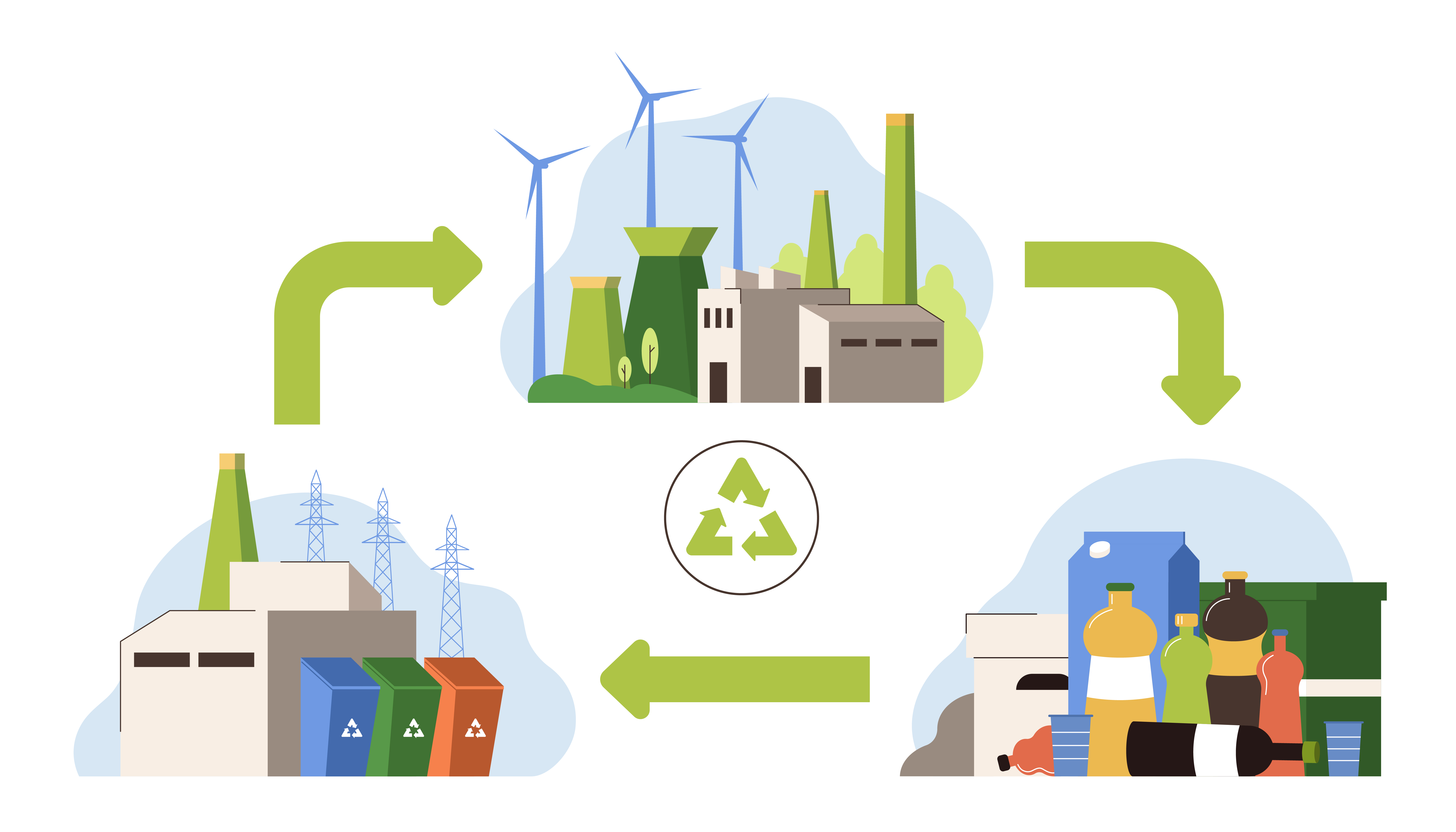
You rinse, you sort, you feel good about that blue bin at the curb. But here’s the uncomfortable math: only about 9% of all plastic waste in the United States actually gets recycled. The rest ends up in landfills, incinerators, or the ocean. The failure isn’t yours. It’s a system-wide breakdown that individual effort alone can’t fix.
What the evidence supports: Traditional mechanical recycling is fundamentally limited by contamination, polymer degradation, and unfavorable economics. Emerging technologies like chemical recycling, enzymatic degradation, and AI-powered sorting have demonstrated effectiveness in peer-reviewed research and pilot-scale operations.
What’s overstated or unsupported: Claims that consumer recycling habits alone can solve the plastic crisis are misleading. Chemical recycling’s scalability and net environmental benefit remain unproven at commercial scale, and some industry-backed solutions may function more as greenwashing than genuine progress.
⚕️ LyfeiQ Score: 6/10 — Current recycling systems largely fail, but legitimate scientific breakthroughs could transform plastic waste management if paired with policy reform and investment.
Plastic recycling’s failure rate is not a myth or exaggeration. According to the EPA, roughly 9% of the 35.7 million tons of plastic generated annually in the U.S. gets recycled. The rest is landfilled, incinerated, or leaks into the environment. Understanding why requires examining three core barriers: contamination, economics, and material degradation.
Contamination remains the biggest technical obstacle. A 2020 study in Science Advances found that food residue, mixed polymer types, and label adhesives routinely render plastic batches unrecyclable. With over 7,000 different polymer formulations in circulation, sorting them accurately is an enormous challenge. A single misplaced item can compromise an entire processing load.
The economics are equally discouraging. Virgin plastic is frequently cheaper to produce than recycled material, especially when petroleum prices are low. China’s 2018 National Sword policy, which banned imports of contaminated recyclables, exposed how dependent Western recycling infrastructure was on exporting the problem rather than solving it.
Mechanical recycling itself has hard physical limits. Research from the University of Portsmouth, published in Nature in 2021, showed that polymer molecular weight drops by up to 30% per recycling cycle. Each pass through the system weakens the material, limiting most plastics to one or two mechanical recycling loops before the material becomes unusable.
Reduction beats recycling every time. Bringing reusable bags, bottles, and containers prevents waste more effectively than even the most efficient recycling system.
When you do use plastic, choose products packaged in clear PET (#1) or natural HDPE (#2) containers. These are the only types most municipal programs can reliably process. Everything else, despite bearing a recycling symbol, likely ends up in a landfill.
Clean your recyclables. Remove food residue, caps, and labels when possible. Contaminated items do more harm in the recycling bin than in the trash, because they can compromise an entire batch of otherwise recyclable material.
Beyond personal habits, support systemic change. Extended Producer Responsibility (EPR) legislation, which makes manufacturers financially accountable for product end-of-life disposal, has already passed in Maine and Oregon. Contact your representatives about similar bills. Vote with your wallet by choosing companies committed to genuinely recyclable or refillable packaging.
Major scientific and health organizations frame plastic waste as both an environmental and public health emergency. The World Health Organization warns that microplastics now contaminate drinking water, food supplies, and human blood. A 2022 study in Environment International detected microplastics in human lung tissue, raising concerns about respiratory health impacts that are still being investigated.
The NIH acknowledges that plastic production and disposal contribute significantly to greenhouse gas emissions, with virgin plastic manufacturing generating roughly 850 million tons of CO2 annually. The Ellen MacArthur Foundation’s 2019 report advocates a circular economy model where products are designed for reuse from the outset, shifting responsibility from consumers to manufacturers.
Environmental scientists at institutions like Johns Hopkins and Harvard emphasize that systemic reform, not individual behavior change, is the primary lever for addressing the plastic crisis.
Zero-waste advocates argue that recycling itself may be a distraction from the real solution: dramatically reducing plastic production. Organizations like the Zero Waste International Alliance promote a refuse-reduce-reuse hierarchy that places recycling near the bottom of preferred strategies.
The Center for International Environmental Law’s 2019 report, Plastic & Health, examines toxic additives throughout plastic’s lifecycle, from petrochemical extraction to breakdown in the environment. This perspective considers not just disposal challenges but cumulative exposure risks from production through decomposition.
Proponents of integrative environmentalism emphasize local, community-level solutions: bulk shopping, reusable container exchange programs, and municipal composting. These approaches address waste at its source rather than attempting to manage it downstream. Early evidence suggests these models can reduce household plastic waste by 50-80%, though large-scale adoption faces economic and logistical barriers.
Social media has become the dominant arena for public education and debate about recycling’s shortcomings. Popular sustainability creators like Shelbi on TikTok (@shelbi.rae, 500K+ followers) regularly highlight “wishcycling”: the common habit of tossing non-recyclable items into the bin and hoping for the best.
YouTube creator Climate Town’s video “The Plastics Industry Lied To You About Recycling” garnered over 2 million views, detailing how petroleum companies promoted recycling as a public relations strategy while knowing it was largely ineffective at scale.
However, not all influencer content holds up to scrutiny. Some accounts share aesthetically appealing but impractical zero-waste tips that ignore economic and accessibility realities. The public conversation tends to oscillate between recycling optimism and nihilistic despair, neither of which reflects the nuanced evidence.
All three perspectives converge on one point: the current recycling system is broken. Where they diverge is on solutions. Mainstream science pushes for technological innovation and policy reform. Alternative voices prioritize consumption reduction and corporate accountability. Public discourse raises awareness but often oversimplifies the problem.
The most important myth to debunk involves those recycling symbols on plastic containers. The numbered resin codes (#1 through #7) indicate polymer type, not recyclability. Most municipal programs only handle #1 (PET) and #2 (HDPE). Everything else, despite bearing the chasing-arrows symbol, typically ends up landfilled. The symbol was introduced by the plastics industry and has been widely criticized as deliberately misleading.
Chemical recycling, often promoted as the silver-bullet solution, deserves particular scrutiny. While the science behind breaking plastic down to molecular building blocks is legitimate, critics point out that some industry-backed chemical recycling ventures function primarily as greenwashing. The energy inputs, emissions profiles, and actual output yields of commercial-scale operations remain under-documented in peer-reviewed literature. The technology works in principle; whether it works as a climate solution at scale is an open question.
Several emerging technologies show genuine promise if they receive adequate investment and policy support. Enzymatic degradation, pioneered by researchers at the University of Portsmouth and commercialized by French company Carbios, can break PET plastic into base monomers in hours, producing virgin-quality material indefinitely. AI-powered sorting systems from companies like AMP Robotics have increased processing speed by 50% and reduced contamination by 30% in pilot programs. Solvent-based purification from PureCycle Technologies can restore contaminated polypropylene to pristine condition. And upcycling research at Rice University has demonstrated converting mixed plastic waste into graphene using flash Joule heating. The bottleneck is no longer scientific proof-of-concept; it’s infrastructure investment, policy incentives, and scaling from pilot to commercial operations.
Credibility Rating: 6/10
Who should try this: Everyone should continue recycling PET (#1) and HDPE (#2) plastics while prioritizing reduction. Investors and policymakers should look seriously at enzymatic and chemical recycling ventures with transparent environmental reporting.
Who should skip this: Anyone relying solely on recycling to offset high plastic consumption. Don’t let the blue bin become permission to overbuy. If a product isn’t in a #1 or #2 container, assume it won’t actually be recycled.
⚕️ LyfeiQ Score: 6/10 — Traditional plastic recycling largely fails, but emerging technologies offer legitimate hope. Chemical recycling, enzymatic digestion, and AI sorting can overcome current limitations if we invest in them. Your individual recycling efforts help marginally with the right materials, but systemic changes in policy, infrastructure, and corporate responsibility will determine whether we actually solve this crisis.
Disclaimer: This content includes personal opinions and interpretations based on available sources and should not replace medical advice. This content includes interpretation of available research and should not replace medical advice. Although the data found in this blog and infographic has been produced and processed from sources believed to be reliable, no warranty expressed or implied can be made regarding the accuracy, completeness, legality or reliability of any such information. This disclaimer applies to any uses of the information whether isolated or aggregate uses thereof.