

November 3, 2025
11 min
Maya Q.
January 15, 2026
6 min
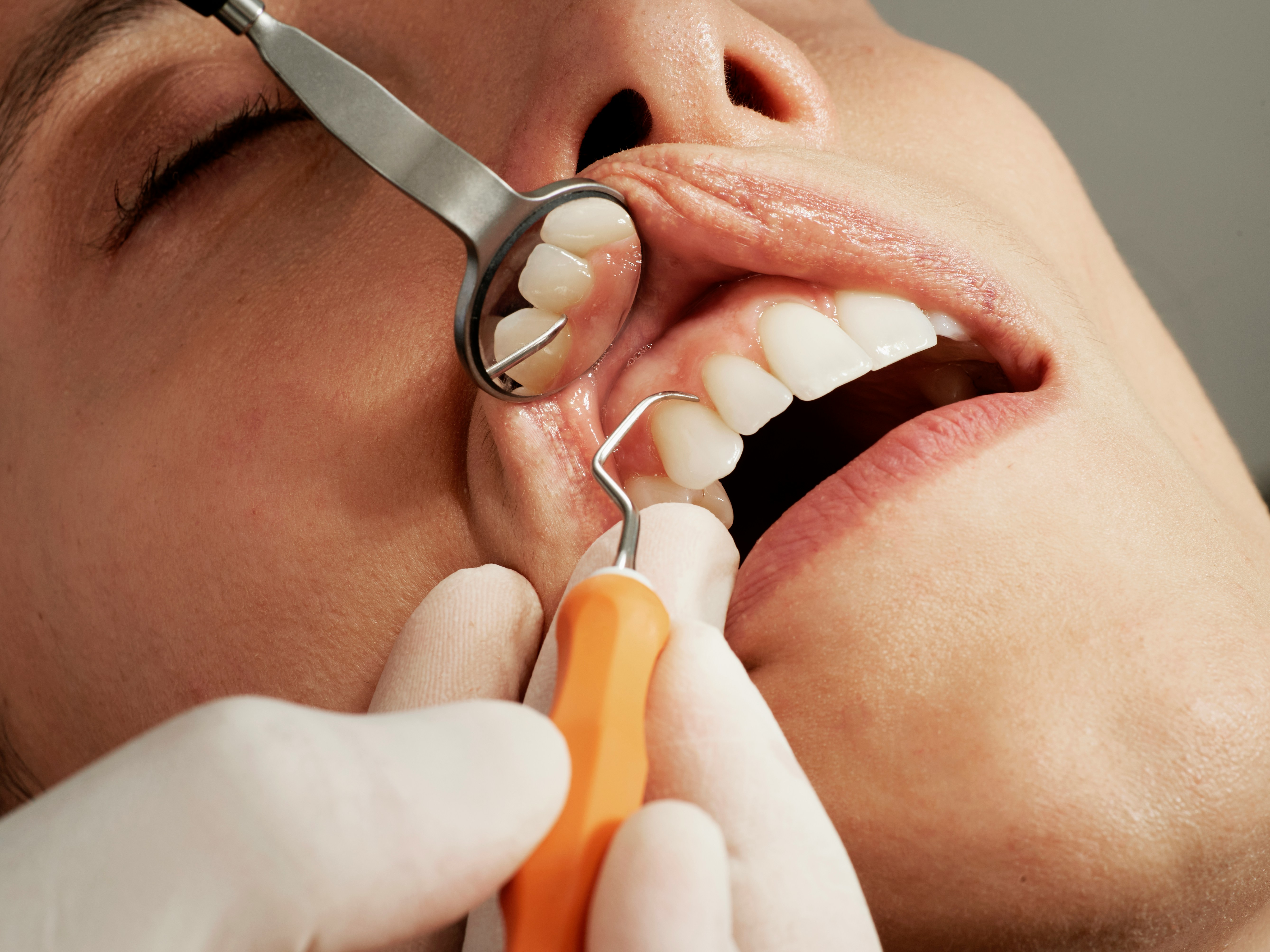
Imagine this: you're walking down a toothpaste aisle, weighing the pros and cons of this brand versus that brand. You’re deciding which paste will make your teeth white, well, white enough. On nearly every toothpaste or mouthwash bottle, you keep seeing small text with “fluoride” on it. You go from confused to concerned, unsure whether this is something you should be using or something you should avoid all together. It's a question that's puzzled people for decades, so let's clear the confusion about fluoride!
Fluoride has long been promoted as a cavity-protection superhero by the traditional dental community. It has commonly been incorporated into toothpaste, mouth wash, and even municipal water supplies, a procedure known as water fluoridation, due to the perceived effectiveness of fluoride in strengthening weak areas of tooth enamel, undoing early signs of tooth decay, and preventing the development of detrimental oral bacteria.
A study titled “Fluoride in Dental Caries Prevention and Treatment: Mechanisms, Clinical Evidence, and Public Health Perspectives” claims that “Fluoride consistently shows preventive and therapeutic benefits across multiple delivery forms”(Yeh et al.). Additionally, another study conducted in 2015 titled “Water fluoridation for the prevention of dental caries” found that water fluoridation resulted in children “having 35% fewer decayed, missing and filled baby teeth and 26% fewer decayed, missing and filled permanent teeth. We also found that fluoridation led to a 15% increase in children with no decay in their baby teeth and a 14% increase in children with no decay in their permanent teeth”(Iheozor-Ejiofor et al.). It is important to note that this study did not take all factors that could lead to tooth decay into account, however, it still provides relevant information regarding the use of fluoride for children’s dental caries.
Well, case closed, right? Fluoride seems to be amazing! Not so fast my friend. Dentists have been singing the praises of fluoride for quite some time, but some people are pressing pause on this particular mineral. Let's examine a couple differing opinions.
Fluorine is a halogen on the periodic table. The fluoride ion (F-) would prefer to combine with a Hydrogen atom (H+) to form a complete octet and make the compound stable. Thai will produce hydrogen fluoride, or HF. HF is known to be able to penetrate bacterial cells due to its acidic nature. Once it gets inside the cell, it can freely dissociate into respective H+ and F- which will alter pH. This change in pH can alter certain enzymatic processes and allow for bacterial inhibition, meaning that using Fluoride can prevent bacterial growth from occuring. It is important to note that this is a more simple schematic of this process, as there is a lot more chemistry involved (Samaranayake et al.)!
The American Dental Association (ADA) “recognizes the use of fluoride and community water fluoridation as safe and effective in preventing tooth decay for both children and adults”(American Dental Association, “Fluoride”). In a more recent article published in 2024 by the ADA, the president of the American Dental Association Linda J. Edgar, D.D.S. states “Even in an era with widespread availability of fluoride from various sources, other studies show that community water fluoridation prevents at least 25% of tooth decay in children and adults throughout their life span. The scientific weight of sound evidence around the benefit of community water fluoridation is clear and compelling”(American Dental Association, “Community Water Fluoridation Is Effective at Preventing Cavities”). In fact, even the Centers for Disease Control (CDC) has named the fluoridation of drinking water one of the ten great public health achievements (1990-1999).
On the other hand, other alternative practitioners concerned with overall wellness are a bit cautious with regards to the use of fluoride. They do acknowledge the potential advantages if topically applied, as seen in toothpaste, but feel very strongly that fluoridating water is an altogether different matter.
As for most things, Fluoride is only safe in moderation. Some are hesitant as they do not want to have any toxicity with fluoride, if they are getting it from water, toothpaste, or/and even mouthwash. Others are worried that the process of water fluoridation can lead to contamination with other chemicals, which has been shown to be rare due to strong regulations in countries with strong public infrastructure. I encourage you to read this article to learn more about some facts and claims regarding fluoride: Facts and Fallacies of the Fluoride Controversy: A Contemporary Perspective.
Lastly, people are worried about dental fluorosis, which is a sign of fluoride toxicity. The public water in the U.S. is monitored to ensure that there is a safe amount of fluoride. Additionally, as long as you use a pea sized amount of toothpaste, you will be okay. You should always be checking in with your dentist to ensure that your teeth are in good condition and healthy.
Meanwhile, just go to social media or a wellness podcast, and you may see a totally differing point of view regarding fluorides. Wellness bloggers and natural health specialists have been vocal about their dislike for fluorides, particularly fluorinated water. Others will say that it saved their teeth and health.
Regarding this issue, it is in your best interest to listen to your dentist and medical team on whether fluoride is a good treatment for you. Most influencers have financial ties to their claims, so always trust the professionals!
As we’ve seen, the issue of fluorides is often complex and there are cases when a simple “yes” or “no” answer just doesn’t cover the truth either way. On one hand, conventional dentistry and established health organizations consider fluorides a safe and proven remedy for preventing dental caries, and they've been studying the matter for many decades now. Topical applications are administered by a dentist, and toothpaste can be purchased at most stores/pharmacies.
On the other hand, a number of alternative health seekers are concerned with water fluoridation and related health concerns associated with the intake of fluorides by young children. They are advocating for a fluoride-free alternative while appreciating the surface or topical advantage.
So, what does this all mean? Well, my point is this: fluoride is like spinach. Spinach is an amazing vitamin-rich food that will do wonders for your body, and by body, I mean your teeth. However, others may not be as fond, and that’s totally fine! The best thing you can do is consult with your dentist to come up with a plan that suits you!
Going forward, we could use more study regarding the long-term consequences of water fluoridation, as well as other ways to prevent cavities among those persons brave enough to resist fluoridation. Remineralized toothpaste developments that aim to strengthen the tooth enamel, with or without Fluoride. There are also minimally invasive procedures, including silver diammine fluoride, that treat cavities without any drilling. Alongside your dentist, preventive care can be customized to your individual risk profile.
Ultimately, when it comes to dental or medical care, you just can't fix everyone the same way. Always make sure you consult your healthcare professional.
LyfeiQ Score: 8/10 Overall, fluoride earns high marks for its cavity-fighting power, with robust medical evidence supporting its benefits, especially in toothpaste and professional treatments. While the water fluoridation debate remains, fluoride remains a dentist-approved choice for most. We've seen the evidence, we've looked at both sides, and we've caught a glimpse of what the future may bring, all starting in a rather unlikely place: the toothpaste aisle!
Disclaimer: As always, this information is for educational purposes only and does not replace professional medical advice. Consult your dentist to find the oral care approach that's right for you.
American Dental Association. “Community Water Fluoridation Is Effective at Preventing Cavities.” Ada.org, 2024, www.ada.org/about/press-releases/community-water-fluoridation-is-effective-at-preventing-cavities.
American Dental Association. “Fluoride.” Ada.org, www.ada.org/topic/fluoride#sort=%40topicsortdate%20descending&f:@contenttag=.
CDC. “Ten Great Public Health Achievements -- United States, 1900-1999 .” CDC, 2 Apr. 1999, www.cdc.gov/mmwr/preview/mmwrhtml/00056796.htm.
Christie, B, et al. “Advances and Challenges in Regenerative Dentistry: A Systematic Review of Calcium Phosphate and Silicate-Based Materials on Human Dental Pulp Stem Cells.” Materials Today Bio, vol. 23, 1 Dec. 2023, pp. 100815–100815, https://doi.org/10.1016/j.mtbio.2023.100815.
IAOMT. “Fluoride Exposure and Human Health Risks.” IAOMT, iaomt.org/resources/fluoride-facts/fluoride-exposure-human-health-risks/.
Iheozor-Ejiofor, Zipporah, et al. “Water Fluoridation for the Prevention of Dental Caries.” The Cochrane Database of Systematic Reviews, vol. 2, no. 6, 2015, p. CD010856, www.ncbi.nlm.nih.gov/pubmed/26092033, https://doi.org/10.1002/14651858.CD010856.pub2.
Ji, Chunhui, et al. “Bacterial Fluoride Resistance, Fluc Channels, and the Weak Acid Accumulation Effect.” The Journal of General Physiology, vol. 144, no. 3, 25 Aug. 2014, pp. 257–261, www.ncbi.nlm.nih.gov/pmc/articles/PMC4144673/, https://doi.org/10.1085/jgp.201411243. Accessed 5 Jan. 2020.
Marquis, Robert E. “Antimicrobial Actions of Fluoride for Oral Bacteria.” Canadian Journal of Microbiology, vol. 41, no. 11, 1 Nov. 1995, pp. 955–964, pubmed.ncbi.nlm.nih.gov/7497353/, https://doi.org/10.1139/m95-133.
McIlwain, Benjamin C, et al. “The Fluoride Permeation Pathway and Anion Recognition in Fluc Family Fluoride Channels.” ELife, vol. 10, 12 July 2021, https://doi.org/10.7554/elife.69482. Accessed 27 Dec. 2024.
Samaranayake, Lakshman, et al. “Facts and Fallacies of the Fluoride Controversy: A Contemporary Perspective.” International Dental Journal, vol. 75, no. 4, 12 May 2025, p. 100833, www.sciencedirect.com/science/article/pii/S0020653925001224?utm_source=chatgpt.com, https://doi.org/10.1016/j.identj.2025.04.013.
Yeh, Chin-Hsuan, et al. “Fluoride in Dental Caries Prevention and Treatment: Mechanisms, Clinical Evidence, and Public Health Perspectives.” Healthcare, vol. 13, no. 17, 8 Sept. 2025, pp. 2246–2246, www.mdpi.com/2227-9032/13/17/2246, https://doi.org/10.3390/healthcare13172246.
Z. Khairunnisa, et al. “Potential of Microbial-Derived Biosurfactants for Oral Applications–a Systematic Review.” BMC Oral Health, vol. 24, no. 1, 19 June 2024, https://doi.org/10.1186/s12903-024-04479-0. Accessed 24 Jan. 2025.