November 3, 2025
11 min
Maya Q.
January 8, 2026
8 min
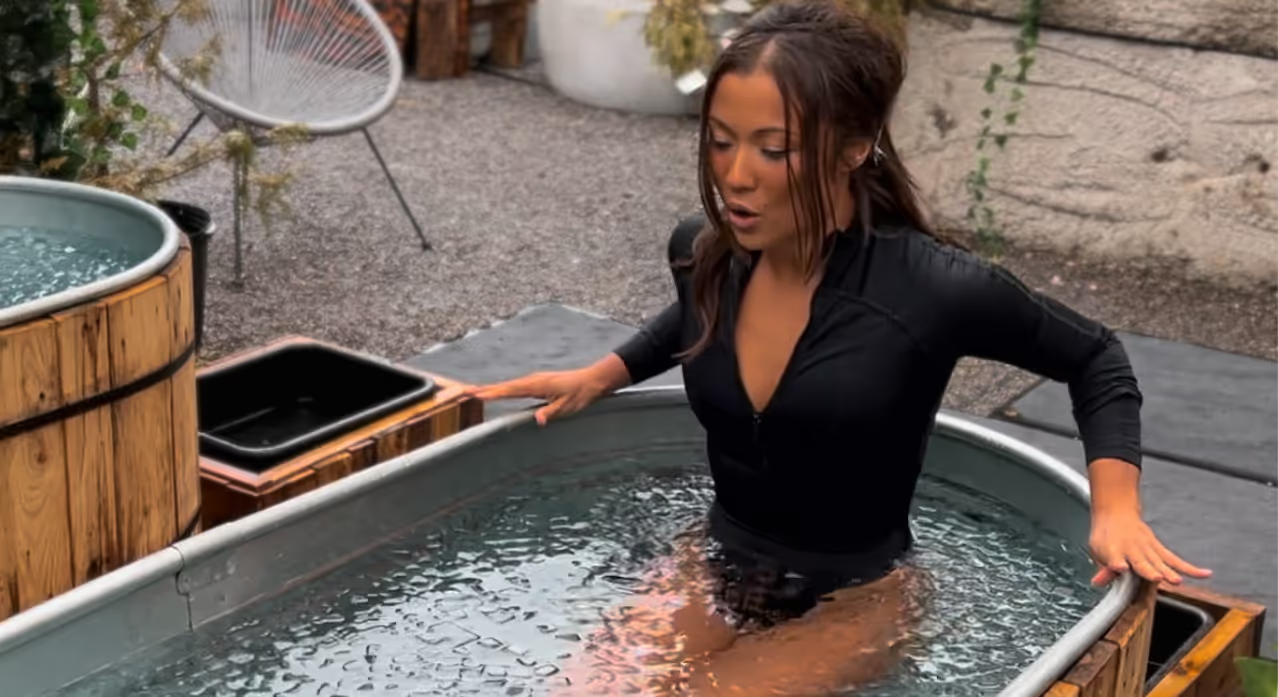
Open Instagram and you'll find shirtless influencers soaking in ice buckets preaching about dopamine rushes and superhuman recovery. Walk into a sports medicine facility and you may hear the opposite. Cold plunges have become a popular and profitable wellness market. But does plunging oneself into ice-cold water actually live up to the hype, or is this merely another exaggerated gimmick?
The tradition isn't new. Ancient Greeks recovered with cold baths and Scandinavian people have long adopted ice swimming. What has shifted though is the scope of the claims and the willingness of people to put their bodies through the cold plunge. Some advocates say cold plunges have anti-inflammatory effects, jump-start metabolism, improve your mood, and even lengthen your life. Critics respond by saying the evidence is inconclusive, the mechanisms are unclear, and the risks are understated.
Let’s take a look at what science says.
The advantage of cold water immersion is founded upon numerous proposed mechanisms. When your body is put under cold stress, you go through vasoconstriction (your blood vessels constrict), and vasodilation (your blood vessels dilate) upon re-warming. This vasculature "workout," in theory, makes your circulation stronger and reduces inflammation. Cold stress also activates brown adipose tissue (BAT), a fat which burns calories to make heat, and could potentially boost metabolic health. The cold water shock can also stimulate the sympathetic nervous system, which makes you release norepinephrine and potentially boosts concentration and mood.
For generations, scientific inquiry has documented cold exposure physiologic responses. To what degree these acute physiologic responses are connected to real-world health advantages through regular training?
Mayo Clinic has shown that cold plunges can reduce muscle damage that could have been caused from physical activities. Cleveland Clinic states that cold plunges may indeed bring relief to sore muscles while also improving circulation. The cold from the plunge may bring better focus, which can lead to some mental meditation. Medical opinions are usually quite cautious of claiming a cold plunge is “anti-inflammatory” as a study published in the Journal of Physiology has shown that cold water plunges are just as effective as active recovery.
For metabolic advantages, cold exposure turns on the brown fat, but are unsure this results in clinically relevant weight loss or metabolic benefits for most individuals. Several minutes immersed in cold water does expend some few extra calories, but fewer than products advertised would have you believe.
Applications of mental health are more promising. Cold water swimming can potentially decrease symptoms of depression and anxiety, potentially by the release of endorphins and the enhancement of norepinephrine.
The largest concern of the medical field revolves around safety. Cold water immersion has the ability to cause hazardous cardiovascular reactions, consisting of arrhythmias, most prominent among individuals who have pre-existing cardiovascular illness. Hyperventilation and gassing are able to be induced by the cold shock and may cause drowning should you be ill-equipped. Individuals suffering from Raynaud's, cardiovascular, or hypertension should be most cautious of cold plunges. If you are unsure about trying a cold plunge, always ensure that you speak to a physician about whether you may be a good fit.
The Medical Verdict: Cold plunges potentially have narrow advantages to athletic recovery and perhaps mood, but benefits to metabolism, longevity, and prevention of disease are hugely beyond the evidence. Technique has documented risks, which deserve extreme caution.
The alternative health scene has embraced cold exposure wholeheartedly, often through the idea that mild stressors make the body stronger. Dutch extreme athlete Wim Hof, the father of modern cold exposure as popularized through the internet and self-guided cold exposure routines, claims his system of cold immersion and breathing technique does affect the autonomic nervous system and the immune system. His 2014 paper, which showed trained subjects were able to voluntarily adjust their immune systems, and this was met with great interest throughout the alt-wellness communities. Keep in mind that the subjects were trained subjects, not the average person.
Cold plunge supporters frequently present cold plunges as means of "re-setting" the nervous system (which is not scientifically proven), of reducing reliance on pharmaceuticals for mood disorders, and of increasing vitality generally. They cite ancient traditions like the Finnish sauna and ice plunge (contrast therapy) as examples of ancient health regimes.
Many in this community emphasize the mental resilience built through regular cold exposure. The practice becomes a form of meditation or mindfulness, training you to stay calm under physical stress. Some may argue that mental training transfers to daily life challenges.
Alternate medicine experts often advise cold plunges to help decrease inflammation (which is also not fully scientifically proven), referencing anecdotal evidence of individuals suffering from autoimmune disorders reporting they feel better after cold exposure regularity. Others claim it helps enhance the quality of sleep, skin, and even slows down the aging process by stimulating cellular repair mechanisms. Keep in mind that these are all claims with mild scientific backing.
The holistic school of thought prefers cold exposure as just another facet of the broader way of living involving breathwork, fasts, and the like "natural" stressors. They frequently attack the prevailing medicine for the latter's conservatism and disregard of centuries of traditional practice.
But even within the alternative communities, responsible voices are quick to say cold plunges are not for every person. They advise beginning gradually, listening to your body, and collaborating with experienced practitioners, particularly if you have any health issues.
Take a glance through wellness Instagram, Facebook, or Tiktok and you will find thousands of posts promoting cold plunges. Fitness bloggers frequently share dramatic stories of transformation, thanking cold plunges, among other interventions, to reductions in body fat, muscle definition, or the resolution of health issues. These are persuasive but almost never for confounding factors. So, take these with a grain of salt.
The majority of these influencers market cold plunge tubs, lessons, or coaching, so they have financial interests to promote benefits by suppressing risks. Eye-catching pictures of cold plunge content are also significant. Sensational videos of people plunging into ice-filled tubs are attention-grabbers, cementing the habit regardless of actual health benefits.
Certain influencer premises go beyond any real scientific backing. You'll be presented with statements of cold plunges "detoxing" the body, radically increasing lifespan, or curing major illnesses. These premises take advantage of individuals seeking health answers and cause people to procrastinate actual doctor's appointments.
The responsible influencers recognize limitations and inter-individual variation. They present their own experiences but say what they are doing may not be applicable to all. However, subtle takes have fewer interactions than sweeping assurances.
Conventional medicine requires strong, randomized controlled trials before it sanctions practices, particularly those involving risks. Alternative wellness communities place greater value on traditional expertise and individual experience and sometimes view the lack of mainstream evidence as medical conservatism. Influencers use the power of engagement and narrative frequently to outweigh scientific integrity.
Analysis of the actual studies discovers the middle ground. Cold water immersion does have measurable physical effects. It has been revealed to have increased norepinephrine, dopamine, and metabolic rate subsequent to cold immersion. Cold water swim studies have correlations to improved mood and potential benefit for depression, but cause and effect are unclear.
Where the alt crowd crosses the line is extrapolating short-term physiological alterations into benefit translations long term. An immediate dopamine rush is interesting but doesn't particularly make your life better. Likewise, brown fat activation will burn off some extra calories, but this alone won't yield obvious fat loss without the application of new diets or physical exercise.
Whereby conventional medicine might be too reserved is the denial of possible uses for the mind. Many of the subjective cold plunge experiences of ordinary individuals, reported as stronger and more focused, are worthy of exploration even where the mechanisms are not entirely clear. Personal experience occasionally precedes proper research, particularly where there are no pharmaceutical motives for profit.
They selectively report studies, reporting the most dramatic findings and discounting opposing studies or substantial limitations. They refer to Wim Hof's study of the immune system and fail to mention it involved prolonged training and breathing protocols, not just cold exposure. They publish the elevation of dopamine but fail to contextualize the body's typical response to repeat stimuli, which would negate initial effects.
The concerns mainstream medicine have are legitimate and should not be dismissed as fear-mongering. Cold water immersion can kill people, usually by drowning of cold shock reactions or by cold-related cardiac arrests of vulnerable individuals. These are actual risks and must be treated exceedingly seriously.
Mainstream Medical Opinion: 3.5/5 In favor of safety features and correct on scare amount of evidence to justify most popular remedies. Possibly too cautious toward the possible benefits of psychiatry and inter-individual variation of response.
Alternative/Holistic Approach: 2.5/5 CREDIT for acknowledging cold exposure as potentially useful and respect for traditions. Loses points for exaggerating benefits, disregarding proper safety issues, and too much reliance upon anecdotal evidence.
Influencer Credibility: 2/5 He has some actual facts related to body reactions but tends to exaggerate benefits, downplay risks, and confuse correlation and causality. Financial conflicts of interest also undermine credibility.
Cold water immersion induces real physiologic effects, but the application of the acute benefits to clinically useful long-term health benefits remains uncertain for the vast majority of applications. If you are an athlete seeking recovery between intense training, the evidence suggests potential modest benefits, but timing matters (be cautious of within minutes of resistance training if muscle growth is your concern). If you are considering cold exposure as an application for mental illness, there is enough preliminary evidence to justify cautious investigation under professional guidance, but don't abandon established treatments.
For generalized well-being, longevity, or metabolism, the evidence isn't present or isn't robust. You won't cold plunge your way to six-pack abs or live years longer by cold bathing.
If you do choose to give cold plunging a go, begin gradually with cold showers, never go alone, particularly in open water, never alcohol prior, and check with your doctor if you have any cardiovascular disorders, hypertension, or any illness. Listen to your own body and not make any generic rules.
Excitement around cold plunges is merely the latest expression of the longing for uncomplicated and accessible health treatments which appear to be empowering and do not require pills. That longing is merited, but renders us susceptible to exaggerated claims. Exposure to cold may become an adjunct to the healthy living toolkit of some people, but it isn't necessary and not even sufficient for health.
Just like every health craze, the truth behind cold plunges is far less flashy than the hype: cold plunges are a tool of extremely limited, specific applications, profound risks, and highly individualized outcomes. They are not the be-all, and they are not for everyone.
Cold plunges score a 6 out of 10 on the LyfeIQ scale, as while there is some evidence for potential benefits in specific applications like athletic recovery and mental health, the majority of popular claims around metabolism, longevity, and general wellness currently outpace the scientific evidence, and significant safety risks exist for certain populations, warranting a cautious and individualized approach under medical guidance rather than broad adoption based on influencer hype.
Traditional Medicine asserts cold plunges potentially assist with muscle soreness induced by intense exercise and potentially assist with mental health, but the vast majority of popular assertions overshadow the evidence. Safety concerns, and specifically cardiovascular, are major and cannot be overlooked.
Alternative/Holistic Communities embrace cold exposure as the inherent stressor building resilience, resolving chronic inflammation, and boosting all-round vitality. They place centuries of practical tradition and personal experience alongside any mainstream research protocols.
They tout dramatic advantages ranging from dopamine spikes to weight loss to better performance, frequently founded on selectively chosen studies and word-of-mouth. Money often clouds objectivity.
Overall Rating: 3/5
Medical Evidence: 2.5/5 (Weak support for some applications like athletic recovery and possibly psychiatric conditions; weak evidence for broad assertions)
Benefit Potential: 3/5 (True but modest benefits for selective uses; likely exaggerated for broad health wellness)
Risk Assessment: 3/5 (It's usually safe for healthy individuals under proper precautions; severe risks for certain populations)
Alisa Bowman. “The Science behind Ice Baths for Recovery.” Mayo Clinic Press, 15 Apr. 2024, mcpress.mayoclinic.org/healthy-aging/the-science-behind-ice-baths-for-recovery/.
Espeland, Didrik, et al. “Health Effects of Voluntary Exposure to Cold Water – a Continuing Subject of Debate.” International Journal of Circumpolar Health, vol. 81, no. 1, 22 Sept. 2022, https://doi.org/10.1080/22423982.2022.2111789.
Gerhard, Danielle. “What Are the Risks and Benefits of a Cold Plunge?” The Scientist, The Scientist Magazine, 5 May 2025, www.the-scientist.com/what-are-the-risks-and-benefits-of-a-cold-plunge-72969.
Jagim, Andrew. “Cold-Water Plunging Health Benefits.” Mayo Clinic Health System, 30 Jan. 2024, www.mayoclinichealthsystem.org/hometown-health/speaking-of-health/cold-plunge-after-workouts.
“Should You Cold Plunge?” Dartmouth Health, 16 Apr. 2024, www.dartmouth-health.org/articles/should-you-cold-plunge. Accessed 22 Oct. 2025.
Stone, Will. “Ready to Cold Plunge? We Dive into the Science to See If It’s Worth It.” NPR, 8 Oct. 2023, www.npr.org/sections/health-shots/2023/10/08/1204411415/cold-plunge-health-benefits-how-to.
Williamson, Laura. “You’re Not a Polar Bear: The Plunge into Cold Water Comes with Risks.” Www.heart.org, 9 Dec. 2022, www.heart.org/en/news/2022/12/09/youre-not-a-polar-bear-the-plunge-into-cold-water-comes-with-risks.