August 24, 2026
10 min
Nathan J
July 20, 2026
8 min
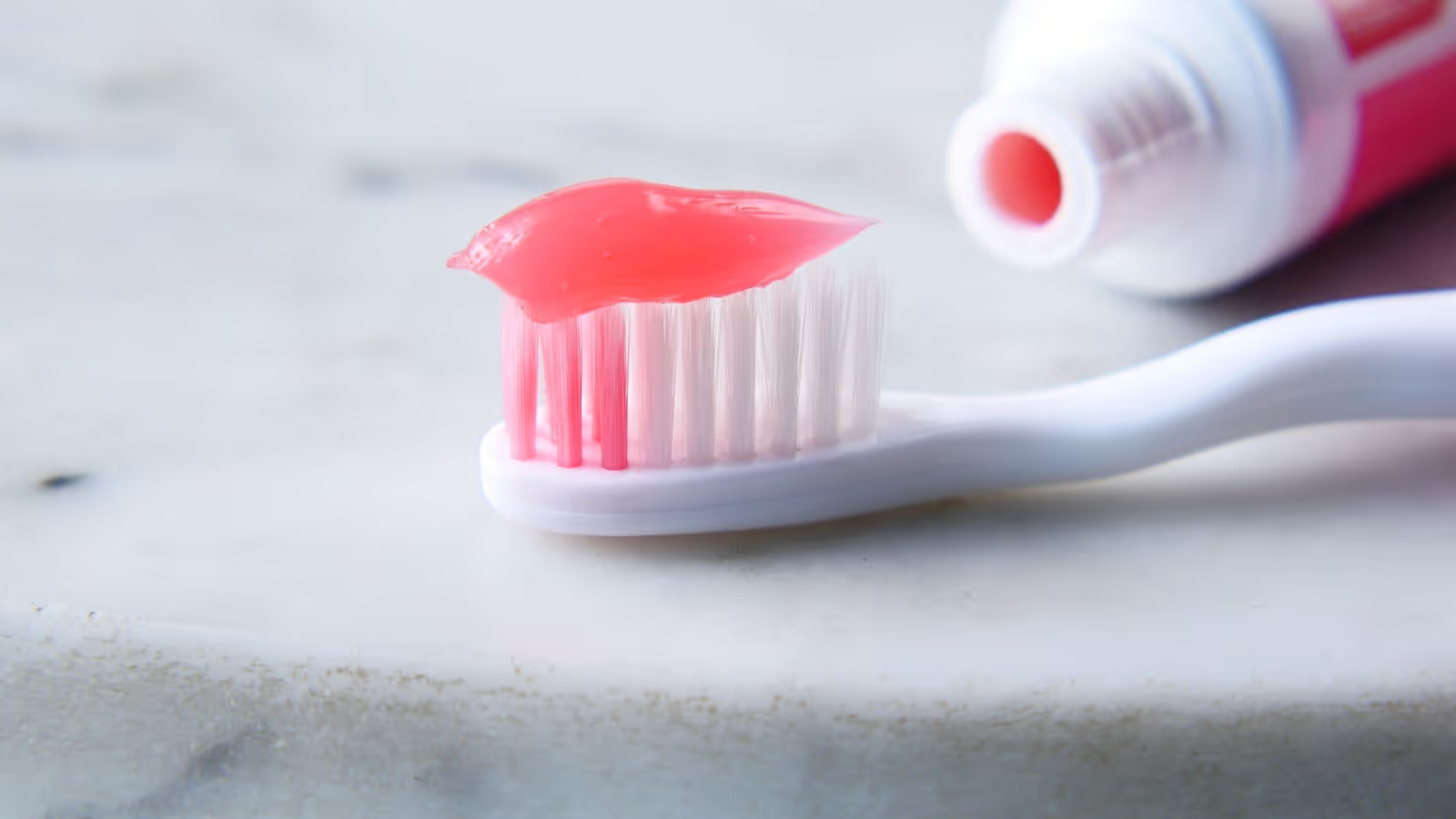
Walk down the toothpaste aisle and you’ll count dozens of promises: whiter, stronger, repairing, sensitive, natural. Strip the marketing away and almost all of it comes down to a handful of active ingredients doing a few specific jobs. Knowing which ingredient does what turns a confusing wall of tubes into a 30-second decision.
What the evidence supports: Fluoride is the one ingredient with decades of high-quality trial data behind it for preventing cavities. Stannous fluoride adds gum and sensitivity benefits. Hydroxyapatite is a credible fluoride-free alternative with growing trial support.
What’s overstated or unsupported: “Repair” mostly means remineralizing very early, surface-level damage — not regrowing a real cavity. Whitening toothpastes lift surface stains; they don’t bleach teeth more than a shade or two, and abrasive “natural” options like charcoal can do more harm than good.
⚕️ LyfeiQ Score: 8/10 — Pick a fluoride (or hydroxyapatite) paste that matches your actual problem; ignore the rest of the label.
Most of a toothpaste tube is the same boring base no matter what the front of the package claims. Abrasives (like hydrated silica) scrub off plaque and surface film, humectants keep the paste from drying out, detergents such as sodium lauryl sulfate make it foam, and flavoring makes it tolerable. None of that is what you’re paying the premium for. The active ingredient — usually one or two compounds — is what changes the outcome for your teeth.
The big functional categories are: prevent decay, strengthen and “repair” enamel, fight gum inflammation, calm sensitivity, and whiten. A single paste often claims several of these, but the claims trace back to specific ingredients with very different amounts of evidence behind them.
Fluoride is the most studied ingredient in all of oral care, and the evidence for cavity prevention is unusually solid. A Cochrane systematic review of 96 trials covering tens of thousands of participants found that fluoride toothpaste meaningfully reduces tooth decay compared with non-fluoride toothpaste, with a clear dose-response: higher concentrations (1,000–1,500 ppm) prevent more decay than lower ones, though very young children’s fluoride exposure has to be balanced against the risk of mild enamel mottling (fluorosis).
Fluoride works by swapping into the enamel’s mineral structure to form a more acid-resistant surface, and by tipping the constant tug-of-war between mineral loss and mineral gain back toward repair. Most adult toothpastes in the US contain sodium fluoride or sodium monofluorophosphate at around 1,000–1,500 ppm.
Match the active ingredient to the problem you actually have, and you can stop reading the rest of the label. A practical way to choose:
Two habits matter more than the brand: brush for two minutes twice daily, and spit, don’t rinse — rinsing with water immediately washes away the fluoride before it can work. A pea-sized amount is plenty.
Major dental and health bodies are aligned and unambiguous: use fluoride toothpaste. The American Dental Association awards its Seal of Acceptance to fluoride toothpastes that demonstrate cavity-prevention efficacy, and bodies like the NHS and WHO list fluoride toothpaste as a cornerstone of preventing decay. For people with gum inflammation or sensitivity, dentists increasingly point to stannous fluoride formulations. A randomized clinical study of a stabilized stannous fluoride toothpaste found it also reduced extrinsic (surface) stain by roughly 28% over six weeks versus a regular fluoride paste, while delivering its known anti-gingivitis and anti-sensitivity benefits.
The most credible fluoride-free position centers on hydroxyapatite, not on avoiding active ingredients altogether. Hydroxyapatite is the mineral teeth are largely made of, so the idea is to supply that mineral directly. A systematic review and meta-analysis concluded that hydroxyapatite in oral-care products reduces caries even without fluoride, with one pooled analysis showing roughly 17% protection; a 24-month triple-blind trial in children found a hydroxyapatite-plus-fluoride paste reduced active enamel lesions, and a separate randomized trial found a biomimetic hydroxyapatite paste eased sensitivity from white-spot lesions more than conventional fluoride paste. Proponents also favor it for young children who swallow toothpaste. The honest caveat: the hydroxyapatite evidence base, while encouraging, is far smaller and newer than fluoride’s.
Social media’s favorite oral-care trend, charcoal toothpaste, is where the evidence falls apart. Popular TikTok and Instagram creators often promote activated-charcoal pastes as a “natural” whitener, and the black-paste-to-white-teeth reveal makes for satisfying video. The research doesn’t back the hype. A systematic review of charcoal whitening toothpastes found they whiten less than other options and tend to be more abrasive, raising concerns about wearing down enamel over time; most also lack fluoride. On the other side, plenty of dentists with large followings push back hard on the charcoal trend and steer viewers toward fluoride or hydroxyapatite — a useful reminder that “natural” and “gentle” are not the same thing.
The three camps agree more than the packaging suggests — they mostly disagree about fluoride, not about the goal. Everyone wants the same thing: shift the enamel’s mineral balance toward repair and keep bacteria in check. Fluoride and hydroxyapatite both do this; stannous fluoride does it while adding gum benefits. The real marketing gap is around two words. “Repair” usually means remineralizing microscopic, pre-cavity softening of enamel — genuinely useful, but not regrowing a hole that already needs a filling. And “whitening” from toothpaste means lifting surface stains through mild abrasives or low-dose peroxide; a systematic review found whitening dentifrices can produce a measurable color change, but it’s modest and works on surface stain, not the deep bleaching you’d get from professional treatment. Where evidence ends and marketing begins is mostly in the size of the promise, not whether the ingredient does anything at all.
Expect more head-to-head trials pitting hydroxyapatite directly against fluoride at matched concentrations, which would settle how interchangeable they really are. Researchers are also exploring peptide- and protein-based remineralization that aims to rebuild enamel structure rather than just re-mineralize its surface, and bacteria-targeting approaches that disrupt cavity-causing biofilms without scrubbing. None of these has displaced fluoride yet — but the fluoride-free category is the one to watch.
What is toothpaste’s LyfeiQ?
Credibility Rating: 8/10
👉 Who should try this: Everyone needs a daily toothpaste — choose a fluoride paste by default, stannous fluoride for gum or sensitivity issues, or hydroxyapatite if you want fluoride-free.
👉 Who should skip this: No one should skip toothpaste, but skip the charcoal pastes, and anyone with a specific dental condition should let their dentist steer the choice.
⚕️ LyfeiQ Score: 8/10 — The right toothpaste is mostly about one or two active ingredients matched to your needs. Buy fluoride (or hydroxyapatite), match the rest to your specific problem, and don’t pay for promises a tube can’t keep.
Related: The Truth About Body pH: Can Your Morning Coffee Really Make You Acidic?
Research retrieved via PubMed. DOI links included per source.
Disclaimer: This content includes personal opinions and interpretations based on available sources and should not replace medical advice. This content includes interpretation of available research and should not replace medical advice. Although the data found in this blog and infographic has been produced and processed from sources believed to be reliable, no warranty expressed or implied can be made regarding the accuracy, completeness, legality or reliability of any such information. This disclaimer applies to any uses of the information whether isolated or aggregate uses thereof.